Chicken Behaviour and Welfare (Coursera)

Chicken Behaviour and Welfare (Coursera)

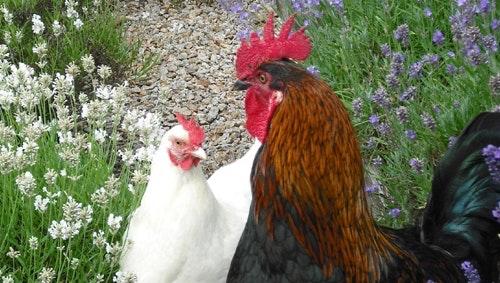
This course explains the general principles of chicken behaviour and welfare, and the behavioural and physiological indicators that can be used to assess welfare in chickens kept in hobby flocks through to commercial farms. The focus is primarily on laying hens and meat chickens (broilers) although many of the principles are relevant to other types of poultry. The course is likely to be of interest to people who own chickens as pets or keep a small hobby flock, commercial egg and chicken meat producers, veterinarians and vet nurses.

Class Deals by MOOC List - Click here and see Coursera's Active Discounts, Deals, and Promo Codes.

Learning Objectives:

  • Describe avian sensory perception and motivation
  • Explain the main behaviour patterns of poultry
  • Define welfare and explain the bases of welfare standards
  • Assess chicken welfare, using behavioural and physiological means
  • Understand common welfare problems of chickens

This course is taught by staff from Scotland's Rural College (SRUC), University of Glasgow, and St David's Poultry Team.

Syllabus

WEEK 1
Getting Started
This brief module will tell you all the things you need to know to begin, including the syllabus of the course, who we are, how to engage with one another.
Introduction to Animal Behaviour: Domestication, Behaviour Development and Learning, the Senses
Welcome to the first week of the Chicken Behaviour and Welfare Course. If you haven't seen it - watch the video which introduces you to the course: you can find it under "Getting Started; Welcome!" During this lesson, we will consider what makes a domestic animal, how behaviour develops in the chicken from before hatching and beyond, different types of learning and the senses - vision, hearing, taste, smell and touch.

WEEK 2
Behaviour Patterns of Chickens, Part 1
During this week, we will consider some of the major behaviour patterns of chickens, such as maintenance behaviours of chickens, and social behaviours. Maintenance behaviours means feeding, drinking, and comfort activities. Comfort activities include preening, dustbathing, and perching (among others). Social behaviours include communication, dominance, aggression, and spacing. This week will be a combination of video lectures, in-video quizzes and an interview with a backyard producer.

WEEK 3
Behaviour Patterns of Chickens, Part 2
Welcome back everyone! During this week, we will consider the reproduction process in chickens, from courtship to brooding and hatching of eggs. We will then look at some abnormal behaviours that you might see in chickens. This week will be a combination of video lectures, in-video quizzes, video clips from outside sources, and a downloadable poster on eggshell abnormality.

WEEK 4
What is chicken welfare? Defining "welfare", ethical obligations, and welfare standards
During this week, we will consider what we mean by "animal welfare", and how a set of criteria known as the Five Freedoms can help you assess it. Dr Dorothy McKeegan from the University of Glasgow will discuss what the ethical obligations are of meeting an animal's welfare needs, and we will explore some of the various welfare standards that exist. Finally, we will look at welfare indicators, and Dr Barry Thorp from St David's Veterinary Team will discuss with Vicky what signs to look for in chicken flocks to make a welfare assessment. This week's Learning Outcomes: •Define 'welfare' and the Five Freedoms •What drives our ethical choices, including cost-benefit analysis •Describe some welfare standards available worldwide and how they differ •Explain ways to assess welfare, using behavioural and physiological indices

WEEK 5
Effects of housing, transport and slaughter on bird welfare
This is the last week of the Chicken Behaviour and Welfare course, you are almost at the finish line... During this week, we will consider the welfare of layer hens and broiler (meat) chickens, from hatch to slaughter, particularly in common commercial systems. This week's Learning Outcomes: •Compare the most common housing systems used in Europe for laying hens •Compare the most common housing systems used in Europe for broiler chickens •Discuss the pros and cons of free range housing •Describe methods of emergency killing •Discuss different transport requirements, depending on the scale •Describe some of the common methods of slaughtering poultry.


Go to Class
MOOC List is learner-supported. When you buy through links on our site, we may earn an affiliate commission.

Related Courses

Feeding the World (Coursera) Coursera
University of Pennsylvania

Feeding the World (Coursera)

This course will explore the concepts driving current food production science (population growth, urbanization, emerging affluence, resource constraints, and underlying biological limits) with the main focus on livestock production. Each of the major food animal species (dairy, swine, beef, and poultry) will be covered in terms of their universal life cycles, constraints to production and emerging societal issues.

Jun 22nd 2026
5-12 Weeks
Seguridad agroalimentaria (Coursera) Coursera
Universidad Nacional Autónoma de México

Seguridad agroalimentaria (Coursera)

La seguridad agroalimentaria es uno de los mayores problemas a nivel mundial debido a que existen millones de personas que no tienen acceso diario a los alimentos. Por ello, es necesario revisar el concepto y analizar su importancia, elementos para la construcción de políticas para generar seguridad alimentaria, así como los riesgos e implicaciones de no implementar estas políticas. Al hacerlo, puede contribuirse al reto global actual, el cual, requiere tomar conciencia de estos aspectos mejorar las condiciones de acceso, disponibilidad, estabilidad y utilización de alimentos.

May 22nd 2023
4 Weeks
Food Science and Nutrition: From the Farm to You (FutureLearn) FutureLearn
University of Leeds

Food Science and Nutrition: From the Farm to You (FutureLearn)

Follow food’s fascinating journey from the farm to your body and explore new food technologies and nutrition around the world. Discover the science of food and understand the value of nutrition in our diets. On this course, you’ll learn how food science and nutrition helps us to understand and study the fascinating world of food.

Feb 16th 2026
2 Weeks
Introduction to Biology: Biodiversity (Coursera) Coursera
Rice University

Introduction to Biology: Biodiversity (Coursera)

In this course we will examine the incredible variety of life that inhabits this planet including microorganisms, plants, and animals. For each of the major groups we’ll learn about their characteristics, functions, and how they came into existence as well as some of the roles they play in the natural world, and how they’re relevant to people. We’ll also take a close look at us humans and consider what we know about our origins and what might become of us in the future.

Jun 22nd 2026
5-12 Weeks
Global Health at the Human-Animal-Ecosystem Interface (Coursera) Coursera
University of Geneva

Global Health at the Human-Animal-Ecosystem Interface (Coursera)

The University of Geneva, Institute Pasteur, University of Montreal and Centre Virchow-Villermé/University Paris Descartes welcome you to this new MOOC on "Global Health at the Human-Animal-Ecosystem Interface"! Over the next 5 weeks, you will explore and learn about some of the major and current Global Health Challenges at the Human-Animal-Ecosystem Interface: zoonotic emerging infections (e.g. Ebola, Nipah, MERS, Avian Influenza), antimicrobial resistance, neglected tropical diseases (e.g. rabies, leishmaniasis, zoonotic TB), snakebite and other human-animal conflicts etc.

Jun 1st 2026
5-12 Weeks
Public Health Perspectives on Sustainable Diets (Coursera) Coursera
Johns Hopkins University

Public Health Perspectives on Sustainable Diets (Coursera)

What we eat and how we produce that food have significant effects on human health and the sustainability of our planet. But what is a ‘sustainable’ diet? A sustainable diet, as defined by the FAO, promotes health and well-being and provides food security for the present population while sustaining human and natural resources for future generations. This short course looks at the urgent need to address the sustainability of our food systems, including better understanding the complex relationship between diet and climate change. We’ll explore current research on dietary shifts needed in high, middle, and low-income countries to achieve both sustainability and food security goals and discuss evidence-based strategies to promote sustainable diets.

Jun 15th 2026
3 Weeks
Sustainable Food Production Through Livestock Health Management (Coursera) Coursera
University of Illinois at Urbana-Champaign

Sustainable Food Production Through Livestock Health Management (Coursera)

Learn about the impact of infectious disease on sustainable animal-based food production by understanding the science of growth, immunity, and infection and by learning the problem-solving skills needed to advance animal health and food production through optimal management practices. In this course we will explore the effect of infectious disease on sustainable animal-based food production. The content and learning outcomes of this new course will be designed to be relevant across different food production sectors (i.e., beef, dairy, poultry, and pigs).

Jun 15th 2026
5-12 Weeks
Revolutionary Ideas: Utility, Justice, Equality, Freedom (Coursera) Coursera
Rutgers University

Revolutionary Ideas: Utility, Justice, Equality, Freedom (Coursera)

What is the purpose of government? Why should we have a State? What kind of State should we have? Even within a political community, there may be sharp disagreements about the role and purpose of government. Some want an active, involved government, seeing legal and political institutions as the means to solve our most pressing problems, and to help bring about peace, equality, justice, happiness, and to protect individual liberty.

Jun 1st 2026
5-12 Weeks
The Truth About Cats and Dogs (Coursera) Coursera
University of Edinburgh

The Truth About Cats and Dogs (Coursera)

What is your cat revealing to you when she purrs? What is your dog expressing when he yawns or wags his tail? Understanding your cat and dog’s behaviour and the way they communicate with you, will enable you to better understand their needs and strengthen your relationship with them. This MOOC is divided into five topics, the appliance of science; behaviour and body language, senses and perception; challenges for the human-animal relationship, including pet problem behaviour; and how to improve the quality of life for cats and dogs in our care.

Jun 1st 2026
5-12 Weeks
Animals, Self, and Society (Coursera) Coursera
University of Colorado Boulder

Animals, Self, and Society (Coursera)

This course explores how animals and people are situated within the web of structures and connections known as “society.” Module 1 considers some of the key symbolic roles that animals play in society by investigating the practice of “thinking with animals.” We investigate how people construct different meanings of animals and the implications these meanings have for both animals and humans. You will gain first-hand experience of this by analyzing how animals are represented in the media.

Jun 15th 2026
4 Weeks