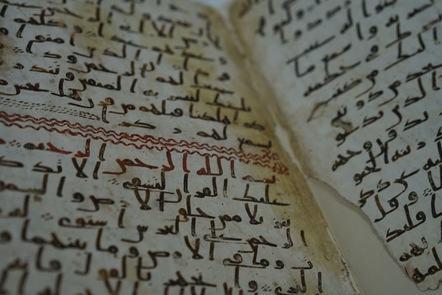
Explore the history and significance of the Birmingham Qur'an, and its journey from late Antiquity Middle East to contemporary UK. The Birmingham Qur’an is one of the oldest surviving Islamic manuscripts. This course will explore the origins and the journey of the Birmingham Qur’an from the Islamic heartlands, the significance of the Birmingham Qur’an, the methods used to determine its age and how it is cared for at Cadbury Research Library, University of Birmingham.
Class Deals by MOOC List - Click here and see FutureLearn's Active Discounts, Deals, and Promo Codes.
Learn how to identify features of Qur’an manuscripts and how they influenced the arts of the book in Islamic manuscript culture. You will also learn more about the Mingana collection of Middle Eastern manuscripts and their relevance to the 21st century.
What topics will you cover?
Week 1: The Journey of the Birmingham Qur’an manuscript
How the radiocarbon dating of the manuscript became a world-wide news sensation
The significance of the dating
The origins of the manuscript: where was it produced?
The journey of the manuscript from the Islamic heartlands to the University of Birmingham
Week 2: The Qur’an and the Arts of the Book
How the Birmingham Qur’an manuscript relates to the development of the Arabic written tradition
Qur’an manuscripts and Arabic calligraphy
The Arts of Qur’an manuscripts and Islamic manuscript culture
Week 3: Research & preservation of manuscripts
Using radiocarbon dating to date manuscripts
Modern technology in the research and analysis of historic manuscripts
Techniques and preservation methods in the conservation and care of historic manuscripts
The value of primary historic sources as a valuable resource for research
Week 4: The Birmingham Qur’an and other historic manuscripts of the Mingana collection
The Islamic Arabic & Persian manuscripts in the Mingana collection held in the Cadbury Research Library
The Mingana collection of Middle Eastern manuscripts as a collection of international importance
The relevance of the Birmingham Qur’an and other manuscripts to the contemporary world: local communities, researchers and academics
The ethics of collecting from different cultures
What will you achieve?
By the end of the course, you'll be able to...
- Explore and understand the historic and cultural significance of the Birmingham Qur’an manuscript dating
- Develop an appreciation of the religious, social and community importance of the Birmingham Qur’an manuscript
- Engage with the journey of the Birmingham Qur’an from the Islamic heartlands to Birmingham University
- Investigate the features of the Birmingham Qur'an manuscript and understand how they relate to the Arabic written tradition
- Demonstrate an ability to trace developments in Arabic script, calligraphy and the decorative arts used in Qur'anic manuscripts
- Assess the benefits to research through consulting primary source materials
- Explore and appreciate the size, variety and importance of the Mingana collection of Middle Eastern manuscripts
- Debate the morals and ethics of western collecting from other cultures
-Evaluate and consider the relevance of historic manuscripts to the contemporary world
- Reflect on how radiocarbon dating and modern technology can be used to date and analyse manuscripts
- Compare and identify techniques and preservation methods used to care for historic manuscripts