Archaeology: from Dig to Lab and Beyond (FutureLearn)

Offered by University of Reading,
Archaeology: from Dig to Lab and Beyond (FutureLearn)

Get an introduction to studying archaeology, exploring exciting discoveries in the Vale of Pewsey, near to Stonehenge and Avebury. Chart the progress of an archaeological excavation from dig to lab and beyond. We’ll show you around our field school at the Vale of Pewsey, a relatively untouched site compared to its famous neighbour, Stonehenge.

Class Deals by MOOC List - Click here and see FutureLearn's Active Discounts, Deals, and Promo Codes.

An excavation is more than just digging with a trowel. You’ll investigate how and where to dig, collect, record and store precious finds and take a closer look at what you can learn from a discovery once you’ve found it.
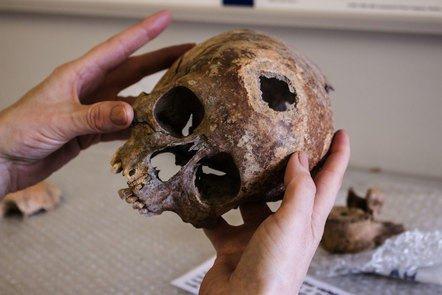
One of the most intriguing finds of all is a burial site and you’ll examine the archaeological methods employed in the study of the dead. How can you recreate the life, health and occupation of an individual just from their skeletal remains?

What topics will you cover?

Week 1: The Dig
Week 2: The Lab

What will you achieve?
By the end of the course, you'll be able to...

  • Explain how an archaeological dig works, from the planning stages, through excavation, to the analysis and storage of artefacts
  • Summarise the basic characteristics of all archaeological periods from the Mesolithic to the post-medieval period (c.8000 BC–AD 1900)
  • Describe the main ways in which archaeologists analyse human skeletons
  • Debate some of the key issues facing archaeology today
  • Understand the transferable skills you will acquire from studying archaeology

Who is the course for?
No prior experience of archaeology is needed. This course is designed for anyone interested in studying an archaeology degree at university. However, anyone with an enthusiastic interest in archaeology is very welcome to join us too.
Go to Class
MOOC List is learner-supported. When you buy through links on our site, we may earn an affiliate commission.

Related Courses

Genealogy: Researching Your Family Tree (FutureLearn) FutureLearn
University of Strathclyde

Genealogy: Researching Your Family Tree (FutureLearn)

Dive into your family ancestry and learn how to create a family tree on this online genealogy course. Discover the basics of genealogy and build your own family tree. Have you ever wondered about your family ancestry or wanted to create a family tree of your own? On this 6-week genealogy course for beginners, you’ll learn how to uncover the past and record your family history. The information on this course does not apply to just one country, so you can learn about your family lineage no matter where you’re from.

Self Paced
5-12 Weeks
Introduction to Archaeology: Knowing The Past (Coursera) Coursera
Rice University

Introduction to Archaeology: Knowing The Past (Coursera)

This course is an introduction to a series on the discipline of Archaeology. It is intended for learners at all stages, including advanced high school, college students, or life-long learners. Basic information about Archaeology and its history are presented in this course, while the following three courses cover scientific methods, forms of interpretation, and contemporary social issues that archaeologists engage with.

Jul 20th 2026
4 Weeks
Discover Palestine (An-Najah National University) Other Providers
An-Najah National University

Discover Palestine (An-Najah National University)

Discover Palestine is the first English language certified Massive Open Online Course (MOOC) about Palestinian history, archaeology, culture, and heritage.
 Discover Palestine will explore the ancient land of Palestine. We will learn about the geographical and ecological makeup of the land, the different types of agriculture and water installations that have been adopted by various groups over the centuries, as well as trade and other relations between groups. We will also learn about the art, architecture and technology of the different periods covered by this course.

No sessions available
5-12 Weeks
The Changing Landscape of Ancient Rome. Archaeology and History of the Palatine Hill (Coursera) Coursera
Sapienza University of Rome

The Changing Landscape of Ancient Rome. Archaeology and History of the Palatine Hill (Coursera)

Studying ancient - as well as medieval or modern - cities basically means telling local urban stories based on the reconstruction of changing landscapes through the centuries. Given the fragmentary nature of archaeological evidence, it is necessary to create new images that would give back the physical aspect of the urban landscape and that would bring it to life again. We are not just content with analyzing the many elements still visible of the ancient city.

Jul 20th 2026
5-12 Weeks
Pyramids of Giza: Ancient Egyptian Art and Archaeology (edX) EdX
HarvardX,Harvard University

Pyramids of Giza: Ancient Egyptian Art and Archaeology (edX)

Explore the archaeology, history, art, and hieroglyphs surrounding the famous Egyptian Pyramids at Giza. Learn about Old Kingdom pharaohs and elites, tombs, temples, the Sphinx, and how new technology is unlocking their secrets. Where is Giza? How were the Pyramids built? How did the cemeteries and hundreds of decorated tombs around them develop? What was Giza’s contribution to this first great age of ancient Egyptian civilization, the Old Kingdom?

Self Paced
Self-Paced
Ancient topography, relief and technical analysis of ancient monuments (UNINETTUNO) UNINETTUNO OpenupEd
International Telematic University UNINETTUNO

Ancient topography, relief and technical analysis of ancient monuments (UNINETTUNO)

The course aims to define the goals and the systematic methodological research related to a discipline of historical and archaeological area, such as the Ancient Topography, Survey and technical analysis of ancient monuments, in order to reconstruct the shape and meaning of the ancient anthropic contexts, through the traces that remain in modern urban landscapes.

Self Paced Course - Start anytime
Self-Paced
Biblical Archaeology: The archaeology of ancient Israel and Judah (edX) EdX
IsraelX

Biblical Archaeology: The archaeology of ancient Israel and Judah (edX)

Join me as I share with you my passion for archaeological discovery and learn about the exciting methods of modern archaeology. Explore how archaeology illuminates biblical Israel and Judah, and the archaeological finds relate to the bible. Join me for an introductory course on biblical archaeology of ancient Israel and Judah during the Iron Age (ca. 1200-586 BCE).

Nov 1st 2022
5-12 Weeks
The Scientific Revolution: Understanding the Roots of Modern Science (FutureLearn) FutureLearn
University of Groningen

The Scientific Revolution: Understanding the Roots of Modern Science (FutureLearn)

Learn about the seventeenth-century Scientific Revolution and its role in shaping the modern Western world. How did the science of today come about? What constitutes ‘modern’ science? How does science relate to religion? Answer these questions and more with this course that travels back in time to the seventeenth-century Scientific Revolution to explore the roots of modern science.

Self Paced
3 Weeks
Forensic Archaeology and Anthropology (FutureLearn) FutureLearn
Durham University

Forensic Archaeology and Anthropology (FutureLearn)

Enter the fascinating world of forensics, and learn how the deceased are located, recovered and analysed using DNA and pathology. Learn the science behind the exhumation and identification of skeletal remains. The location, exhumation and identification of the dead requires highly specialised expertise. On this course, you’ll learn the latest scientific techniques for body location, recovery and analysis.

Self Paced
5-12 Weeks
Early Modern Scottish Palaeography: Reading Scotland's Records (FutureLearn) FutureLearn
University of Glasgow

Early Modern Scottish Palaeography: Reading Scotland's Records (FutureLearn)

Travel back in time through Scottish history by examining early modern Scottish handwriting. Explore Scottish history and learn more about using historical sources. Palaeography is the study of ancient handwriting and a vital skill in the historian’s toolkit. It is essential when conducting research on early modern Scotland – a period of profound political, religious and social change the effects of which can still be felt today.

Self Paced
3 Weeks