Ecology and Wildlife Conservation (FutureLearn)

Offered by University of Leeds,
Ecology and Wildlife Conservation (FutureLearn)

Discover ecology and how we can protect wildlife and conserve the natural world. Do you worry about the effects of climate change on nature? This course will show you how the work of conservation biologists and study of ecosystems can help with conserving the world’s biodiversity. You’ll explore the impact that the presence of wind farms on populations of seabirds and understand how the use of advanced techniques can be used to study different populations.

Class Deals by MOOC List - Click here and see FutureLearn's Active Discounts, Deals, and Promo Codes.

In Week 2, you’ll learn about ecosystems and how they are influenced by human activity. Case studies will explore the reasons behind the bee decline across the world, and examine fish species in tropical seas to see at first-hand how climate change damages coral reefs.

What topics will you cover?

  • The moral and economic arguments for nature conservation.
  • The impact of human activity on the natural environment.
  • Why the conservation of populations and communities are essential for human life.
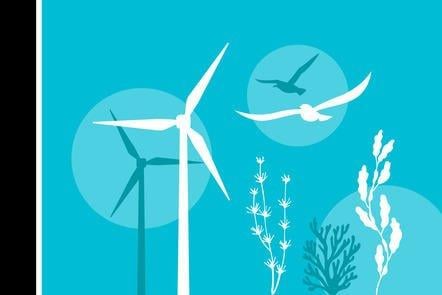
  • How conservation biologists are helping to protect seabirds from offshore wind turbines.
  • The impact of climate change on coral reef ecosystems.
  • How the loss of coral can lead to ecosystem collapse.
  • How large-scale studies are used to understand environmental issues.
  • The impact of bee decline across the world.
  • How new technology is helping to conserve nature and biodiversity.

Learning on this course
You can take this self-guided course and learn at your own pace. On every step of the course you can meet other learners, share your ideas and join in with active discussions in the comments.

What will you achieve?
By the end of the course, you'll be able to...

  • Identify, through research, the key threats faced by seabirds, pollinators, and coral reefs
  • Explore the impact of global environmental change on two key species and two key ecosystems
  • Evaluate real data taken from a field study to investigate the conservation of a group of animals or plants
  • Investigate the advanced techniques and technology which are used to study and conserve biodiversity by conservation scientists

Who is the course for?
The course is for anyone with a general interest in ecology and wildlife conservation but it will be particularly useful for students at high school who want to study conservation biology, zoology or biology at university level. The course is part of the Going to University collection and completing it can help improve your university application by broadening your understanding of wildlife conservation and developing your independent learning skills. The course can also be used as a teachers’ classroom enrichment resource.
Go to Class
MOOC List is learner-supported. When you buy through links on our site, we may earn an affiliate commission.

Related Courses

Agroforestry II: Major Systems of the World (Coursera) Coursera
University of Florida

Agroforestry II: Major Systems of the World (Coursera)

Welcome to Agroforestry II: Major Systems of the World. A focused exploration of agroforestry practices from around the world. This is the second module of the five-module course covering the various aspects of agroforestry including the global distribution of the practices, their underlying principles, and major scientific advances during the past nearly five decades, presented by leading experts in the field.

Jun 22nd 2026
2 Weeks
Nature Connectedness with the University of Derby (FutureLearn) FutureLearn
University of Derby

Nature Connectedness with the University of Derby (FutureLearn)

Learn to establish a new relationship with nature to help improve your wellbeing and tackle larger issues such as climate change. Explore the relationship between nature connection and the climate crisis. Too often we see nature as something to use, control, or as a threat to us. The climate crisis and wildlife emergency show that the existing relationship between people and the rest of nature is breaking down. It has become too disconnected and narrow.

Jul 26th 2021
4 Weeks
Beneath the Blue: The Importance of Marine Sediments (FutureLearn) FutureLearn
University of Southampton

Beneath the Blue: The Importance of Marine Sediments (FutureLearn)

Understand the importance of our planet's seafloor and get an introduction to the exciting field of ocean science. Discover fascinating seafloor habitats and learn how humans affect them. Exactly what lies beneath our oceans? Why is the sea floor, and its marine sediments, so important? And how are humans affecting them? On this course you’ll answer these questions and more.

No sessions available
3 Weeks
The Worldview of Thomas Berry: The Flourishing of the Earth Community (Coursera) Coursera
Yale University

The Worldview of Thomas Berry: The Flourishing of the Earth Community (Coursera)

Thomas Berry (1914-2009) was a historian of world religions and an early voice awakening moral sensibilities to the environmental crisis. He is known for articulating a “new story” of the universe that explores the implications of the evolutionary sciences and cultural traditions for creating a flourishing future. This course investigates Berry’s life and thought in relation to the Journey of the Universe project.

Jun 22nd 2026
5-12 Weeks
Agroforestry V: Ecosystem Services, Food and Sustainability (Coursera) Coursera
University of Florida

Agroforestry V: Ecosystem Services, Food and Sustainability (Coursera)

Welcome to Agroforestry V: Ecosystem Services, Food Security and Sustainable Development, a detailed review of fundamental principles and best practices for successful agroforestry projects. This interdisciplinary module, presented by leading experts in the field, is the final in the five-module course covering the various aspects of agroforestry including the global distribution of the practices, their underlying principles, and major scientific advances during the past nearly five decades.

Jun 22nd 2026
2 Weeks
Beyond the Sustainable Development Goals (SDGs): Addressing Sustainability and Development (Coursera) Coursera
University of Michigan

Beyond the Sustainable Development Goals (SDGs): Addressing Sustainability and Development (Coursera)

We’re excited you’re here! This course, “Beyond the Sustainable Development Goals (SDGs): Addressing Sustainability and Development,” is the first course in the upcoming Sustainability and Development MasterTrack Certificate program (Fall 2020), but you can also take this course as a stand-alone learning opportunity.

Jun 24th 2026
5-12 Weeks
Introduction to Religions & Ecology (Coursera) Coursera
Yale University

Introduction to Religions & Ecology (Coursera)

At first glance the fields of religion and ecology may seem and unlikely pairing, but a deeper consideration reveals the two have a great deal to contribute to one another and are indeed inextricably linked. Religions recognize the unity and interdependence of humans with nature. Ecological sciences affirm this deep interconnection with the natural world. This partnership can inspire work for the wellbeing of the Earth community
.

Jun 22nd 2026
5-12 Weeks
EAL: English Language for Nature Conservation and Sustainability (FutureLearn) FutureLearn
Te Pūkenga – New Zealand Institute of Skills and Technology,Nelson Marlborough Institute of Technology - NMIT

EAL: English Language for Nature Conservation and Sustainability (FutureLearn)

Advance your study of English as a second language as you explore sustainability and discover the wonders of New Zealand. Improve your language skills with the Nelson Marlborough Institute of Technology. The themes of conservation and sustainability are present in most major academic English exams such as IELTS, TOEFL, and NZCEL. This four-week course will prepare you for reading, listening, writing, and speaking about these themes.

Jun 27th 2022
4 Weeks
Introduction to Biology: Biodiversity (Coursera) Coursera
Rice University

Introduction to Biology: Biodiversity (Coursera)

In this course we will examine the incredible variety of life that inhabits this planet including microorganisms, plants, and animals. For each of the major groups we’ll learn about their characteristics, functions, and how they came into existence as well as some of the roles they play in the natural world, and how they’re relevant to people. We’ll also take a close look at us humans and consider what we know about our origins and what might become of us in the future.

Jun 22nd 2026
5-12 Weeks
Dino 101: Dinosaur Paleobiology (Coursera) Coursera
University of Alberta

Dino 101: Dinosaur Paleobiology (Coursera)

Dino 101: Dinosaur Paleobiology is a 12-lesson course teaching a comprehensive overview of non-avian dinosaurs. Topics covered: anatomy, eating, locomotion, growth, environmental and behavioral adaptations, origins and extinction. Lessons are delivered from museums, fossil-preparation labs and dig sites. Estimated workload: 3-5 hrs/week.

Jun 27th 2026
5-12 Weeks
South Asian Religions & Ecology (Coursera) Coursera
Yale University

South Asian Religions & Ecology (Coursera)

At first glance the fields of religion and ecology may seem and unlikely pairing, but a deeper consideration reveals the two have a great deal to contribute to one another and are indeed inextricably linked. Religions recognize the unity and interdependence of humans with nature. Ecological sciences affirm this deep interconnection with the natural world. This partnership can inspire work for the wellbeing of the Earth community

Jun 22nd 2026
5-12 Weeks