Biosphere 2 Science for the Future of Our Planet (Coursera)

Offered by University of Arizona,
Biosphere 2 Science for the Future of Our Planet (Coursera)

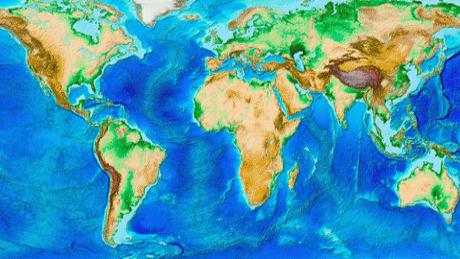
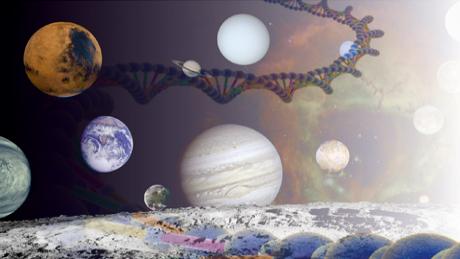
Are you ready to take an incredible journey around Planet Earth and beyond? In this course, you will delve into a world of innovative science and learn from a team of Biosphere 2 and University of Arizona researchers. From plants and soils, to oceans and rainforests, the Moon, Mars, and more, this course is an exciting opportunity for anyone interested in science and Earth stewardship.

Class Deals by MOOC List - Click here and see Coursera's Active Discounts, Deals, and Promo Codes.

Learn how a unique research station in the Arizona desert is used to investigate big ideas, such as how Earth systems interact, the effects of climate change, and what our future holds. Go back in time thousands of years with information locked in ancient trees, and travel into an imagined future where humans become Martians. Collect and analyze your own scientific data, discuss big questions with participants from around the world, and gain novel insights and understanding about our wonderfully unique planet.

Syllabus

WEEK 1
Biosphere 2, an Icon of Possibilities
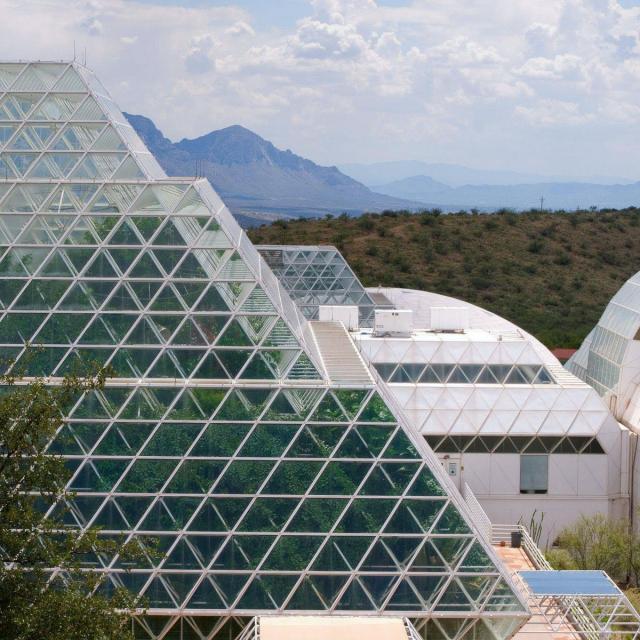
Why would anyone build an enormous glass structure in the Arizona desert? In Module 1, you will get a virtual introduction to the engineering marvel that is Biosphere 2. Learn about the fascinating history of Biosphere 2 and how it is currently used as the world’s best research instrument for earth systems science. Discover how the ocean, rainforest, and desert can be studied in one enclosed, three-acre structure in the Arizona desert. With Dr. Joaquin Ruiz, University of Arizona (UA) Vice President for Innovation, Director of Biosphere 2, Dean of UA Science, Geoscientist, and John Adams, Deputy Director, UA Biosphere 2.

WEEK 2
Climate Disruption
How do we know that human activity is changing the climate? In Module 2, you will hear from scientists who reconstruct past climates by unlocking information held in ancient trees. Discover how tree rings help us understand drought and wildfire patterns across time and space. Learn what global warming is, exactly, and how it is accelerated by carbon emissions. With Dr. Kevin Anchukaitis, Geography and UA Laboratory of Tree-Ring Research, and Dr. David Frank, UA Laboratory of Tree-Ring Research.

WEEK 3
The Science of Water Availability
Where is Earth’s water? In Module 3, you will learn about the global water cycle and discover how much water exists, where it exists, and how it moves around the environment. Learn how Biosphere 2 and Critical Zone research are used to study the water cycle. With Dr. Peter Troch, Director of Science at Biosphere 2, UA Hydrology.

WEEK 4
Desert Plants, Climate, and Changing Landscapes
How can many different species coexist in once place? In Module 4, go beyond Biosphere 2 to UA Tumamoc Hill—the world’s oldest long-term desert ecology research site near the University of Arizona. Learn how living and nonliving components of the environment are related, how different species coexist, and how climate variation affects Sonoran Desert plants. With Dr. Larry Venable, UA Ecology & Evolutionary Biology.

WEEK 5
Rainforests in an Altered World
What can the Biosphere 2 rainforest tell us about the future? Module 5 focuses on tropical rainforests in the Amazon Basin of South America, and the controlled rainforest inside Biosphere 2. Learn about the fascinating activity of tropical forests, the major roles they play in global climate, and the potential impacts of deforestation and climate change. With Dr. Joost Van Haren, Biosphere 2, UA Honors, and Dr. Scott Saleska, UA Ecology & Evolutionary Biology.

WEEK 6
Sea Changes in our Marine Environment
Why are coral reefs in peril, and what can we do about it? In Module 6, discover the immense role that oceans play in global climate, heat distribution, and human livelihoods. Learn why global warming is sometimes called ocean warming, how ocean acidification affects marine life, and innovative ways in which the ocean is studied. With Dr. Julia Cole, U. of Michigan, UA Biosphere 2 Marine Research.

WEEK 7
Soil Science - Foundations & Implications
How can soil be alive? In Module 7, discover the fascinating, microscopic world within soils and their critical role in Earth systems. Learn how soils provide functions and services that make them vital to our health and wellbeing. With Dr. Rachel Gallery, UA School of Natural Resources and the Environment, and Dr. Katerina Dontsova, UA Soil Water & Environmental Science, Biosphere 2.

WEEK 8
Feeding the Future
Can a Mars or Lunar greenhouse help feed people on Earth? In Module 8, learn how space-farming models can be applied on Earth as we move towards a global population of 10 billion people. Discover innovative controlled agricultural systems, learn more about how plants grow, and get a chance to produce your own hydroponically grown vegetables at home! With Dr. Gene Giacomelli, UA Controlled Environment Agriculture Center.

WEEK 9
Life and Resources in Space - Should We Go There?
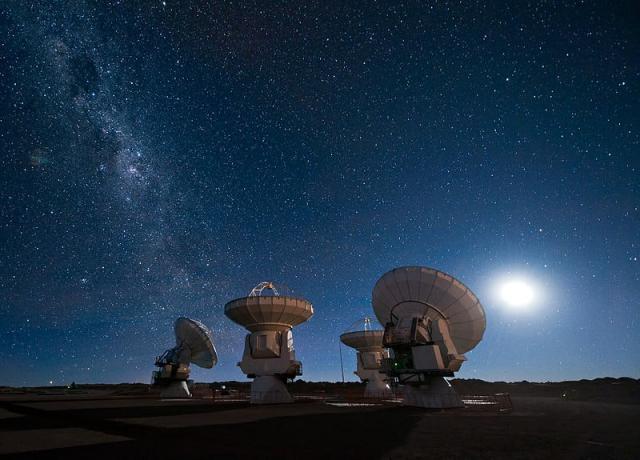
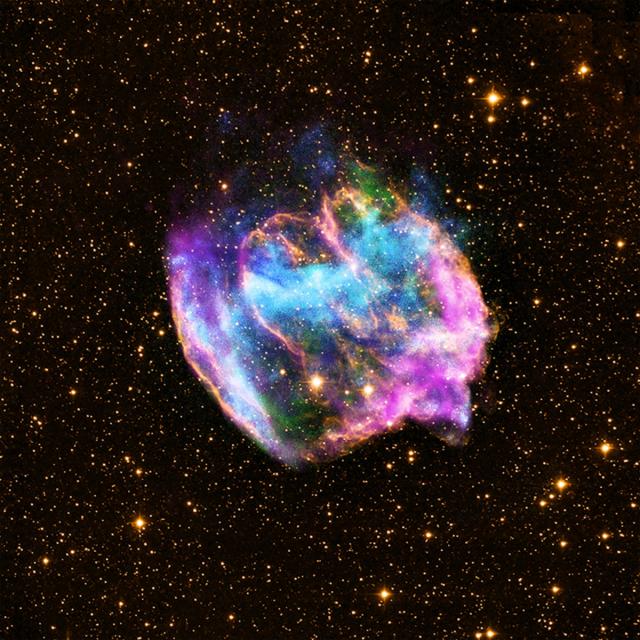
When will humans live beyond Earth’s gravity? Module 9 is a fascinating and inspiring journey into space. Ignite your imagination as you learn about space tourism, asteroid-mining, moon elevators, robotic space explorers, and Mars colonization. While focusing on space, this module is sure to reaffirm your appreciation of Planet Earth. With Dr. Chris Impey, Associate Dean UA College of Science, UA Astronomy.
Go to Class
MOOC List is learner-supported. When you buy through links on our site, we may earn an affiliate commission.

Related Courses

Act on Climate: Steps to Individual, Community, and Political Action (Coursera) Coursera
University of Michigan

Act on Climate: Steps to Individual, Community, and Political Action (Coursera)

Are you concerned about climate change? Would you like to learn how to address and respond to this challenge? If so, this course is for you. Act on Climate: Steps to Individual, Community, and Political Action is intended to help learners understand, address and respond to climate change as individuals and in partnership with their communities and political leaders.

Jun 15th 2026
5-12 Weeks
Public Health Perspectives on Sustainable Diets (Coursera) Coursera
Johns Hopkins University

Public Health Perspectives on Sustainable Diets (Coursera)

What we eat and how we produce that food have significant effects on human health and the sustainability of our planet. But what is a ‘sustainable’ diet? A sustainable diet, as defined by the FAO, promotes health and well-being and provides food security for the present population while sustaining human and natural resources for future generations. This short course looks at the urgent need to address the sustainability of our food systems, including better understanding the complex relationship between diet and climate change. We’ll explore current research on dietary shifts needed in high, middle, and low-income countries to achieve both sustainability and food security goals and discuss evidence-based strategies to promote sustainable diets.

Jun 15th 2026
3 Weeks
Introduction to Genetics and Evolution (Coursera) Coursera
Duke University

Introduction to Genetics and Evolution (Coursera)

Introduction to Genetics and Evolution is a college-level class being offered simultaneously to new students at Duke University. The course gives interested people a very basic overview of some principles behind these very fundamental areas of biology. We often hear about new "genome sequences," commercial kits that can tell you about your ancestry (including pre-human) from your DNA or disease predispositions, debates about the truth of evolution, why animals behave the way they do, and how people found "genetic evidence for natural selection." This course provides the basic biology you need to understand all of these issues better, tries to clarify some misconceptions, and tries to prepare students for future, more advanced coursework in Biology (and especially evolutionary genetics). No prior coursework is assumed.

Jun 8th 2026
5-12 Weeks
Philosophy of Science (Coursera) Coursera
University of Pennsylvania

Philosophy of Science (Coursera)

For the last four centuries, scientists have aimed to provide us with an understanding of the world around us. By all appearances, science has made substantial progress during this time. But is this progress real or illusory? And if it is real, how has this progress been made? This four-week course will consider these important questions.

Jun 15th 2026
4 Weeks
Writing in the Sciences (Coursera) Coursera
Stanford University

Writing in the Sciences (Coursera)

This course teaches scientists to become more effective writers, using practical examples and exercises. Topics include: principles of good writing, tricks for writing faster and with less anxiety, the format of a scientific manuscript, peer review, grant writing, ethical issues in scientific publication, and writing for general audiences.

Jun 15th 2026
5-12 Weeks
Introduction to Systems Biology (Coursera) Coursera
Icahn School of Medicine at Mount Sinai

Introduction to Systems Biology (Coursera)

This course will introduce the student to contemporary Systems Biology focused on mammalian cells, their constituents and their functions. Biology is moving from molecular to modular. As our knowledge of our genome and gene expression deepens and we develop lists of molecules (proteins, lipids, ions) involved in cellular processes, we need to understand how these molecules interact with each other to form modules that act as discrete functional systems.

Jun 15th 2026
5-12 Weeks
Beyond the Sustainable Development Goals (SDGs): Addressing Sustainability and Development (Coursera) Coursera
University of Michigan

Beyond the Sustainable Development Goals (SDGs): Addressing Sustainability and Development (Coursera)

We’re excited you’re here! This course, “Beyond the Sustainable Development Goals (SDGs): Addressing Sustainability and Development,” is the first course in the upcoming Sustainability and Development MasterTrack Certificate program (Fall 2020), but you can also take this course as a stand-alone learning opportunity.

Jun 17th 2026
5-12 Weeks
Population, Food, and Soil (Coursera) Coursera
Dartmouth College

Population, Food, and Soil (Coursera)

This course explores the population-environment relationship. In this course, you will learn about the human population and the ways in which changes in the population affect the environment. Agriculture, soils, and the environmental implications of eating meat, vegetables, local, organic, sustainable, industrial, and other types of food are discussed too.

Jun 15th 2026
4 Weeks
Advanced Neurobiology I (Coursera) Coursera
Peking University

Advanced Neurobiology I (Coursera)

Hello everyone! Welcome to advanced neurobiology! Neuroscience is a wonderful branch of science on how our brain perceives the external world, how our brain thinks, how our brain responds to the outside of the world, and how during disease or aging the neuronal connections deteriorate. We’re trying to understand the molecular, cellular nature and the circuitry arrangement of how nervous system works.

Jun 15th 2026
5-12 Weeks
Planning with Climate Change in Mind (Coursera) Coursera
University of Colorado Boulder

Planning with Climate Change in Mind (Coursera)

This course focuses on the climate impacts occurring and expected to occur across the United States. Our approach will be regional and sectoral, with consideration of impacts on water resources, transportation, energy, agriculture, forests, health, and coastal/marine resources. We will also look at how you can apply information about climate risks to motivate climate action in your household, in your community, or in your workplace.

Jun 15th 2026
3 Weeks
What is Climate Change? (Coursera) Coursera
University of Colorado Boulder

What is Climate Change? (Coursera)

In this course, learners will become familiar with the scientific evidence that demonstrates human-caused climate change. We will explore how greenhouse gases cause the Earth to warm, and why our recent warming is attributed to human activities. We will also discuss where our climate is headed, including anticipated future temperature, precipitation, and sea level. Learners will engage with the consequences of these changes on our ecosystems, infrastructure, and communities.

Jun 15th 2026
3 Weeks