Baroque Art to Neoclassicism (saylor.org)

Offered by Saylor.org,
Baroque Art to Neoclassicism (saylor.org)

This course will examine the history of Western art from approximately 1600 to approximately 1800—a period that bridges the gap from the Renaissance to the earliest days of the Modern era.

Beginning with the Baroque in Counter-Reformation Italy and concluding with Neoclassicism in the late 18th century, we will trace the stylistic developments in Europe and America through a variety of religious, political, and philosophical movements. The class begins with the Baroque, which was the immediate successor to the Renaissance and to Renaissance humanism, and we will examine this period by regions (Italy and Spain, the Netherlands, and France and England). Next, the course moves on to explore the development of two opposing styles that emerged in the 18th century: Rococo and Enlightenment art. The course culminates with Neoclassical art, its development in a politically turbulent France, and its spread into other Western cultures, including Italy, England, and the United States.
Crucial to this course is the emergence of characteristics (artistic, social, political, scientific, philosophical, and religious) that anticipate the issues faced by Modern society in the 18th century and after. Long-accepted institutions, such as the Catholic Church and the monarchy, reached their zenith in this environment and were ultimately challenged. Reading assignments and lectures will present an overview of this material, revealing the deep connection between a culture’s sociopolitical climate and its art. By the time you finish this course, you will be familiar with the most important art and artists of Western civilization from approximately 1600 to 1800. You will also have a greater understanding of the most important social and political debates of the time. Moreover, you will be able to explain and discuss the ways in which the themes, styles, and patronage of works of art relate to the social, political, and religious environments in which they were produced. The content covered in this course will prepare you to study Modern art in the West.

Course Requirements: Have completed Art Appreciation and Techniques, Introduction to Western Art History—Pre-Historic to High Gothic, and Introduction to Western Art History—Proto-Renaissance to Contemporary Art.
Go to Class
MOOC List is learner-supported. When you buy through links on our site, we may earn an affiliate commission.

Related Courses

O Real Paço Mafra: do Magnânimo ao Clemente (UAb) Universidade Aberta
Universidade Aberta

O Real Paço Mafra: do Magnânimo ao Clemente (UAb)

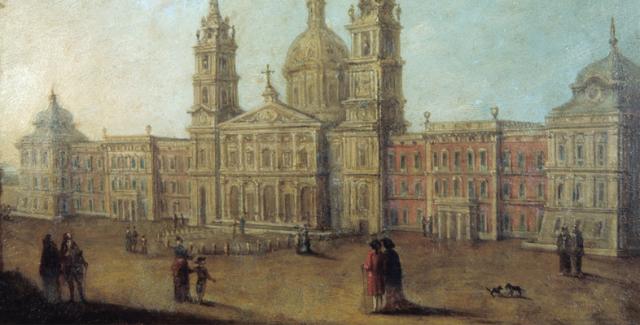
Erguido numa lógica de afirmação do poder real, o Real Paço de Mafra está intimamente ligado à figura de D. João V. Mas a adaptação a novos tempos, a evolução do gosto, o terramoto de 1755 e as campanhas de Napoleão vão determinar a forma como o Paço vai sendo (ou não) habitado ao longo do século XVIII. Outro monarca, D. João VI, deixará também a sua marca neste que era um dos seus Paços favoritos. Conheça neste curso esta e outras dimensões da história do Palácio.

Self Paced
Self-Paced
Seeing Through Photographs (Coursera) Coursera
The Museum of Modern Art

Seeing Through Photographs (Coursera)

Although taking, sharing, and viewing photographs has become second nature for many of us, our regular engagement with images does not necessarily make us visually literate. This course aims to address the gap between seeing and truly understanding photographs by introducing a diversity of ideas, approaches, and technologies that inform their making. In this course you will look closely at 100 photographs from the collection of The Museum of Modern Art, going behind the scenes of the Museum and into artist studios through original films and audio interviews.

Oct 19th 2026
5-12 Weeks
Age of Cathedrals (Coursera) Coursera
Yale University

Age of Cathedrals (Coursera)

An introduction to some of the most astonishing architectural monuments the world has ever known—Gothic cathedrals. We shall study the art, literature, intellectual life, economics, and new social arrangements that arose in the shadow of the cathedrals and that were such an important part of the revival of cities in the twelfth and thirteenth centuries. The goal of the course is a better appreciation of the High Middle Ages, a world that is still recognizably our own.

Oct 26th 2026
5-12 Weeks
African Art (saylor.org) Saylor Academy
Saylor.org

African Art (saylor.org)

This course will introduce you to the art and architecture of Africa from a Western art historical perspective. This Western perspective is influenced by developments in modern European art, which have claimed African art as an inspiration for more “primitive,” intuitive art forms.

Legacy Course
Self-Paced
Women in Arts: From 1900 until today (FutureLearn) FutureLearn
Centre Pompidou

Women in Arts: From 1900 until today (FutureLearn)

Discover the women creators who shaped modern and contemporary art and those who continue to make huge impacts today. Delve into art history through the extraordinary works of women artists. On this seven-week course, you’ll journey through an alternative history of modern and contemporary art – one that is centred on the brilliant women creators in the movement.

Nov 15th 2021
5-12 Weeks
Western and Chinese Art: Masters and Classics (edX) EdX
Tsinghua University,TsinghuaX

Western and Chinese Art: Masters and Classics (edX)

From da Vinci to Zhang Xu, Wu Daozi and Warhol, explore immortal works of Western and Chinese art and gain an appreciation of culture, history and civilization. Throughout human history, art has served as a window into current events, traditions, societies and culture. And, Chinese and Western civilizations have produced some of the most famous artworks by world-renowned artists.

Self Paced
Self-Paced
Greek and Roman Mythology (Coursera) Coursera
University of Pennsylvania

Greek and Roman Mythology (Coursera)

Myths are traditional stories that have endured over a long time. Some of them have to do with events of great importance, such as the founding of a nation. Others tell the stories of great heroes and heroines and their exploits and courage in the face of adversity. Still others are simple tales about otherwise unremarkable people who get into trouble or do some great deed. What are we to make of all these tales, and why do people seem to like to hear them? This course will focus on the myths of ancient Greece and Rome, as a way of exploring the nature of myth and the function it plays for individuals, societies, and nations. We will also pay some attention to the way the Greeks and Romans themselves understood their own myths.

Oct 19th 2026
5-12 Weeks
American Art (saylor.org) Saylor Academy
Saylor.org

American Art (saylor.org)

This course surveys art of America from the colonial era through the post-war 20th century. We will consider broad stylistic tendencies in various regions and periods and examine specific artists and works of art in historical and social contexts, with emphasis on the congruent evolution of contemporary American multi-cultural identity.

Legacy Course
Self-Paced