African Art (saylor.org)

Offered by Saylor.org,
African Art (saylor.org)

This course will introduce you to the art and architecture of Africa from a Western art historical perspective. This Western perspective is influenced by developments in modern European art, which have claimed African art as an inspiration for more “primitive,” intuitive art forms.

This course will introduce you to the art and architecture of Africa from a Western art historical perspective. This Western perspective is influenced by developments in modern European art, which have claimed African art as an inspiration for more “primitive,” intuitive art forms. Note that the visual arts, as traditionally performed and held in various African societies, are largely incongruent with Western artistic values. For example, most traditional African art was not meant to be displayed, but rather viewed when in use and in motion, especially in mixed-media masquerades. Meanwhile, body adornment and textiles have long been important forms of visual communication and expression in Africa, whereas painting, common in Western art, is not a historically prevalent practice in many African regions. These cultural gaps cannot be overcome, but this course will try to recognize and consider them in examining and appreciating specific objects.

The objects, images, and sites featured in this course represent a small cross-section of the diverse ethnic and artistic heritage in Africa. This course will emphasize the role of art as manifested in the lifestyles, spiritualities, and philosophies of particular African societies, while also broaching aesthetic principles and the study and display of African art.

Viewing original works in person is important for any study of art. Public museums throughout the West display examples of historical African art, secured mainly during the time spanning the height of the European slave trade through the end of the colonial era and well into the 20th century. Additionally, contemporary African art has been widely collected and exhibited throughout the world in recent decades. If at all possible, you should do the self-evaluative assignment at the end of Unit 4, in which you are asked to write about at least one work, and preferably several, of African art that you have viewed in a museum or gallery. You will also encounter a number of other “homework” assignments, which should serve as learning tools, helping you absorb the material and get an idea of what specialty studies of African art history entails.

Lastly, note that as with most translated material, you will find slight variations in English transcriptions of African names across resources. Click on all images encountered in the websites below, as doing so will usually enlarge the image and reveal more detail in the artwork. Finally, be sure to take note of the data provided with the artwork reproductions, such as the size, medium (material), and place of origin.

Upon successful completion of this course, you will be able to:

demonstrate an understanding of transitions in the national geography of the African continent from the 17th century to the present;
demonstrate an understanding of the ethnic diversity and distinct cultural traditions among the peoples of Africa;
identify and discuss materials and techniques employed in the creation of a range of African artistic and architectural works;
discuss the functions and meanings of a range of African art forms; and
identify traditional styles and forms strongly associated with particular cultural groups.
Go to Class
MOOC List is learner-supported. When you buy through links on our site, we may earn an affiliate commission.

Related Courses

Contemporary Art (saylor.org) Saylor Academy
Saylor.org

Contemporary Art (saylor.org)

This course will survey contemporary art, starting with the 1960s and concluding in 2010. While the focus is on Western art and culture, we will also explore a selection of contemporary art and artistic practices around the globe, which have become increasingly influential in the definition of contemporary art today.

Legacy Course
Self-Paced
The Blues: Understanding and Performing an American Art Form (Coursera) Coursera
University of Rochester

The Blues: Understanding and Performing an American Art Form (Coursera)

The blues is an American art form and the most important musical form in jazz. Although there are other formal paradigms of the blues, such as 8-bar or 16-bar, this course focuses on different incarnations of the 12-bar blues. There are considerable differences between Early Jazz blues, Swing blues, Bebop blues, Modal blues, and Post Bop blues.

Aug 10th 2026
5-12 Weeks
Sharpened Visions: A Poetry Workshop (Coursera) Coursera
California Institute of the Arts

Sharpened Visions: A Poetry Workshop (Coursera)

Why just write poems when you can write better ones? This course is built on the notion that the most exciting writing begins after the first draft. It is specifically for folks who believe that writing poems just to express oneself is like using the Internet just for email. After all, poetry can change the way you and your readers think of the world and its inhabitants; it can break new ground for language; turn a blank sheet of paper into a teeming concert of voices and music.

Aug 3rd 2026
5-12 Weeks
Representaciones Culturales de las Sexualidades (Coursera) Coursera
Universitat Autònoma de Barcelona

Representaciones Culturales de las Sexualidades (Coursera)

Desde los estudios de género, los estudios queer y los estudios culturales, este curso quiere familiarizaros con las representaciones culturales de las sexualidades no normativas en la cultura contemporánea. Planteamos diversos marcos teóricos y ejemplos prácticos a partir de los cuales reflexionar sobre las construcciones corporales e identitarias de las personas lesbianas, gays, transgénero, transexuales, queer, heterosexuales, etc. en diversos soportes culturales como el cine, la literatura, internet, la televisión o las artes plásticas.

Aug 3rd 2026
5-12 Weeks
Transmedia Storytelling: Narrative worlds, emerging technologies, and global audiences (Coursera) Coursera
UNSW Sydney - University of New South Wales

Transmedia Storytelling: Narrative worlds, emerging technologies, and global audiences (Coursera)

Transmedia storytelling is the practice of designing, sharing, and participating in a cohesive story experience across multiple traditional and digital delivery platforms - for entertainment, advertising and marketing, or social change. Have you ever read a book, seen a movie, watched a television show, or played a game that centred around different aspects of a larger story or universe? You may be familiar with popular examples of such universes like Star Wars, Marvel, and The Walking Dead (to name a few). How do the professionals develop such expansive narratives? How do they ensure that each element stays true to the original story? How do they innovatively use different technologies to share the stories, grow audiences and create an active and involved community of fans?

Aug 10th 2026
5-12 Weeks
The Holocaust - An Introduction (II): The Final Solution (Coursera) Coursera
Tel Aviv University,Yad Vashem

The Holocaust - An Introduction (II): The Final Solution (Coursera)

The Holocaust was an inconceivable historical event, which forever robbed Western culture of its innocence. As civilized human beings, we fail to understand how events of such horror could have taken place, and how an idea so inhumanly warped could have spread like wildfire through an entire continent, instigating the systematic annihilation of millions of Jews.

Aug 10th 2026
3 Weeks
Art & Ideas: Teaching with Themes (Coursera) Coursera
The Museum of Modern Art

Art & Ideas: Teaching with Themes (Coursera)

This course is designed to help build critical skills that support theme-based teaching practices and build confidence in incorporating modern and contemporary art into interdisciplinary lesson plans. By addressing themes and questions that arise in relation to modern and contemporary art, the course will help you to think creatively about links to your curriculum and the ways that you can tap into students’ knowledge and life experience.

Aug 10th 2026
5-12 Weeks
Arch of Titus: Rome and the Menorah (Coursera) Coursera
Yeshiva University

Arch of Titus: Rome and the Menorah (Coursera)

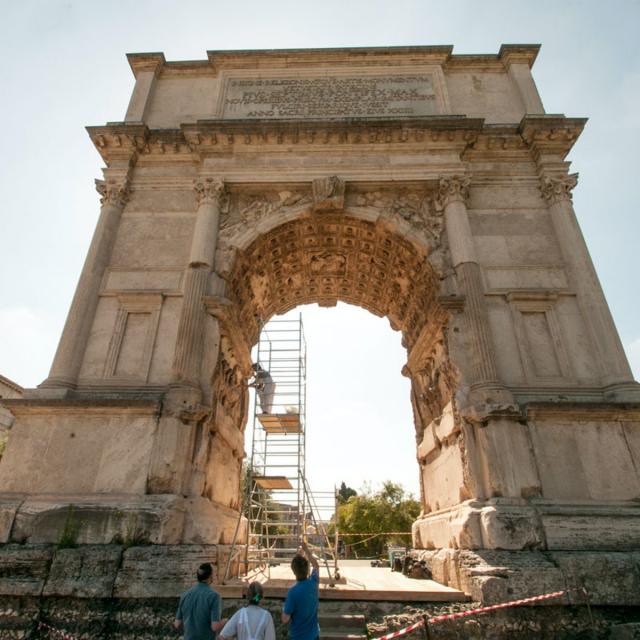
The Arch of Titus: Rome and the Menorah explores one of the most significant Roman monuments to survive from antiquity, from the perspectives of Roman, Jewish and later Christian history and art. The Arch of Titus commemorates the destruction of Jerusalem by the emperor Titus in 70 CE, an event of pivotal importance for the history of the Roman Empire, of Judaism, of Christianity and of modern nationalism. Together with your guide, Professor Steven Fine, you will examine ancient texts and artifacts, gaining skills as a historian as you explore the continuing significance of the Arch of Titus from antiquity to the very present.

Aug 3rd 2026
5-12 Weeks
Art & Activity: Interactive Strategies for Engaging with Art (Coursera) Coursera
The Museum of Modern Art

Art & Activity: Interactive Strategies for Engaging with Art (Coursera)

Art can be a powerful catalyst for building skills and understanding a range of subjects. Intended for primary and secondary teachers of all disciplines, Art & Activity builds upon the inquiry-based approaches of Art and Inquiry: Museum Teaching Strategies for Your Classroom, while delving into activity-based strategies that will make your students empowered participants.

Aug 3rd 2026
4 Weeks
The Italian Proto-Renaissance To Mannerism (saylor.org) Saylor Academy
Saylor.org

The Italian Proto-Renaissance To Mannerism (saylor.org)

In this course, we will focus on becoming “literate” in the art of the Italian Renaissance, on identifying the effects that the Renaissance had on the arts of Italy, and discovering the ways in which specific historical developments impacted those arts from the end of the thirteenth century to the end of the sixteenth century.

Legacy Course
Self-Paced