Arts of Latin America (saylor.org)

Offered by Saylor.org,
Arts of Latin America (saylor.org)

A chronological and thematic survey of the major themes and developments in the history of Latin American art, this course traces the evolution of visual culture over approximately four millennia. Organized into three parts, the course begins with the pre-Columbian period (1800 BC to AD 1492), moves into the years of European contact and conquest (AD 1492 to 1800), and concludes with an overview of modern and contemporary art across the Americas.

A chronological and thematic survey of the major themes and developments in the history of Latin American art, this course traces the evolution of visual culture over approximately four millennia. Organized into three parts, the course begins with the pre-Columbian period (1800 BC to AD 1492), moves into the years of European contact and conquest (AD 1492 to 1800), and concludes with an overview of modern and contemporary art across the Americas. You will learn to identify and describe works of art and discuss the broader historical and social contexts in which they were produced and circulated.

The first part of the course will introduce you to the major artistic achievements and archaeological record of the ancient Mesoamerican and Andean cultures: monumental architecture, urban planning, painting, sculpture, and portable arts. The study of colonial art focuses on Mexico, Peru, and Brazil, introducing concepts of artistic hybridity and diversity, indigenous and national cultures, and transatlantic encounters and exchange. Turning finally to the nineteenth and twentieth centuries, the course considers artistic production in such avant-garde city-centers as Mexico City, Buenos Aires, and São Paulo. Throughout the course, you will consider thematic questions relating to the expression of Latin American identities, the relationships between art, religion, and politics, and the nature of “non-Western” art.

Building on the foundations of the Core Program, Arts of Latin America offers a focused survey of art that is often excluded from conventional canons of the field. If you are familiar with Western Art History, this course will expose you to a fascinating, parallel history of art that challenges and enriches your knowledge of how art evolved globally over time.

Upon successful completion of this course, the student will be able to:

Identify major monuments and works of art from Latin America, recalling such information as the name of the artist or culture, date or period, medium, location, and title.
Construct a visual analysis of a single artwork or a small group of works through the identification of visual form, thematic content, and historical context.
Discuss major movements in Latin American art and identify their characteristics.
Recognize stylistic developments and trace influences between different Latin American cultures and over periods of time.
Explain the relationship between artworks from Latin America and the cultural, social, economics, and political contexts in which they functioned and were produced.
Discuss critical themes relating to the definition of Latin American art and its relationship to “Western” art history.

Go to Class
MOOC List is learner-supported. When you buy through links on our site, we may earn an affiliate commission.

Related Courses

From Brand to Image: Creating High Impact Campaigns That Tell Brand Stories (Coursera) Coursera
IE Business School

From Brand to Image: Creating High Impact Campaigns That Tell Brand Stories (Coursera)

There are many different ways to approach clients to assess their needs and develop creative campaigns which fulfill your creative desires. Many agencies have established methodology, terminology and processes, and oftentimes, have spent decades or even years developing these processes. However, whether you are a freelancer, designer, illustrator, photographer or marketing director, or perhaps a small business owner, you will be looking to develop a simple process to create campaigns for yourself or your client.

Sep 14th 2026
4 Weeks
Contemporary Art (saylor.org) Saylor Academy
Saylor.org

Contemporary Art (saylor.org)

This course will survey contemporary art, starting with the 1960s and concluding in 2010. While the focus is on Western art and culture, we will also explore a selection of contemporary art and artistic practices around the globe, which have become increasingly influential in the definition of contemporary art today.

Legacy Course
Self-Paced
I. Missões jesuíticas nos territórios guaranis: história (Coursera) Coursera
Universidade de São Paulo, Brasil

I. Missões jesuíticas nos territórios guaranis: história (Coursera)

Conhecer a história não é uma exigência para eruditos ou especialistas, mas é um recurso necessário para o exercício da cidadania e a valorização da dignidade humana em suas diversas dimensões. Através de dois cursos, propomos o conhecimento da história das Missões Jesuíticas na região guaranítica. Este processo ocorreu desde os inícios do século XVII a meados do século XVIII, envolvendo ampla área geográfica correspondente aos atuais estados de Paraguai, Argentina (Misiones), Brasil (Rio Grande do Sul, Paraná, Santa Catarina), Uruguai e Bolívia.

Sep 14th 2026
2 Weeks
La nueva industria eléctrica en México (edX) EdX
Tecnológico de Monterrey,TecdeMonterreyX

La nueva industria eléctrica en México (edX)

Comprender la reforma al sector eléctrico y los nuevos negocios en generación y comercialización de insumos, electricidad y productos asociados. ¿Sabías que México fue uno de los últimos países que tuvo una reestructura del sector eléctrico? El sector eléctrico es muy importante y tiene un fuerte impacto en la competitividad del país. La reforma al sector eléctrico mexicano abre oportunidades para que el estado y la iniciativa privada colaboren entre ellos.

Self Paced
Self-Paced
Corn, Fire, & Spice: A Blueprint for Making Enchiladas Verdes (Skillshare) Skillshare
Skillshare

Corn, Fire, & Spice: A Blueprint for Making Enchiladas Verdes (Skillshare)

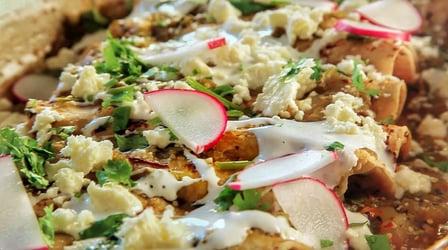
Bold. Delicious. And packed with flavor. Who doesn’t love enchiladas? In this fast-paced class, geared towards the beginner, you’ll learn the basics of making green chicken enchiladas with an array of traditional ingredients, using the time-honored (read: secret) techniques of the Mexican kitchen, from charring on a comal to frying sauces, on your way to making luscious, deep-flavored enchiladas.

Self Paced
Self-Paced
La Reforma Energética de México y sus oportunidades (edX) EdX
Tecnológico de Monterrey,TecdeMonterreyX

La Reforma Energética de México y sus oportunidades (edX)

Explica los principales cambios y las oportunidades de nuevos negocios que facilita la reforma energética de México. ¿Sabías que la reforma energética en México es uno de los cambios más importantes que ha ocurrido en el país en los últimos 70 años? ¿Sabes cuál es el alcance de la reforma en la economía mexicana y cómo te impacta?

Self Paced
Self-Paced
Understanding the Music Business: What is Music Worth? (Coursera) Coursera
Vanderbilt University

Understanding the Music Business: What is Music Worth? (Coursera)

This course will examine the music industry in the United States, with the unique perspective gained by Vanderbilt University’s location in Nashville, TN. Nashville is a major center of music in the United States, and the music created here has a global reach, particularly in the country, rock, pop, singer-songwriter, and Americana genres. However, students will learn that the basic principles of recording, marketing, copyright, licensing, and live performance are the same, regardless of musical style or genre.

Sep 14th 2026
5-12 Weeks
Principles of fMRI 1 (Coursera) Coursera
Johns Hopkins University

Principles of fMRI 1 (Coursera)

Functional Magnetic Resonance Imaging (fMRI) is the most widely used technique for investigating the living, functioning human brain as people perform tasks and experience mental states. It is a convergence point for multidisciplinary work from many disciplines. Psychologists, statisticians, physicists, computer scientists, neuroscientists, medical researchers, behavioral scientists, engineers, public health researchers, biologists, and others are coming together to advance our understanding of the human mind and brain. This course covers the design, acquisition, and analysis of Functional Magnetic Resonance Imaging (fMRI) data, including psychological inference, MR Physics, K Space, experimental design, pre-processing of fMRI data, as well as Generalized Linear Models (GLM’s).

Sep 14th 2026
4 Weeks