Contemporary Art (saylor.org)

Offered by Saylor.org,
Contemporary Art (saylor.org)

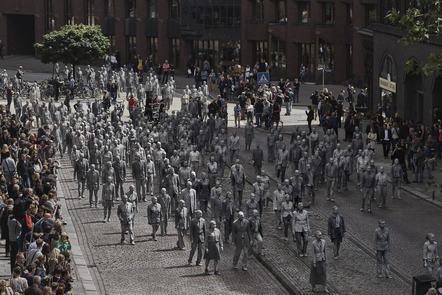
This course will survey contemporary art, starting with the 1960s and concluding in 2010. While the focus is on Western art and culture, we will also explore a selection of contemporary art and artistic practices around the globe, which have become increasingly influential in the definition of contemporary art today.

In common conversation, we often use the phrase “contemporary art” to refer to current artistic production—the art being produced today. However, in the art history field, the phrase denotes a specific period of art and artistic practice starting in the 1960s and continuing today. It is characterized by a break from the modernist artistic canon and a desire to move away from the dominant Western cultural model, looking for inspiration in everyday and popular culture. More specifically, many contemporary artworks reject traditional modernistic artistic media (such as painting or sculpture) in favor of a more collaborative, ephemeral, and multimedia approach that further blurs the boundaries between high and mass culture. In its subject matter, this art also tends to reflect a shift away from purely aesthetic issues to more socially oriented concerns. Finally, it is important to note that contemporary art should not be seen as a progression of different artistic styles but as series of different cultural, social, and political inquiries that occupied contemporary art practice over the course of the past 50 years or so. We will examine these important aesthetic and cultural changes within their historical and social context as we progress through this course.
Each of the units will examine a set of specific aesthetic and social issues and look at the different strategies contemporary artists proposed and used in their work. By the end of this course, you should be able to recognize and interpret most important aspects of contemporary art and contemporary visual culture while better understanding some of the cultural and social aspects of our daily life in today’s global world.
Upon successful completion of this course, the student will be able to:

  • Identify significant works of contemporary art and visual culture.
  • Describe the difference between modernist and contemporary works of art.
  • Explain the geographical shift of artistic centers from Europe (Paris) to the United States (New York), and then in the 21st century to a global spreading (Asia and Africa).
  • Define and discuss the development of contemporary art as a series of different cultural, social, and political inquiries over the past 50 years.
  • Identify and discuss multiple and vital relationships between contemporary art and such broader social and cultural issues as ideology, gender, race, or ethnicity.
  • Describe and explain a relationship between different contemporary art strategies, such as performance or installation, and their immediate social and cultural context.
  • Discuss how important contemporary artworks relate to their social and historical contexts.
  • Define contemporary art as a continuing, international artistic project.
  • Identify and define the importance of contemporary art and contemporary visual culture in today’s increasingly globalized world.

Requirements:
Have completed all courses listed in the Core Program of the art history discipline: Art Appreciation and Techniques, Introduction to Western Art History: Prehistoric to High Gothic, Introduction to Western Art History: Proto-Renaissance to Contemporary Art and Art Historical Methodologies.

Go to Class
MOOC List is learner-supported. When you buy through links on our site, we may earn an affiliate commission.

Related Courses

Art & Ideas: Teaching with Themes (Coursera) Coursera
The Museum of Modern Art

Art & Ideas: Teaching with Themes (Coursera)

This course is designed to help build critical skills that support theme-based teaching practices and build confidence in incorporating modern and contemporary art into interdisciplinary lesson plans. By addressing themes and questions that arise in relation to modern and contemporary art, the course will help you to think creatively about links to your curriculum and the ways that you can tap into students’ knowledge and life experience.

Jun 15th 2026
5-12 Weeks
Women in Arts: From 1900 until today (FutureLearn) FutureLearn
Centre Pompidou

Women in Arts: From 1900 until today (FutureLearn)

Discover the women creators who shaped modern and contemporary art and those who continue to make huge impacts today. Delve into art history through the extraordinary works of women artists. On this seven-week course, you’ll journey through an alternative history of modern and contemporary art – one that is centred on the brilliant women creators in the movement.

Nov 15th 2021
5-12 Weeks
ART of the MOOC: Activism and Social Movements (Coursera) Coursera
Duke University,Creative Time

ART of the MOOC: Activism and Social Movements (Coursera)

This course is for activists, artists, and thinkers who wish to better understand and participate in social change. We will focus on the prolific and exciting overlap between socially engaged art and cultural practices generated by recent social movements around the world. Rather than assess the political efficacy of activities like mourning, listening, organizing, dancing, or partying, the lectures examine such cultural activities next to, and within, contemporary art practice.

Jun 22nd 2026
5-12 Weeks
Early Christian and Byzantine Art (saylor.org) Saylor Academy
Saylor.org

Early Christian and Byzantine Art (saylor.org)

In this course, we will study the history of Eastern (Orthodox) Christian art. The course begins with an overview of the emergence of Christianity in the Late Antique period and the formation of the Christian visual language that grew out of the Classical tradition. The course then follows the development of Christian art after the fall of the Roman Empire and the emergence of a “new Rome” in the East: the Byzantine Empire.

Legacy Course
Self-Paced
La percepción del paisaje (edX) EdX
Universidad Autonoma de Madrid,UAMx

La percepción del paisaje (edX)

En este MOOC nos proponemos dos objetivos: recrear la historia del paisaje y percibirlo no sólo por la vista, sino por los cinco sentidos. De forma que veremos cómo se ha ido pasando de una percepción frontal del paisaje (la del caminante y el navegante), a una lateral (la de las ventanillas del ferrocarril) y a otra vertical (la de los submarinos y los satélites espaciales). Y desde la aparición de internet ha surgido otra dimensión: el paisaje virtual.

Self Paced
Self-Paced
Discovering Socially Engaged Art in Contemporary China (FutureLearn) FutureLearn
City University of Hong Kong

Discovering Socially Engaged Art in Contemporary China (FutureLearn)

Find out about inspiring projects created by Chinese artists to address important social issues, with this free online course. China has experienced dramatic changes over the past four decades - while the country is becoming more affluent, it’s also facing complex social issues. A number of Chinese artists have responded to these issues through powerful art.

No sessions available
5-12 Weeks
ART of the MOOC: Activismo y Movimientos Sociales (Coursera) Coursera
Duke University,Creative Time

ART of the MOOC: Activismo y Movimientos Sociales (Coursera)

Este curso es para activistas, artistas y pensadores que deseen entender mejor el cambio social y participar en él. El contenido del curso enfoca en la coincidencia prolífica y emocionante entre el arte socialmente comprometido y prácticas culturales generadas por recientes movimientos sociales en todo el mundo. Más que evaluar la eficacia política de actividades como el luto, la escucha, la organización, el baile, o la fiesta, las conferencias examinan tales actividades culturales al lado y dentro de la práctica artística contemporánea.

Jun 22nd 2026
5-12 Weeks
Creative Writing: The Craft of Setting and Description (Coursera) Coursera
Wesleyan University

Creative Writing: The Craft of Setting and Description (Coursera)

In this course aspiring writers will be introduced to the techniques that masters of fiction use to ground a story in a concrete world. From the most realist settings to the most fantastical, writers will learn how to describe the physical world in sharp, sensory detail. We will also learn how to build credibility through research, and to use creative meditation exercises to deepen our own understanding of our story worlds, so that our readers can see all that we imagine.

Jun 22nd 2026
4 Weeks
Creative Writing: The Craft of Plot (Coursera) Coursera
Wesleyan University

Creative Writing: The Craft of Plot (Coursera)

In this course aspiring writers will be introduced to perhaps the most elemental and often the most challenging element of story: plot. We will learn what keeps it moving, how it manipulates our feelings, expectations, and desires. We will examine the choices storytellers make to snag our imaginations, drag them into a fictional world, and keep them there. We will learn how to outline and structure a plot, discuss narrative arc, pacing and reversals and reveal the inevitable surprise: connecting the beginning, middle and end.

Jun 22nd 2026
4 Weeks
American Art (saylor.org) Saylor Academy
Saylor.org

American Art (saylor.org)

This course surveys art of America from the colonial era through the post-war 20th century. We will consider broad stylistic tendencies in various regions and periods and examine specific artists and works of art in historical and social contexts, with emphasis on the congruent evolution of contemporary American multi-cultural identity.

Legacy Course
Self-Paced