Introduction to Archaeology : Archaeology as Science (Coursera)

Offered by Rice University,
Introduction to Archaeology : Archaeology as Science (Coursera)

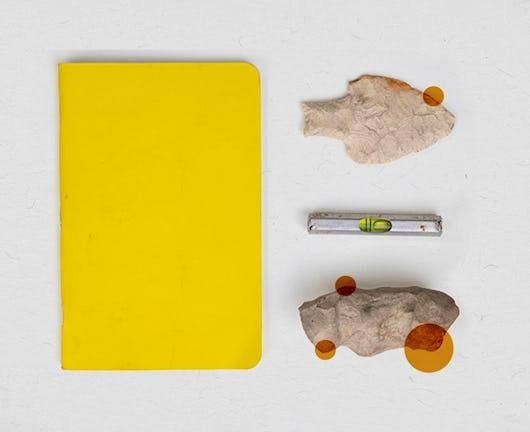
This course is the second in a series on the discipline of Archaeology. It is intended for learners at all stages, including advanced high school, college students, or life-long learners. Basic information about Archaeology and its history are presented in the previous introductory course.

Class Deals by MOOC List - Click here and see Coursera's Active Discounts, Deals, and Promo Codes.

This course covers scientific methods commonly used by archaeologists. The following two courses teach about forms of interpretation and contemporary social issues that archaeologists engage with.
This course is part of the Introduction to Archaeology Specialization.

Syllabus

Introduction
Welcome to "Archaeology as Science" course! Here, we'll explore how archaeologists use scientific methods to uncover the mysteries of the past. From excavation to remote sensing, we'll dive into the tools and techniques they use to reconstruct past behaviors and understand human settlement patterns. Join us on this fascinating journey into the world of archaeology!

The Science of Living Spaces
In "The Science of Living Spaces" module, we'll explore the history behind a plantation house built in the 1830s by enslaved people. Using historical documents and archaeology, we'll investigate the lives of those who lived and worked there, including the impact of the convict leasing system after emancipation. Join us to expand your knowledge of the past and honor their lives!

The Science of Environments
Hey there! Are you curious about how scientists uncover clues about past environments? Ever wonder what the world looked like thousands of years ago? If you answered yes, then you're in the right place! In this module, we'll explore the fascinating science of paleoenvironments and human ecology. Discover how archaeologists use various types of materials to reconstruct past environments, from ancient sediments to human artifacts. Get ready to delve into the mysteries of the past and learn about the incredible techniques used to unravel them!

The Science of The Human Diet
In this module, we'll explore the science of the human diet. We'll study ancient animal bones, biomolecules, and stable isotopes to understand how food has shaped our past. We'll also look at the cultural significance of food, from cooking to societal changes. As we investigate human diets, we'll find out how they relate to environmental shifts, population dynamics, and cultural evolution. We'll also discover how ancient people weathered climate change and adapted to new environments. From declines in human health associated with transitions to farming to the intricacies of daily life, the foods we eat can reveal a wealth of information about our ancestors. Finally, we'll explore how trade networks have moved plants, animals, and people across the world throughout history. So join us on this fascinating journey through the archaeology of human diets and discover how food has shaped our past and present.

The Science of Landscape
Welcome to "The Science of Landscape," where we explore how landscape archaeology and settlement studies can help us better understand our shared history. From analyzing natural resources to shedding light on dynamic relationships between sites, we'll delve into the interdisciplinary methodologies that facilitate comprehensive analyses of large-scale data sets and spatial relationships. Let's enrich our understanding of past societies and the complex networks of influence that shaped human history!

The Science of Time
Hey there! Are you fascinated by the mysteries of the past? Do you ever wonder how archaeologists can accurately determine the age of artifacts? If so, then you're in for a treat! Welcome to "The Science of Time" - a module dedicated to exploring the fascinating world of chronologies and dating techniques used by archaeologists to unravel the secrets of our ancestors. From relative dating methods, which help us determine the order of materials in a sequence, to absolute dating techniques that assign specific dates to artifacts, this module will take you on a journey through the evolution of these scientific techniques. Get ready to uncover the secrets of stratigraphy, typological sequences, and more! Join us as we dive deep into the science of time and discover the incredible stories hidden within the artifacts of the past.

The Final Dig
Hey there! It was great having you in Archaeology as Science, the second part of the Introduction to Archaeology specialization. Hope you enjoyed learning about excavation, geoarchaeology, landscape studies, dating techniques, and other kinds of research archaeologists engage in to investigate the past. Now that you know how datasets are built to record living spaces, entire landscapes, and the passing of time, it's time to take a step further. Our next course, Archaeology as Reconstruction of the Past, will be even more exciting as we learn about how archaeologists study identity through the remains of past foodways, how ancient people understood sacred spaces, and how we can learn about the transition to farming. These examples and more will be covered in the next course in the Knowing the Past series. I hope you'll join me for the next adventure in the fascinating world of archaeology!
Go to Class
MOOC List is learner-supported. When you buy through links on our site, we may earn an affiliate commission.

Related Courses

Pensamiento Científico (Coursera) Coursera
Universidad Nacional Autónoma de México

Pensamiento Científico (Coursera)

¿El pensamiento científico es sólo para científicos? Su utilidad va mucho más allá, ayudando a las personas a tomar mejores decisiones todos los días. El objetivo de este curso es fomentar en pensamiento científico en los alumnos para ayudarles a tomar mejores decisiones profesionales, personales y sociales.

Sep 28th 2026
5-12 Weeks
Global Warming I: The Science and Modeling of Climate Change (Coursera) Coursera
University of Chicago

Global Warming I: The Science and Modeling of Climate Change (Coursera)

This class describes the science of global warming and the forecast for humans’ impact on Earth’s climate. Intended for an audience without much scientific background but a healthy sense of curiosity, the class brings together insights and perspectives from physics, chemistry, biology, earth and atmospheric sciences, and even some economics—all based on a foundation of simple mathematics (algebra).

Sep 21st 2026
5-12 Weeks
Philosophy, Science and Religion: Science and Philosophy (Coursera) Coursera
University of Edinburgh

Philosophy, Science and Religion: Science and Philosophy (Coursera)

Philosophy, Science and Religion mark three of the most fundamental modes of thinking about the world and our place in it. Are these modes incompatible? Put another way: is the intellectually responsible thing to do to ‘pick sides’ and identify with one of these approaches at the exclusion of others? Or, are they complementary or mutually supportive? As is typical of questions of such magnitude, the devil is in the details. For example, it is important to work out what is really distinctive about each of these ways of inquiring about the world. In order to gain some clarity here, we’ll be investigating what some of the current leading thinkers in philosophy, science and religion are actually doing.

Oct 5th 2026
5-12 Weeks
Advanced Neurobiology I (Coursera) Coursera
Peking University

Advanced Neurobiology I (Coursera)

Hello everyone! Welcome to advanced neurobiology! Neuroscience is a wonderful branch of science on how our brain perceives the external world, how our brain thinks, how our brain responds to the outside of the world, and how during disease or aging the neuronal connections deteriorate. We’re trying to understand the molecular, cellular nature and the circuitry arrangement of how nervous system works.

Sep 21st 2026
5-12 Weeks
Bugs 101: Insect-Human Interactions (Coursera) Coursera
University of Alberta

Bugs 101: Insect-Human Interactions (Coursera)

Of all the animals on earth, which are the strongest for their size? What about the fastest? Who were the first animals to evolve flight? Insects take all of these titles and more! As the most abundant animals on the planet, insects and other arthropods affect our lives in so many ways. From beneficial interactions like pollination and biological pest control, to the transmission of life threatening diseases; this course will teach you about the big ways that these little arthropods impact our lives.

Oct 12th 2026
13-24 Weeks
Bioinformatics: Introduction and Methods 生物信息学: 导论与方法 (Coursera) Coursera
Peking University

Bioinformatics: Introduction and Methods 生物信息学: 导论与方法 (Coursera)

A big welcome to “Bioinformatics: Introduction and Methods” from Peking University! In this MOOC you will become familiar with the concepts and computational methods in the exciting interdisciplinary field of bioinformatics and their applications in biology, the knowledge and skills in bioinformatics you acquired will help you in your future study and research.

Oct 12th 2026
13-24 Weeks
Constructivism and Mathematics, Science, and Technology Education (Coursera) Coursera
University of Illinois at Urbana-Champaign

Constructivism and Mathematics, Science, and Technology Education (Coursera)

This course is designed to help participants examine the implications of constructivism for learning and teaching in science, mathematics, and technology focused areas. Course readings, discussions, and assignments will examine constructivist views of learning, research on students' ideas and idea-based interactions, research on instructional approaches taking student ideas into account, and challenges in implementing constructivist perspectives in instruction.

Oct 12th 2026
5-12 Weeks
Intellectual Humility: Science (Coursera) Coursera
University of Edinburgh

Intellectual Humility: Science (Coursera)

It’s clear that the world needs more intellectual humility. But how do we develop this virtue? And why do so many people still end up so arrogant? Do our own biases hold us back from becoming as intellectually humble as we could be—and are there some biases that actually make us more likely to be humble? Which cognitive dispositions and personality traits give people an edge at being more intellectually humble - and are they stable from birth, learned habits, or something in between? And what can contemporary research on the emotions tell us about encouraging intellectual humility in ourselves and others?

Oct 12th 2026
4 Weeks
Climate Change and Water in Mountains: A Global Concern (Coursera) Coursera
University of Geneva

Climate Change and Water in Mountains: A Global Concern (Coursera)

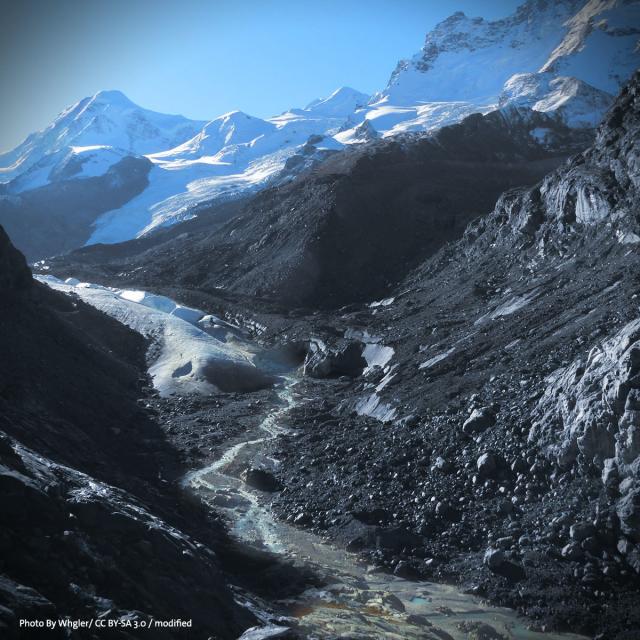
What is climate change? How are mountain regions affected by the evolution of water resources and their uses? What kind of risks need to be considered? Mountains are recognized as particularly sensitive physical environments where intense and rapid changes have in the past, and may increasingly in the future, place pressure on their resource base.

Oct 5th 2026
5-12 Weeks
Egiptología (Egyptology) (Coursera) Coursera
Universitat Autònoma de Barcelona

Egiptología (Egyptology) (Coursera)

¿Sientes curiosidad por la civilización del antiguo Egipto? ¿Eres un apasionado de su cultura e historia? En este curso nos acercaremos a los templos de los antiguos faraones, a sus complejos funerarios, a sus ciudades, a su escritura jeroglífica, a su religión y a muchos otros aspectos de esta gran civilización.

Sep 28th 2026
5-12 Weeks
AstroTech: The Science and Technology behind Astronomical Discovery (Coursera) Coursera
University of Edinburgh

AstroTech: The Science and Technology behind Astronomical Discovery (Coursera)

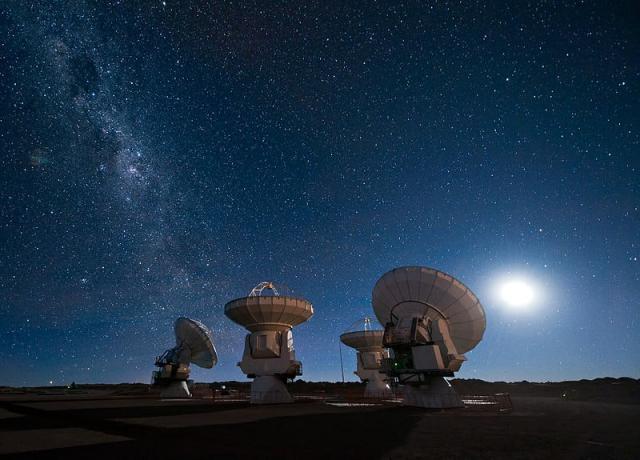
Modern astronomy has made some astonishing discoveries - how stars burn and how black holes form; galaxies from the edge of the universe and killer rocks right next door; where the elements come from and how the expanding universe is accelerating. But how do we know all that? The truth is that astronomy would be impossible without technology, and every advance in astronomy is really an advance in technology. But the technology by itself is not enough. We have to apply it critically with a knowledge of physics to unlock the secrets of the Universe.

Sep 21st 2026
5-12 Weeks