EdX

Global China: From the Mongols to the Ming (edX)

Global China: From the Mongols to the Ming (edX)

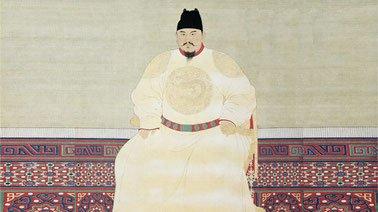
Explore the impact of the conquest dynasties and the world of the Ming. In the 13th century, by force of arms, the Mongols created the greatest empire in human history. Yet by the end of the Ming dynasty in the late 16th century, a new global economy emerged. New World silver brought together the Americas, Europe, and East Asia, and the intellectuals of East and West began to speak to each other directly.

Class Deals by MOOC List - Click here and see EdX's Active Discounts, Deals, and Promo Codes.

The founding of the Ming and the growth of the global silver trade spurred changes in social and political spheres, and the late Ming period brought new literature, philosophies, and religions, with shifting roles for women.

This course, part of a collection on the history and culture of China, will cover the Mongol’s large, multi-ethnic empire and the social, political, and cultural changes during the Ming dynasty. From early Mongol life at China’s northern border to the rise of Genghis Khan, we’ll take a deep dive into the territorial expansion of these traditionally nomadic people.
The establishment of a truly global China set the stage for even greater changes in the modern era. Enroll now to understand the context for these changes, and how the economic and political realities of today’s China originated in the region centuries ago.
This course is part of the History of China: Bronze Age to the Last Dynasties XSeries program.

What you'll learn

  • How the Mongols created the greatest empire in human history.
  • How the Ming dynasty established a new global economy.
  • How New World silver brought together the Americas, Europe, and East Asia.
  • How the intellectuals of the East and West spoke directly to each other.
  • How to analyze land-based versus sea-based approaches to empire-building.
Go to Class
MOOC List is learner-supported. When you buy through links on our site, we may earn an affiliate commission.

Related Courses

Cosmopolitan Tang: Aristocratic Culture in China (edX) EdX
HarvardX,Harvard University

Cosmopolitan Tang: Aristocratic Culture in China (edX)

Explore the reunification of China under the Tang with a focus on aristocratic culture — from poetry to calligraphy to literature. By the Tang period, China was divided into northern and southern dynasties with different rulers and political systems. The north was conquered by relatively unsophisticated barbarians, but in the south, the aristocratic families established a refined appreciation of writing and literature.

Self Paced
Self-Paced
Chinese History From Warring States to the Tang Dynasty | 资治通鉴 (edX) EdX
Tsinghua University,TsinghuaX

Chinese History From Warring States to the Tang Dynasty | 资治通鉴 (edX)

Guides you through the Chinese masterpiece _Zizhi Tongjian, _an unprecedented work of governance and philosophical thinking spanning from the Warring States Period to the Tang Dynasty. Through the teacher's guided reading, students can go deep into the interior of this classic text, gain an overview of thousands of years of history, and improve their literacy in Chinese studies.

Self Paced
Self-Paced
Chinese Politics Part 1 - China and Political Science (Coursera) Coursera
The Hong Kong University of Science and Technology - HKUST

Chinese Politics Part 1 - China and Political Science (Coursera)

This course offers a conceptual framework for understanding China that highlights the intersection of politics and economics. It shows that rather than develop into a full blown market economy, state and party officials at all levels of the political system maintain significant influence in economic development. Such a “political” economy has had both positive and negative outcomes, which we will assess in detail.

Jun 22nd 2026
5-12 Weeks
Contemporary China: The People's Republic, Taiwan, and Hong Kong (edX) EdX
HarvardX,Harvard University

Contemporary China: The People's Republic, Taiwan, and Hong Kong (edX)

Use the case study method to study China from the rise of Deng Xiaoping to the present. Using case studies from the Harvard Business School, this course will cover the contemporary Chinese scene by focusing on five main themes in China’s development: agriculture, entrepreneurship, education, environment, and literature.

Self Paced
Self-Paced
China and Communism (edX) EdX
HarvardX,Harvard University

China and Communism (edX)

Explore the Maoist period of China, from the Communist Party to the death of Mao and the reopening of China. How did the Communists conquer China? What role does culture play? What are the successes and failures of the Chinese Communist Party after seizing power in 1949? What constitutes liberation?

Self Paced
Self-Paced
History of Chinese Architecture | 中国建筑史 (edX) EdX
Tsinghua University,TsinghuaX

History of Chinese Architecture | 中国建筑史 (edX)

This course explores China's rich and varied architectural history. (In Mandarin with English subtitles.) 体味中国古建筑之美,理解中国建筑的重要内涵 China's architectural history spans thousands of years. In this course, we will explore the ancient cities of Chang'an of Han, Luoyang of Northern Wei, Chang'an and Luoyang of Sui and Tang, Kaifeng of Song and Dadu of Yuan, and delve into the history of the awe-inspiring ancient buildings that still grace the landscape of these bustling cities.

No sessions available
13-24 Weeks
Creating Modern China: The Republican Period to the Present (edX) EdX
HarvardX,Harvard University

Creating Modern China: The Republican Period to the Present (edX)

Explore the birth of modern China with a focus on the time between the fall of the Qing and the end of World War II. What does it mean to be modern? What constitutes modern politics, modern institutions, a modern military, and modern infrastructure? In this period of great excitement and experimentation, the country is asking itself: How do you become modern and remain true to the Chinese national identity?

Self Paced
Self-Paced
China’s First Empires and the Rise of Buddhism (edX) EdX
HarvardX,Harvard University

China’s First Empires and the Rise of Buddhism (edX)

Learn about the Qin and Han dynasties, and how Buddhism and ideas of self-realization influenced the medieval period. This course, the second in a collection on Chinese history and culture, addresses how the Qin dynasty conquered China and established a new system of government and how the Han dynasty built a stable, centralized empire that lasted for hundreds of years. We cover the early history of Buddhism in China and how the rising feudal aristocracy responded to the loss of empire by looking inward.

Self Paced
Self-Paced
Macroeconomics for a Sustainable Planet (edX) EdX
SDGAcademyX,SDG Academy

Macroeconomics for a Sustainable Planet (edX)

Is it possible to develop a thriving global economy in an equitable and environmentally-resilient way? Unemployment. Inflation. Protectionism. Trade barriers. Fiscal deficit. These are not just terms in an economics textbook or in newspaper headlines. These real-life challenges carry societal and environmental implications for billions of people around the world.

Self Paced
Self-Paced