EdX

The Civil War and Reconstruction - 1861 - 1865: A New Birth of Freedom (edX)

The Civil War and Reconstruction - 1861 - 1865: A New Birth of Freedom (edX)

Learn about the political, social, and economic changes in the Union and the Confederacy and the Civil War’s long-term economic and intellectual impact.

Class Deals by MOOC List - Click here and see EdX's Active Discounts, Deals, and Promo Codes.

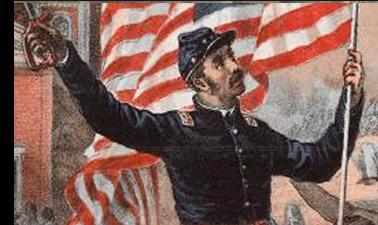
Politics of Freedom: The Civil War, 1861-1865 narrates the history of the American Civil War. While it examines individual engagements and the overall nature of the military conflict, the focus is less on the battlefield than on political, social, and economic change in the Union and the Confederacy. Central to the account are the road to emancipation, the role of black soldiers, the nature of Abraham Lincoln’s wartime leadership, internal dissent in both the North and South, the changing position of women in both societies, and the war’s long-term economic and intellectual impact. We end with a look at the beginnings of Reconstruction during the conflict.
This course is part of the XSeries, Civil War and Reconstruction, which introduces students to the most pivotal era in American history. The Civil War transformed the nation by eliminating the threat of secession and destroying the institution of slavery. It raised questions that remain central to our understanding of ourselves as a people and a nation – the balance of power between local and national authority, the boundaries of citizenship, and the meanings of freedom and equality. This XSeries will examine the causes of the war, the road to secession, the conduct of the Civil War, the coming of emancipation, and the struggle after the war to breathe meaning into the promise of freedom for four million emancipated slaves. One theme throughout the series is what might be called the politics of history – how the world in which a historian lives affects his or her view of the past, and how historical interpretations reinforce or challenge the social order of the present.
This course is part of the The Civil War and Reconstruction XSeries.

What you'll learn

  • Individual engagements and the overall nature of the military conflict
  • Political, social, and economic change in the Union and the Confederacy
  • The road to emancipation
  • The role of black soldiers in the Civil War
  • The nature of Abraham Lincoln’s wartime leadership
  • Internal dissent in both the North and South
  • The changing position of women in both societies
  • The war’s long-term economic and intellectual impact

Syllabus

  1. Introduction to the Civil War
  2. The First Year of the War
  3. The Coming of Emancipation
  4. The Black Soldier
  5. The Confederacy
  6. The Impact of the Civil War
  7. Toward Union Victory
  8. Beginnings of Reconstruction and the End of the War
Go to Class
MOOC List is learner-supported. When you buy through links on our site, we may earn an affiliate commission.

Related Courses

La España de El Quijote (edX) EdX
Universidad Autonoma de Madrid,UAMx

La España de El Quijote (edX)

La España de El Quijote es un viaje a nuestro esplendor cultural. A un Siglo de Oro que elevó las artes y las letras hispanas a la excelencia mundial. En un lugar de la UAM, cuyo nombre merece recordar, habita la España de El Quijote. Un espacio en el que su monarquía creó el primer imperio global de la Historia. Un tiempo, entre los siglos XVI y XVII, en el que su sociedad alcanzó la excelencia en las artes y las letras.

Self Paced
Self-Paced
The Modern and the Postmodern (Part 2) (Coursera) Coursera
Wesleyan University

The Modern and the Postmodern (Part 2) (Coursera)

This course examines how the idea of "the modern" develops at the end of the 18th century in European philosophy and literature, and how being modern (or progressive, or hip) became one of the crucial criteria for understanding and evaluating cultural change. Are we still in modernity, or have we moved beyond the modern to the postmodern?

Oct 5th 2026
5-12 Weeks
Words Spun Out of Images: Visual and Literary Culture in Nineteenth Century Japan (Coursera) Coursera
The University of Tokyo

Words Spun Out of Images: Visual and Literary Culture in Nineteenth Century Japan (Coursera)

In their ambition to capture “real life,” Japanese painters, poets, novelists and photographers of the nineteenth century collaborated in ways seldom explored by their European contemporaries. This course offers learners the chance to encounter and appreciate behavior, moral standards and some of the material conditions surrounding Japanese artists in the nineteenth century, in order to renew our assumptions about what artistic “realism” is and what it meant.

Oct 5th 2026
4 Weeks
Globalization: Past and Future (edX) EdX
SDGAcademyX,SDG Academy

Globalization: Past and Future (edX)

Is globalization a new phenomenon or a cyclical pattern throughout human history? In this four-part mini-course, Professor Jeffrey Sachs argues that we have always lived in a global world. He takes students on a historical and anthropological tour of six distinct waves of globalization and outlines the key factors that drove innovation, technology dispersal and development during these epochs.

Self Paced
Self-Paced
Casing the Joint: Introducing Histories of Australian Crime (edX) EdX
The University of Newcastle, Australia,NewcastleX

Casing the Joint: Introducing Histories of Australian Crime (edX)

Learn about approaches to the study of the history of crime and punishment, especially in Australia. Crime holds a special place in Australian history, having facilitated colonisation, provided its most celebrated anti-hero in Ned Kelly and been used to sell millions of newspapers, books and movie tickets. Drawing upon a rich array of digital history resources, this course offers you a guided tour of the origins of Australian underworlds and of the study of the history of crime and punishment.

No sessions available
3 Weeks
Was Alexander Great? The Life, Leadership, and Legacies of History’s Greatest Warrior (edX) EdX
Wellesley College,WellesleyX

Was Alexander Great? The Life, Leadership, and Legacies of History’s Greatest Warrior (edX)

Was Alexander Great? If so, how? If not, why not? This course explores the life, leadership, and legacies of history’s greatest warrior. Alexander the Great conquered most of the world known to the ancient Greeks, fused the eastern and western peoples of his empire, and became a god – before his 33rd birthday.

No sessions available
4 Weeks
Visualizing the Birth of Modern Tokyo (edX) EdX
MIT,MITx

Visualizing the Birth of Modern Tokyo (edX)

See Tokyo’s modernization through the “100 views” tradition, from the gas-lit 1870s to the jazz era 1930s. From MIT Visualizing Cultures, with the Smithsonian Institution. This course shows the emergence of modern Tokyo through artist renderings of its neighborhoods, daily life and nightlife, nested between its recurring destruction by natural disasters and war.

Self Paced
Self-Paced
A Global History of Architecture (edX) EdX
MIT,MITx

A Global History of Architecture (edX)

Learn about humanity’s rich architectural history on this journey around the globe – from 100,000 BCE to ca. 1,600 CE. How do we understand architecture? One way of answering this question is by looking through the lens of history, beginning with First Societies and extending to the 16th century. This course in architectural history is not intended as a linear narrative, but rather aims to provide a more global view, by focusing on different architectural "moments."

Oct 18th 2023
5-12 Weeks
Pyramids of Giza: Ancient Egyptian Art and Archaeology (edX) EdX
HarvardX,Harvard University

Pyramids of Giza: Ancient Egyptian Art and Archaeology (edX)

Explore the archaeology, history, art, and hieroglyphs surrounding the famous Egyptian Pyramids at Giza. Learn about Old Kingdom pharaohs and elites, tombs, temples, the Sphinx, and how new technology is unlocking their secrets. Where is Giza? How were the Pyramids built? How did the cemeteries and hundreds of decorated tombs around them develop? What was Giza’s contribution to this first great age of ancient Egyptian civilization, the Old Kingdom?

Self Paced
Self-Paced