EdX

Modern China’s Foundations: The Manchus and the Qing (edX)

Modern China’s Foundations: The Manchus and the Qing (edX)

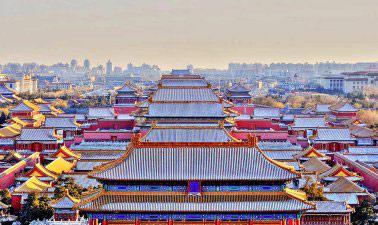
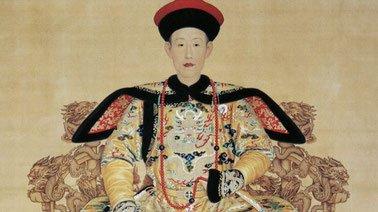
Learn how the Manchus conquered the Qing and established the last of the imperial dynasties. This course, part of a comprehensive series on China, looks at the Qing state in the early 1600s and the challenges that the Manchus faced as minority rulers. While living in Chinese cities and surrounded by Chinese culture — a culture that was far more sophisticated than their own — the Manchus struggled to hold onto their identity as a conquesting people.

Class Deals by MOOC List - Click here and see EdX's Active Discounts, Deals, and Promo Codes.

We'll look at the last period of ascendancy for China before the modern era. We’ll cover China in the 18th century, under the Kangxi, Yongzheng, and Qianlong emperors — a period in which the size of the empire nearly doubles.
The Qing was the last dynasty before the foundation of the modern republics and sets the stage for everything that will come after. Join us to learn about this critical era in Chinese history, an era that sets the stage for a truly modern China.
This course is part of the History of China: The Modern Era XSeries Program.

What you'll learn

  • How the Manchus conquered Ming China.
  • How the last of the imperial dynasties were established.
  • How the Qing dynasty became the foundation on which modern China was built.
  • How to evaluate the imposition of foreign rule.
  • How to develop your own approaches to history and gain a critical appreciation of China’s literary, philosophical, political and cultural resources.
  • How to express ideas more clearly and confidently.
Go to Class
MOOC List is learner-supported. When you buy through links on our site, we may earn an affiliate commission.

Related Courses

International Politics in the Korean Peninsula (edX) EdX
Seoul National University,SNUx

International Politics in the Korean Peninsula (edX)

Explore the genesis, expansion, projection and challenges of the Chinese World Order in China and East Asia. This course is divided into three parts. First, you’ll learn how the Chinese World Order emerged in the ancient world, focusing on the concept of the "heavenly mandate" (天命) as the ultimate source of political power.

Self Paced
Self-Paced
Invasions, Rebellions, and the Fall of Imperial China (edX) EdX
HarvardX,Harvard University

Invasions, Rebellions, and the Fall of Imperial China (edX)

An overview of modern Chinese history, including the fall of the Qing and the end of imperial China. In the 18th century, the Qing Dynasty is at its height; it is the wealthiest, most powerful, most civilized state on earth. And yet the 19th century brought enormous challenges for the Qing and for the place we call China. By the 20th century, a 2,000-year imperial tradition is gone. What happened?

Self Paced
Self-Paced
Religious Transformation in Early China: the Period of Division (Coursera) Coursera
The Chinese University of Hong Kong

Religious Transformation in Early China: the Period of Division (Coursera)

This sequence of four courses will propose a multi-disciplinary approach to the study of Chinese cultural history conceived of as a succession of modes of rationality (philosophical, bureaucratic, and economic). The focus will be on the moments of paradigm shift from one mode of rationality to another. For each of these moments, cultural facts and artifacts—thought, literature, ritual—will be examined in relationship to changing social, political, and economic systems.

Sep 7th 2026
5-12 Weeks
English for Doing Business in Asia - Speaking (edX) EdX
The Hong Kong University of Science and Technology - HKUST,HKUSTx

English for Doing Business in Asia - Speaking (edX)

Introducing strategies for developing your spoken English communication skills in the context of doing business in Asia. The use of English for doing business in multinational settings is a fact of life for many business people. As Asian economies expand and become more involved in the global economy, a lingua franca – a language used to communicate among groups of people who do not share a mother tongue – is needed to exchange information.

Self Paced
Self-Paced
ChinaX Book Club: Five Authors, Five Books, Five Views of China (edX) EdX
HarvardX,Harvard University

ChinaX Book Club: Five Authors, Five Books, Five Views of China (edX)

An exploration of the dynamics of contemporary China using the tools of close reading, discussion, and analysis. How can literature and literary analysis allow us to understand the dynamics of contemporary China? China’s historical and cultural transformations, and its imaginary and actual engagements in everyday life are vividly dramatized by five Chinese authors featured in this course.

Self Paced
Self-Paced
Literati China: Examinations, Neo-Confucianism, and Later Imperial China (edX) EdX
HarvardX,Harvard University

Literati China: Examinations, Neo-Confucianism, and Later Imperial China (edX)

Explore China’s imperial period, with a focus on the Song dynasty and the role of the exam system in government. Fundamental changes in government, the economy, and broader society took place between the 8th and 11th centuries in China. The state aristocracy gave way to new literati elite: educated men who sought to enter government through competitive examinations. A new kind of Confucianism also took shape, which prized the moral autonomy of individuals. With this, the later imperial period of China’s history begins.

Self Paced
Self-Paced
China and Communism (edX) EdX
HarvardX,Harvard University

China and Communism (edX)

Explore the Maoist period of China, from the Communist Party to the death of Mao and the reopening of China. How did the Communists conquer China? What role does culture play? What are the successes and failures of the Chinese Communist Party after seizing power in 1949? What constitutes liberation?

Self Paced
Self-Paced
China Humanities: The Individual in Chinese Culture (edX) EdX
HarvardX,Harvard University

China Humanities: The Individual in Chinese Culture (edX)

Explore Chinese history and culture from the perspective of the individual through philosophical texts, literary works, and art. In China’s history, there has been a longstanding belief that being cultured and being moral are necessary for a person to participate in public life. We often think of China in political terms – and focus on the history of government – or in social terms – and study the role of the family in society. But this course looks at the individual and the striving for culture and morality.

Self Paced
Self-Paced
文物精品与文化中国:文字与乐礼 | Relics of Chinese History - Part 3: Writing System, Rites and Music (edX) EdX
Tsinghua University,TsinghuaX

文物精品与文化中国:文字与乐礼 | Relics of Chinese History - Part 3: Writing System, Rites and Music (edX)

Discover how writing systems and music played a major role in Chinese history through the study of artifacts and relics. 本课程以精品文物作引子,将学术界探索中华文明的过程作为线索,介绍古代中国在造船、玉器等诸多领域的杰出成就

Self Paced
Self-Paced