EdX

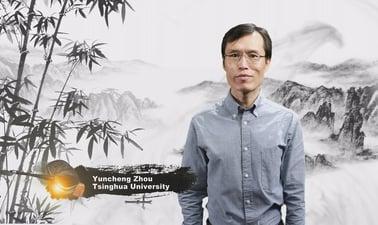
New Horizons in Chinese Philosophy (edX)

New Horizons in Chinese Philosophy (edX)

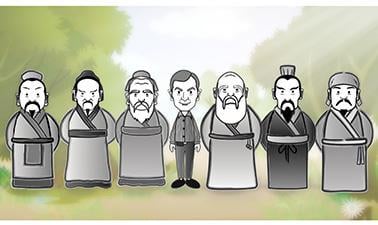
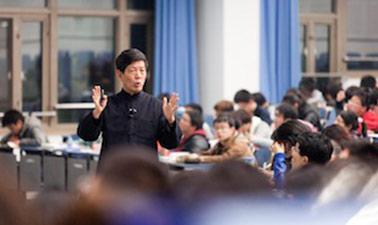
This course is an introduction to classical Chinese thoughts advanced by Confucius, Mozi, Laozi, Zhuangzi, Mencius, Xunzi, Hanfeizi and other legalist thinkers. It is designed for those who are interested in philosophy and curious about Chinese culture.

Class Deals by MOOC List - Click here and see EdX's Active Discounts, Deals, and Promo Codes.

  1. This is a philosophy course. It is a study of the world in most general sense. It is concerned with nature of the world and knowledge of the world.
  2. This is Chinese philosophy: a philosophical study of Chinese thoughts.

New horizons emerge from predicate inquiry of Chinese philosophizing.

What you'll learn
Through this course, you will get a philosophical training. You will be introduced into China’s culture in her golden historic period.

Go to Class
MOOC List is learner-supported. When you buy through links on our site, we may earn an affiliate commission.
Related Courses

Global China: From the Mongols to the Ming (edX) EdX
HarvardX,Harvard University

Global China: From the Mongols to the Ming (edX)

Explore the impact of the conquest dynasties and the world of the Ming. In the 13th century, by force of arms, the Mongols created the greatest empire in human history. Yet by the end of the Ming dynasty in the late 16th century, a new global economy emerged. New World silver brought together the Americas, Europe, and East Asia, and the intellectuals of East and West began to speak to each other directly.

Self Paced
Self-Paced
Humanity and Nature in Chinese Thought (edX) EdX
University of Hong Kong,HKUx

Humanity and Nature in Chinese Thought (edX)

We make ethical or behaviour guiding right / wrong judgments all the time but have you ever wondered where Ethics comes from, what it is about and why it is important? This course provides an introduction to traditional Chinese ethical thought and focuses on the pervasive contrast in the way Chinese and Westerners think about ethical guidance or guidance concerning what is right and what is wrong, good or bad.

No sessions available
5-12 Weeks
Literati China: Examinations, Neo-Confucianism, and Later Imperial China (edX) EdX
HarvardX,Harvard University

Literati China: Examinations, Neo-Confucianism, and Later Imperial China (edX)

Explore China’s imperial period, with a focus on the Song dynasty and the role of the exam system in government. Fundamental changes in government, the economy, and broader society took place between the 8th and 11th centuries in China. The state aristocracy gave way to new literati elite: educated men who sought to enter government through competitive examinations. A new kind of Confucianism also took shape, which prized the moral autonomy of individuals. With this, the later imperial period of China’s history begins.

Self Paced
Self-Paced
Cosmopolitan Tang: Aristocratic Culture in China (edX) EdX
HarvardX,Harvard University

Cosmopolitan Tang: Aristocratic Culture in China (edX)

Explore the reunification of China under the Tang with a focus on aristocratic culture — from poetry to calligraphy to literature. By the Tang period, China was divided into northern and southern dynasties with different rulers and political systems. The north was conquered by relatively unsophisticated barbarians, but in the south, the aristocratic families established a refined appreciation of writing and literature.

Self Paced
Self-Paced
International Politics in the Korean Peninsula (edX) EdX
Seoul National University,SNUx

International Politics in the Korean Peninsula (edX)

Explore the genesis, expansion, projection and challenges of the Chinese World Order in China and East Asia. This course is divided into three parts. First, you’ll learn how the Chinese World Order emerged in the ancient world, focusing on the concept of the "heavenly mandate" (天命) as the ultimate source of political power.

Self Paced
Self-Paced
China and Communism (edX) EdX
HarvardX,Harvard University

China and Communism (edX)

Explore the Maoist period of China, from the Communist Party to the death of Mao and the reopening of China. How did the Communists conquer China? What role does culture play? What are the successes and failures of the Chinese Communist Party after seizing power in 1949? What constitutes liberation?

Self Paced
Self-Paced
Modern China’s Foundations: The Manchus and the Qing (edX) EdX
HarvardX,Harvard University

Modern China’s Foundations: The Manchus and the Qing (edX)

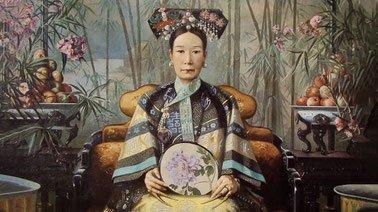
Learn how the Manchus conquered the Qing and established the last of the imperial dynasties. This course, part of a comprehensive series on China, looks at the Qing state in the early 1600s and the challenges that the Manchus faced as minority rulers. While living in Chinese cities and surrounded by Chinese culture — a culture that was far more sophisticated than their own — the Manchus struggled to hold onto their identity as a conquesting people.

Self Paced
Self-Paced
文物精品与文化中国:农业与制造业 | Relics in Chinese History - Part 1: Agriculture and Manufacturing (edX) EdX
Tsinghua University,TsinghuaX

文物精品与文化中国:农业与制造业 | Relics in Chinese History - Part 1: Agriculture and Manufacturing (edX)

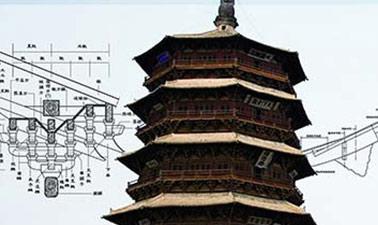
Discover manufacturing and agriculture’s role in the history of China as we explore Chinese culture through artifacts and relics. 本课程以精品文物作引子,将学术界探索中华文明的过程作为线索,介绍古代中国在造船、玉器等诸多领域的杰出成就

Self Paced
Self-Paced
Creating Modern China: The Republican Period to the Present (edX) EdX
HarvardX,Harvard University

Creating Modern China: The Republican Period to the Present (edX)

Explore the birth of modern China with a focus on the time between the fall of the Qing and the end of World War II. What does it mean to be modern? What constitutes modern politics, modern institutions, a modern military, and modern infrastructure? In this period of great excitement and experimentation, the country is asking itself: How do you become modern and remain true to the Chinese national identity?

Self Paced
Self-Paced