World War 1: Lessons and Legacy of the Great War (FutureLearn)

World War 1: Lessons and Legacy of the Great War (FutureLearn)

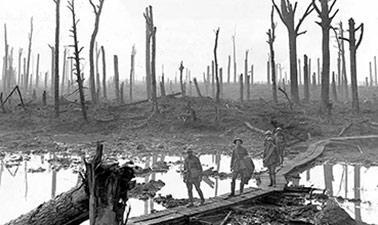
Learn how the Allies defeat the Germans in World War 1, how the memory arose that the war was futile, and why this view is untrue. What is your understanding of World War I? Brave men led to their deaths by stupid officers? A war of trenches, mud and barbed wire in which there was no victor? In this short, free online course, we offer you the opportunity to uncover both the mechanics and the memory of the Great War.

Class Deals by MOOC List - Click here and see FutureLearn's Active Discounts, Deals, and Promo Codes.

Focusing on the Western Front, the most important and bloody theatre of the war, we will examine how the Allied armies experienced a ‘learning curve’. We will see how they integrated new training, techniques and technologies, to end the stalemate of trench warfare, defeat the German invader and liberate Belgium and northern France from four hard years of military occupation.
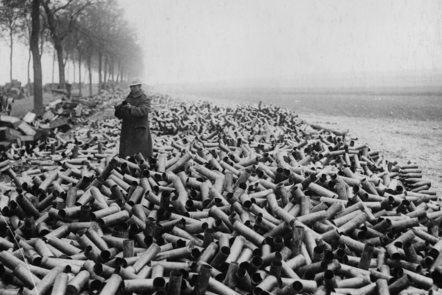
The course compares and contrasts the reality of the First World War - a costly and wasteful conflict, but one that ended in a decisive victory over German aggression - with our memory of it today, a war that was both senseless and ineffective. Throughout, we will focus on the experiences of soldiers in the British, French, German and American armies, as these formed the majority of soldiers on the Western Front. This includes soldiers from the British and French empires, including Australian, Canadian, Indian, New Zealand, Algerian, Moroccan and West African soldiers.
You will learn with John Connor, one of Australia’s leading military historians, and a team of international historians. They will draw on the latest historical research to offer new insights and engage with old myths, helping you understand a conflict that, despite occurring a century ago, still resonates with people today.
The course is presented in three parts:
Part 1: An overview of the Great War. We concentrate on the conflict on the Western Front, and explore the development of an unprecedented type of combat, trench warfare.
Part 2: The ‘learning curve’. In this section we compare how the British, French and German armies attempted to end the stalemate of trench warfare by developing new technology, training and tactics.
Part 3: Remembering the First World War. We explore how the social and political landscape has shaped and changed the memory of the War over the last century, and how art, poetry and novels have contributed to that understanding.
Go to Class
MOOC List is learner-supported. When you buy through links on our site, we may earn an affiliate commission.

Related Courses

World War 1: Aviation Comes of Age (FutureLearn) FutureLearn
University of Birmingham

World War 1: Aviation Comes of Age (FutureLearn)

Investigate how the white heat of innovation in World War 1 shaped the history of human flight. Investigate how the early days of aviation gripped the imagination of the general public, galvanised industry and excited far-sighted members of the military, with this free online course from the University of Birmingham’s Centre for War Studies.

No sessions available
3 Weeks
Irish Lives in War and Revolution: Exploring Ireland's History 1912-1923 (FutureLearn) FutureLearn
Trinity College Dublin

Irish Lives in War and Revolution: Exploring Ireland's History 1912-1923 (FutureLearn)

Explore the lives of men, women and children living through war and revolution and social changes that made modern Ireland. How do people experience war and revolution? How does political change, violence, total war, affect life in its most basic ways? Looking at Ireland through war and revolution, this course considers these and other questions about Irish life between 1912 and 1923.

No sessions available
5-12 Weeks
War and American Society (saylor.org) Saylor Academy
Saylor.org

War and American Society (saylor.org)

This course will focus on the wars and military conflicts that have shaped the social, political, and economic development of the United States from the colonial era through the present. You will learn how these conflicts have led to significant changes in America social and political life during this 300-year period.

Legacy Course
Self-Paced
Plagues, Witches, and War: The Worlds of Historical Fiction (Coursera) Coursera
University of Virginia

Plagues, Witches, and War: The Worlds of Historical Fiction (Coursera)

A unique and exciting introduction to the genre and craft of historical fiction, for curious students, aspiring authors--anyone with a passion for the past. Read classics of the genre, encounter bestselling writers of historical fiction, and discover your own historical archive while interacting with a global community of interested readers.

Jun 8th 2026
5-12 Weeks
The Great War and Modern Philosophy (edX) EdX
KU Leuven University,KULeuvenX

The Great War and Modern Philosophy (edX)

Learn how philosophers responded to the First World War and how the war changed philosophical reflection. The First World War, also known as the Great War, was the original catastrophe of the 20th-century. This course investigates the complex ways in which the Great War mobilized philosophical reflection during the war and the varied ways in which philosophical thought responded to the war.

No sessions available
5-12 Weeks
Global Media, War, and Technology (edX) EdX
University of Queensland,UQx

Global Media, War, and Technology (edX)

Explore the intersection of information technology, violent conflict, and resistance. The experience of war has changed fundamentally – not only for those fighting and reporting, but also for those on the home front. High-tech nations wage wars from a distance using satellite-guided weaponry while non-state military actors, terrorist organizations, and citizen journalists have increasingly added new voices and visual perspectives to the conversation about conflict.

Self Paced
Self-Paced
Russian Invasion of Ukraine Teach-Out (Coursera) Coursera
University of Michigan

Russian Invasion of Ukraine Teach-Out (Coursera)

The armed conflict in Ukraine first started in the beginning of 2014, when Russia invaded and annexed the Ukrainian region of Crimea. Over the past eight years, there has been ongoing conflict between Ukraine and Russia, with regular shelling and skirmishes occurring along Russian and Ukrainian borders in the eastern part of the country. On February 24, 2022, Russia launched a full-scale military invasion of Ukraine, plunging the entire country into war and sending shockwaves across the world.

Jul 25th 2022
1 Week
Health Care in Danger: The Rights and Responsibilities of Health-Care Personnel Working in Armed Conflict and Other Emergencies (ICRC) Other Providers
International Committee of the Red Cross

Health Care in Danger: The Rights and Responsibilities of Health-Care Personnel Working in Armed Conflict and Other Emergencies (ICRC)

The rights and responsibilities e-learning module is a web based educational tool designed to provide health care workers with an in depth explanation of their rights and responsibilities during armed conflicts and other emergencies. Developed by the International Committee of the Red Cross, it includes 7 chapters addressing specific issues or themes which health-care workers may face during crises in order to prepare them to respond effectively and ensure that they can provide the necessary care to their patients.

Self Paced
1 Week
The Scottish Highland Clans: Origins, Decline and Transformation (FutureLearn) FutureLearn
University of Glasgow

The Scottish Highland Clans: Origins, Decline and Transformation (FutureLearn)

Explore fascinating Scottish history by learning about the Highland clans and how clanship has changed across hundreds of years. Discover the important history of the Highland clans. The Highland, Gaelic speaking clans are a vital part of Scotland’s history. They also shape how the world imagines Scotland today.

Apr 3rd 2023
3 Weeks
World War 1: Paris 1919 - A New World Order? (FutureLearn) FutureLearn
University of Glasgow

World War 1: Paris 1919 - A New World Order? (FutureLearn)

This course reassesses the legacy of the Paris Peace Conference (1919) and how it sought to create a new world order. The Paris Peace Conference of 1919 ended a Great War, but it also designed the post-war future. In 1919, world leaders assembled in Paris redrew the map of the world, partitioned and created countries, and ushered in a new era of international relations. The naivety of the peace-makers of 1919 has been justly criticised. However, in setting up a permanent ‘world organisation’, the League of Nations, they changed the management of world affairs forever…

No sessions available
3 Weeks
Accounting for Death in War: Separating Fact from Fiction (FutureLearn) FutureLearn
Royal Holloway, University of London,Every Casualty Counts

Accounting for Death in War: Separating Fact from Fiction (FutureLearn)

Discover the main methods used to account for war deaths, how they've been used and practice using them yourself. Calculating the number of deaths during a war is a difficult, but necessary, task - having accurate information is crucial for political and societal debates and decisions. On this course you will explore the methods currently used to account for war deaths and then apply these methods to particular wars.

Available now
3 Weeks
Corpus Linguistics: Method, Analysis, Interpretation (FutureLearn) FutureLearn
Lancaster University

Corpus Linguistics: Method, Analysis, Interpretation (FutureLearn)

Get a practical introduction to the methodology of corpus linguistics for researchers in the social sciences and humanities. Learn how to build and query corpora in this practical course On this course, you’ll get a practical introduction to corpus linguistics, an extremely versatile methodology of language analysis using computers.

Sep 16th 2024
5-12 Weeks