Heritage under Threat (Coursera)

Heritage under Threat (Coursera)

In this course you will learn to articulate your own concepts about (threatened) heritage and that of others. What is your heritage? Who defines heritage? Why is heritage under threat? How can we protect heritage? This course, sponsored by the LDE Centre for Global Heritage and Development and the Honours Academy of Leiden University, and the Netherlands Commission for UNESCO gave its support to one of the sections of the MOOC, will explore these issues. We wish to engage global communities and widen the perspective on threatened heritage. You can help us with this.

Class Deals by MOOC List - Click here and see Coursera's Active Discounts, Deals, and Promo Codes.

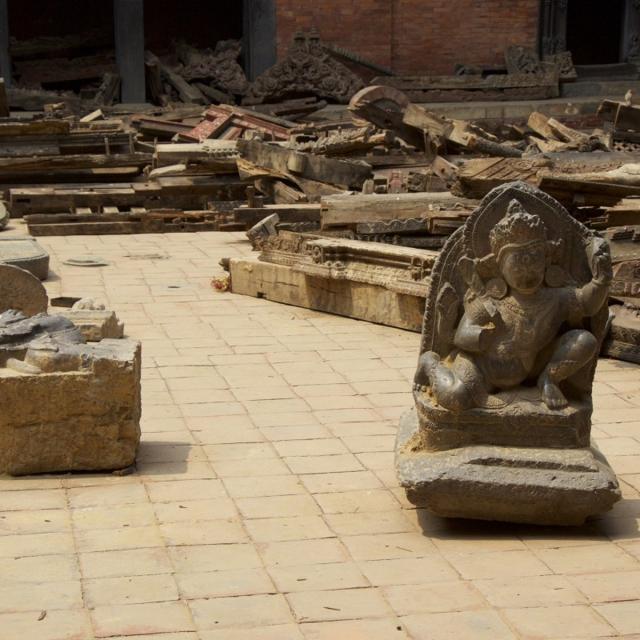
WW1, WW2, Cold war politics and contemporary conflicts as well as continuing political and socio-economic inequalities and colonial pasts are all factors playing a role in the global heritage discussions and approaches to (or lack of ) valorization and protection of heritage. Hence, issues behind destruction or threats to heritage are related to complex issues, often connected to complex landscapes of wars, the war-on-terror, fundamentalism, migration, global warming, financial crises, inequality and diverse interests of local communities.

Course Syllabus

Week 1
Welcome to this course
Great that you are joining us! In this course you will learn about your heritage and how you can preserve it. Before you start with studying we invite you to first go through our introduction module and introduce yourself in the forum to meet your fellow learners. If you encounter any difficulties while studying, please let us know on the forum. For technical difficulties or questions regarding the course certificate, you can always contact the Coursera Learner Helpdesk. Good luck & we hope you will enjoy studying in this course!
What is your heritage?
Hi everybody and welcome to the first module of this MOOC! We have an exciting course prepared for you, with a large variety of topics to be discussed. Some of which can become quite technical, but are necessary in order for you to understand the frameworks we are dealing with. For this week however, we are starting somewhat slowly and view cultural heritage from a very personal point of view. This is important because, as you will also learn later, a personal view and inclusive heritage is one of the main ways to go forward and battle for heritage which is under threat. We'd like you to introduce yourself to your fellow students before diving into the content, so make sure to select the next discussion prompt first!

Week 2
Heritage and inequality
Hi everybody welcome to the second module! Last week we talked about the concept of heritage and how heritage can be very personal. This week we will dive into how heritage is actually defined, both within the field of (archaeological) heritage management, as well as for local communities. We will also discuss various forms of inequality which unfortunately can come with defining and framing something as heritage. Please watch the video's we have prepared for you first and then proceed with the quizz and case study!

Week 3
Heritage, communities and ownership
Hi everybody welcome to the third module!Last week we talked about the definition of heritage and how this can sometimes invoke inequality. This week we will discuss the role of communities and the impact of heritage ownership. Please watch the video's we have prepared for you first and then proceed with the quizz and case study!Have fun!

Week 4
Heritage threats
Hi all! Welcome to the fourth module!Last week we talked about local communities and the impact of heritage ownership. This week we will dive into the various threats to heritage, both anthropogenic as well as natural. We also have a very interesting, relevant and timely case study prepared for you! Please watch the video's we have prepared for you first and then proceed with the quizz and case study!

Week 5
Heritage protection
Hi all! Welcome to the fifth module!Last week we discussed the various threats to heritage, both man-made as well as natural. This week we will discuss how we can actually protect cultural heritage and which measures we have at our disposal to do so. Please watch the video's we have prepared for you first and then proceed with the quizz and case study!

Week 6
Inclusive heritage
Hi all! Welcome to the sixth and last module! Did you enjoy the course thus far?Last week we talked about the opportunities we have to protect heritage. This final week we will discuss how heritage can be utilized to create an inclusive, sensitive and thoughtful society. We will also discuss some of the more technological developments going on in the world of video games and virtual reality, all helping to create an open and inclusive heritage discourse. Let us know what you think! Please watch the video's we have prepared for you first and then proceed with the quizz and case study! Good luck with your final tasks!
Go to Class
MOOC List is learner-supported. When you buy through links on our site, we may earn an affiliate commission.

Related Courses

Anti-Racism III (Coursera) Coursera
University of Colorado Boulder

Anti-Racism III (Coursera)

Anti-Racism III is the third course in CU Boulder's Anti-Racism specialization on Coursera. You will be asked to apply and deepen what you've learned about race, racism, identity, and inequality in the first and second courses to a more global context that understands systemic racism and white supremacy as a human rights issue. You will also be invited to consider how you might engage in anti-racist practices in your own life, and you will be challenged to design a community outreach project that leverages your own experience and skills as an anti-racism advocate. Anti-Racism III will be available in Fall 2021.

Jun 15th 2026
3 Weeks
Economic Growth and Distributive Justice Part II - Maximize Social Wellbeing (Coursera) Coursera
Tel Aviv University

Economic Growth and Distributive Justice Part II - Maximize Social Wellbeing (Coursera)

If you really care about the big questions in the economies and societies of the 21st century, such as distributive justice - namely, inequality of income or wealth, and its correlation with economic growth - this course is meant for you. The knowledge you will gain can truly change your outlook on our world.

Jun 8th 2026
5-12 Weeks
Challenges of Agribusiness Management (Coursera) Coursera
Università Bocconi

Challenges of Agribusiness Management (Coursera)

The goal of this course is to understand the challenges and opportunities of agribusiness nowadays. From farms to retailers, from input providers to traders, all the diverse players of this value chain interact a complex business environment in which nature, policy, technology and management strategies have to be considered to overcome future challenges and seize upcoming opportunities.

Jun 1st 2026
5-12 Weeks
Introduction à la programmation orientée objet (en C++) (Coursera) Coursera
École Polytechnique Fédérale de Lausanne

Introduction à la programmation orientée objet (en C++) (Coursera)

Ce cours introduit la programmation orientée objet (encapsulation, abstration, héritage, polymorphisme) en l'illustrant en langage C++. Il présuppose connues les bases de la programmation (variables, types, boucles, fonctions, ...). Il est conçu comme la suite du cours « Initiation à la programmation (en C++) ».

Jun 22nd 2026
5-12 Weeks
Beyond the Sustainable Development Goals (SDGs): Addressing Sustainability and Development (Coursera) Coursera
University of Michigan

Beyond the Sustainable Development Goals (SDGs): Addressing Sustainability and Development (Coursera)

We’re excited you’re here! This course, “Beyond the Sustainable Development Goals (SDGs): Addressing Sustainability and Development,” is the first course in the upcoming Sustainability and Development MasterTrack Certificate program (Fall 2020), but you can also take this course as a stand-alone learning opportunity.

Jun 24th 2026
5-12 Weeks
The Economics of AI (Coursera) Coursera
University of Virginia

The Economics of AI (Coursera)

The course introduces you to cutting-edge research in the economics of AI and the implications for economic growth and labor markets. We start by analyzing the nature of intelligence and information theory. Then we connect our analysis to modeling production and technological change in economics, and how these processes are affected by AI. Next we turn to how technological change drives aggregate economic growth, covering a range of scenarios including a potential growth singularity.

Jun 16th 2026
5-12 Weeks
Philosophy, Science and Religion: Philosophy and Religion (Coursera) Coursera
University of Edinburgh

Philosophy, Science and Religion: Philosophy and Religion (Coursera)

Philosophy, Science and Religion mark three of the most fundamental modes of thinking about the world and our place in it. Are these modes incompatible? Put another way: is the intellectually responsible thing to do to ‘pick sides’ and identify with one of these approaches at the exclusion of others? Or, are they complementary or mutually supportive? As is typical of questions of such magnitude, the devil is in the details. For example, it is important to work out what is really distinctive about each of these ways of inquiring about the world. In order to gain some clarity here, we’ll be investigating what some of the current leading thinkers in philosophy, science and religion are actually doing.

Jun 22nd 2026
5-12 Weeks
Archaeology and Heritage of Africa (Coursera) Coursera
Universitat Autònoma de Barcelona

Archaeology and Heritage of Africa (Coursera)

Would you like to know more about the new methods archaeologists are using to study African archaeology? And to learn directly from case studies with researchers working on the continent? Are you interested in knowing the role local communities have in the preservation and protection of heritage sites? By enrolling in this course, you will have the opportunity to learn and explore these and so many other subjects in African Archaeology and Heritage and discover the rich and diverse heritage of Africa.

Jun 8th 2026
4 Weeks
Arts and Heritage Management (Coursera) Coursera
Università Bocconi

Arts and Heritage Management (Coursera)

Today cultural institutions are facing important dilemmas in many aspects of their management. Over the past decades, a new figure has emerged that of the art manager. Imagine you went to work every day to connect artists with audiences, vision with reality, and money with a mission. That is what managers in the arts do, they play an essential role in transforming the minds, lives, and communities through creative expression. This course has been conceptualized to address the need of skills and techniques to help professionals and managers in running art and cultural institutions.

Jun 15th 2026
5-12 Weeks
Economics of Money and Banking (Coursera) Coursera
Columbia University

Economics of Money and Banking (Coursera)

The last three or four decades have seen a remarkable evolution in the institutions that comprise the modern monetary system. The financial crisis of 2007-2009 is a wakeup call that we need a similar evolution in the analytical apparatus and theories that we use to understand that system. Produced and sponsored by the Institute for New Economic Thinking, this course is an attempt to begin the process of new economic thinking by reviving and updating some forgotten traditions in monetary thought that have become newly relevant.

Jun 8th 2026
13-24 Weeks
Migrations internationales : un enjeu mondial (Coursera) Coursera
Sciences Po

Migrations internationales : un enjeu mondial (Coursera)

Le monde bouge, mais les opinions et les gouvernements ne sont pas tous prêts à accepter cette réalité mal connue. La question affecte à la fois les Etats, mais aussi la planète, dans un processus de mondialisation et de régionalisation des migrations, et pose de nouvelles questions aux relations internationales, en y incluant le sud. Ce cours cherche à la fois à parfaire la connaissance sur le sujet, à traiter les thèmes essentiels induits par les migrations internationales et à dresser les tendances de demain.

Jun 1st 2026
5-12 Weeks