Wine Tasting: Sensory Techniques for Wine Analysis (Coursera)

Wine Tasting: Sensory Techniques for Wine Analysis (Coursera)

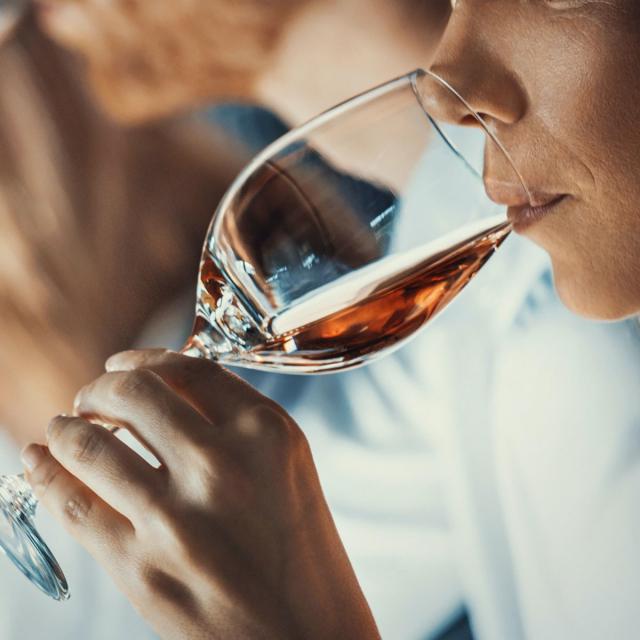
With its roots in ancient cultures as early as 6,000 BC, wine has long been part of the human experience. Today, increasing worldwide interest in wine and its complexities and varieties has created an international market valued at $304 billion annually. For the learner who is just getting started in the study of wine, this course will help you take the first steps toward understanding the physiological process of wine tasting.

Class Deals by MOOC List - Click here and see Coursera's Active Discounts, Deals, and Promo Codes.

The first module will explore types of wine and help you set up your own tasting. You’ll also begin to build a sensory vocabulary. In module 2 you will review classic wine types of the world and set up flights of specific wines. Later we’ll examine the various faults and defects that can appear in wine as well as techniques for spotting problems. In week 4 we’ll delve into the complex world of wine and food pairings, and its “seven deadly sins.” The course will culminate in a peer review project in which you will apply the knowledge and sensory techniques you have developed throughout the course to assess a specific wine.

Syllabus

WEEK 1
Wine Styles
In this first module we’ll take the first steps on our journey through the various categories of wines, starting with the flavor profiles of classic New World and Old World wines. We’ll also identify and describe flavor groups of wine and discuss sensory physiology including the visual, olfactory, textural, and taste aspects of various wines. We’ll also analyze how climate can affect the grape and wine flavor expression, and we’ll discuss the concept of "terroir". Finally, you will create a set of basic taste standards for practicing blind tasting.

WEEK 2
Wine Flavor and Aroma
In this module, the journey continues and we will compare and contrast the flavor profiles of eight classic red varietals and eight classic white varietals. We’ll also discuss the growing requirements for each varietal as well as their cultural and historic background and growing locations. At the conclusion of this module, you will write a descriptive analysis of the aroma attributes you identify in a particular wine. Finally, you’ll create flavor standards to help you develop your sensory vocabulary.

WEEK 3
Common Wine Faults
Is there something wrong with this wine? This week we’ll examine the philosophy behind what actually constitutes a fault in wine. We’ll identify the most often-encountered faults and explain how to recognize them as well as determine what caused them. We’ll also examine the Old World and New World sensibilities toward some of these faults, and discuss how some so-called faults may really be attributes that contribute to a wine’s complexity. We’ll differentiate between a fault and a defect and examine the range of classic faults and their origins. You’ll learn techniques for spotting problems and create wine defect sniff standards to practice fault recognition.

WEEK 4
Wine and Food Pairing
Can you drink red wine with fish? In this module we’ll discuss the often perplexing question of how to pair wine with food, and the physical, structural, textural, and aromatic aspects of both the "wine side" and the "food side" of the equation. We’ll discuss ways to improve your ability to make flavorful choices and determine the structure and "weight" of a wine. To help you predict a good food match, we’ll talk about the process of flavor profiling and how to decide whether to change a wine or food to make a pair work. Finally, we’ll discuss the "seven deadly sins" of wine and food pairing, and you’ll develop a personal wine and food scoring system.

WEEK 5
Project: Fully Describe a Wine From an Unusual Region or Varietal
In this final module, we’ll conclude our journey into wine tasting with a project that will demonstrate your understanding of the physiological process of wine tasting and the sensory techniques required for accurate wine analysis. You’ll apply the skills you have developed throughout this course to making a critical evaluation and description of a specific wine. Working with fellow learners in this peer review process, you will demonstrate your ability to describe the appellation, climate, winery, varietal and winemaking style as well as describe the visual, and tactile aspects of the wine. You’ll also describe the flavor and aroma of the wine, and make decisions about the best and worst food pairings for the wine.


Go to Class
MOOC List is learner-supported. When you buy through links on our site, we may earn an affiliate commission.

Related Courses

Learning How to Learn: Powerful mental tools to help you master tough subjects (Coursera) Coursera
University of California, San Diego,McMaster University

Learning How to Learn: Powerful mental tools to help you master tough subjects (Coursera)

This course gives you easy access to the invaluable learning techniques used by experts in art, music, literature, math, science, sports, and many other disciplines. We’ll learn about the how the brain uses two very different learning modes and how it encapsulates (“chunks”) information. We’ll also cover illusions of learning, memory techniques, dealing with procrastination, and best practices shown by research to be most effective in helping you master tough subjects.

Jun 8th 2026
4 Weeks
Optimizing Diversity on Teams (Coursera) Coursera
University of Pennsylvania

Optimizing Diversity on Teams (Coursera)

By drawing on social science perspectives, this course enables you to learn what diversity is, and how to use it to maximize team performance, innovation and creativity. You also learn how to draw out the collective wisdom of diverse teams, handle conflict and establish common ground rules through real-world cases and peer-to-peer discussions. In addition, you discover how to overcome common biases faced in diverse teams. Systems of power, reward and rhetoric are discussed to help you create prosperous teams where differences flourish.

Jun 8th 2026
4 Weeks
OWU2 - Université de la Vigne et du Vin pour Tous 2 (FUN) FUN
Université de Bourgogne

OWU2 - Université de la Vigne et du Vin pour Tous 2 (FUN)

Open Wine University, c’est l’université de la vigne et du vin ouverte à tous. Créé en 2015 par l'Université de Bourgogne, le MOOC OWU1 a été un pionnier dans le domaine de la vigne et du vin. Aujourd’hui, ce MOOC revient avec une version OWU2 incluant de nouveaux contenus et activités, tous intégralement disponibles en quatre langues : français, anglais, espagnol et chinois. Pendant cinq semaines, les participants découvriront les différentes facettes du vin grâce à une approche pluridisciplinaire.

No sessions available
5-12 Weeks
OWU2 - Universidad de la viña y del vino abierta a todos 2 (FUN) FUN
Université de Bourgogne

OWU2 - Universidad de la viña y del vino abierta a todos 2 (FUN)

Open Wine University, es la universidad de la viña y del vino abierta a todos. Creado en 2015 por la Universidad de Borgoña, el MOOC OWU1 ha sido un pionero en el campo de la viña y el vino. Hoy, este MOOC vuelve con una version OWU2 que incluye nuevos contenidos y actividades, todos plenamente disponibles en cuatro idiomas: francés, inglés, español y chino. Durante cinco semanas, los participantes descubrirán las diferentes facetas del vino gracias a un enfoque multidisciplinario.

No sessions available
5-12 Weeks
MOOC #OWU: Open Wine University (Université de la Vigne et du Vin pour Tous) (EMMA) EMMA
Université de Bourgogne

MOOC #OWU: Open Wine University (Université de la Vigne et du Vin pour Tous) (EMMA)

Le MOOC #OWU créé par les enseignants-chercheurs de l’université de Bourgogne (membres de l’Institut Universitaire de la Vigne et du Vin) propose une plongée dans l’univers de la vigne et du vin. De la viticulture à la dégustation en passant par les terroirs, vous apprendrez toutes les étapes de fabrication de différents vins français, jusqu’aux étapes essentielles de la dégustation du vin. Pourquoi un vin est-il blanc, rouge, mousseux ou rosé ? Comment entraîner vos sens à la dégustation des arômes du vin ? Au-delà des techniques viticoles, ce MOOC vous transmettra aussi des connaissances quant à l’Histoire des cépages et des terroirs vitivinicoles de l’environnement socio-culturel de la vigne et du vin.

Self Paced
Self-Paced
Story of a Wine: The Importance of Being Prosecco (FutureLearn) FutureLearn
University of Padova

Story of a Wine: The Importance of Being Prosecco (FutureLearn)

Identify how one of the world’s trendiest sparkling wines is produced and the future challenges that face Prosecco production. Learn about the history, the production and the challenges that face Prosecco. Whether you’re a wine novice, an enthusiastic student, a curious viticulturist or an expert oenologist, this four-week course from the University of Padova will tell you everything you need to know about the production process behind one of the world’s most popular sparkling wines; Prosecco.

Jan 25th 2021
4 Weeks
Sustainability in the New Zealand Wine Industry (FutureLearn) FutureLearn
Te Pūkenga – New Zealand Institute of Skills and Technology,Nelson Marlborough Institute of Technology - NMIT

Sustainability in the New Zealand Wine Industry (FutureLearn)

Discover the sustainable wine industry in New Zealand, from the processes and principles to sustainability certifications. Explore how sustainable wine production works. New Zealand is a “new world” producer of wines, innovating to provide high-quality products assisted by technology and driven by sustainability. On this four-week course from the Nelson Marlborough Institute of Technology (NMIT), you’ll explore the concept of sustainable wine production, from a sustainable way of managing the environment called kaitiakitanga, to the vision and purpose of the sustainable wine label Tohu.

Jun 27th 2022
4 Weeks
Iniciação à Prova de Vinhos (NAU) NAU
Turismo de Portugal

Iniciação à Prova de Vinhos (NAU)

Sabia que a degustação de vinhos é muitas vezes apresentada como uma arte ou ciência apenas ao alcance de alguns? Com o curso Iniciação à Prova de Vinhos vai perceber que esta afirmação está muito longe de ser verdade. No curso Iniciação à Prova de Vinhos vai aprender que a degustação de vinho vai muito para além do simples consumo da bebida. Olha para o rótulo de uma garrafa de vinho e pouco ou nada lhe diz? Depois de vertido no copo, faz aquele gesto de especialista e sente o aroma do vinho - mas continua sem perceber as características do que está prestes a beber?

No sessions Available
Self-Paced
World of Wine: From Grape to Glass (edX) EdX
University of Adelaide,AdelaideX

World of Wine: From Grape to Glass (edX)

Learn about the principles and practices of how grapes are grown and wine is made. Whether you’re a wine novice or a seasoned oenophile, you’ll learn to confidently describe wine appearance, aroma, flavour and taste. Think about your favourite wine. Imagine the brilliance of its colour in the glass, the ripe fruit aromas on the nose, a hint of toasty oak and lingering tannins on the back palate.

Self Paced
Self-Paced
Job Success: Get Hired or Promoted in 3 Steps (Coursera) Coursera
The State University of New York

Job Success: Get Hired or Promoted in 3 Steps (Coursera)

This course, Job Success: Get Hired or Promoted in Three Steps, will prepare you to stand out in a crowded applicant pool so that you can get hired or promoted. In three steps you will leave this course with : an upgraded social media presence (one that you can be proud of); a visual, infographic resume that will get you noticed; a professional pitch that highlights your strengths and skills.

Jun 8th 2026
3 Weeks
Sit Less, Get Active (Coursera) Coursera
University of Edinburgh

Sit Less, Get Active (Coursera)

Physical inactivity and sedentariness are “silent killers”. Do you feel like you spend too much time sitting? Do you feel like you would like to be more active? Are you unsure about how to incorporate physical activity into your daily life? We are here to help. Join us on a journey to learn about how to sit less and become more active. Use this FREE course to learn how to monitor your own activity and set physical activity goals.

Jun 14th 2026
3 Weeks