Wasser in der Schweiz (Coursera)

Offered by University of Zurich,
Wasser in der Schweiz (Coursera)

Wasser in der Schweiz. Tauchen Sie ein! Woher kommt das Wasser in der Schweiz? Was ist ein Jahrhunderthochwasser? Wie viel Wasser braucht die Schweiz? Warum ist Wasser so wichtig für die Schweiz? -- Wasser ist so zentral für unser tägliches Leben und trotzdem ist das Wissen über Wasser häufig begrenzt. Dieser Kurs beantwortet viele Fragen rund um das Wasser in der Schweiz – schwimmen Sie mit!

Class Deals by MOOC List - Click here and see Coursera's Active Discounts, Deals, and Promo Codes.

In sieben Modulen berichten verschiedene Wasserexperten über die vielen Aspekte des Wassers in der Schweiz. In den ersten Modulen eignen Sie sich verschiedene hydrologische Grundlagen an und erfahren mehr zu Niederschlag, Abfluss und wichtigen hydrologischen Konzepten. Auf diesem Wissen bauen die weiteren Module auf, in denen dann Themen wie Wasserqualität, Hochwasser und Wasserkraft behandelt werden. Mit einem Einblick über die Bedeutung von Wasser für Kultur und Kunst wird der Kurs abgerundet.
Lernen Sie mehr über die hydrologischen Bedingungen in der Schweiz, staunen Sie über die Vielfältigkeit des Wassers und erfahren Sie, wie das Element Wasser den Alltag in der Schweiz prägt.

Syllabus

WEEK 1
Sprung ins Wasser
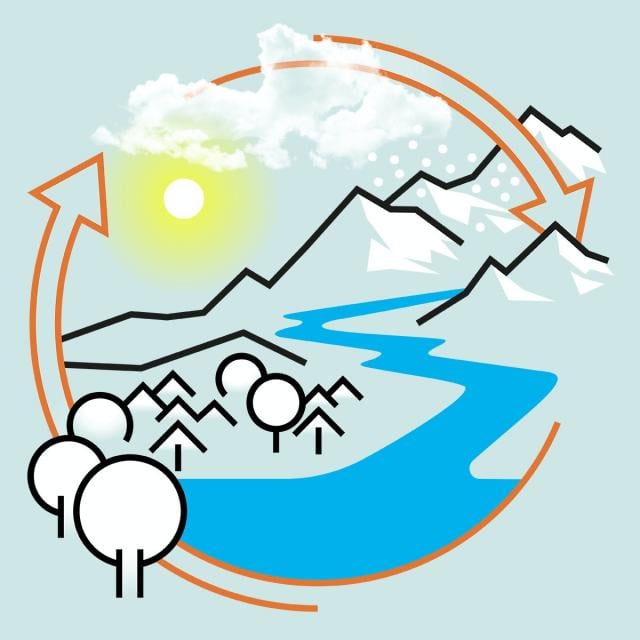
Willkommen im Kurs Wasser in der Schweiz! Genau um dieses Thema wird es in Kapitel 1.1 gehen. Sie bekommen eine Einführung in den Inhalt, und die Ziele und Konzepte dieses Kurses. In Kapitel 1.2 wird über die Bedeutung von Wasser geredet. Es wird Ihnen auch eine Übersicht gegeben, wieviel Wasser in der Schweiz für welche Zwecke genutzt wird. Erste hydrologische Bezeichnungen und Konzepte lernen Sie in Kapitel 1.3 kennen. Dabei werden Wasserkreislauf, Einzugsgebiete und die Wasserbilanz behandelt. Um das Modul erfolgreich abzuschliessen, ist es nötig das Examen am Ende zu bestehen.

WEEK 2
Vom Regen in die Traufe
Was ist Niederschlag? Wie wird er gemessen? Um diese zwei Fragen wird sich das Kapitel 2.1 drehen. Dabei werden die Entstehung, die verschiedenen Arten und die räumliche Verteilung von Niederschlag angeschaut. Im zweiten Teil dieses Kapitels wird gezeigt, wie der Niederschlag gemessen werden kann. In Kapitel 2.2 beschäftigt uns unterirdisches Wasser. Dieses wird unterschieden in Bodenwasser und Grundwasser. Es wird jeweils aufgezeigt, was Hydrologen unter Boden- und Grundwasser verstehen und wie diese zwei wichtigen Komponenten des Wasserkreislaufs gemessen werden können.

WEEK 3
In Strömen fliessen
Im dritten Modul steht der Abfluss im Zentrum. Zuerst wird in Kapitel 3.1 gezeigt, wie und warum der Abfluss über Raum und Zeit variiert. Um den Abfluss auch quantifizieren zu können, werden Einheiten vorgestellt, in denen Abfluss gemessen wird. Wie der Abfluss dann tatsächlich gemessen werden kann, wird in praxisnahen Feldvideos genauer erklärt. Im Kapitel 3.2 wird dann vom Abfluss an einer Stelle auf das ganze Einzugsgebiet herausgezoomt. Es werden verschiedene Einzugsgebiete charakterisiert und Messnetze diskutiert.

WEEK 4
Wenn das Wasser bis zum Hals steht
Hochwasser sind eine bekannte Naturgefahr. Wie oft kommen Hochwasser vor? Wie schützt man sich heute vor Hochwassern? Diese Fragen werden in 4.1 und 4.2 behandelt. In diesem Zuge wird auch näher vorgestellt, was ein hydrologisches Modell ist und wie der Hochwasserschutz solche Modelle anwendet. In 4.3 wird es dann etwas trockener: Nicht nur Hochwasser, sondern auch Dürren stellen eine Bedrohung dar. Es wird gezeigt, was für einen Einfluss trockene Perioden auf die Wasserresourcen und das Wassermanagement haben.

WEEK 5
Kein Wässerchen trüben
Wie sieht es aus mit der Wasserqualität in der Schweiz? In Kapitel 5.1 lernen Sie Grundlagen der Wasserqualität sowie Verschmutzungsquellen näher kennen. Im Anschluss werden mit einer Bierbrauerei und einem Thermalbad zwei Industriezweige gezeigt, für welche die Wasserqualität eine wichtige Rolle spielt. In Kapitel 5.2 wird dann die Wasserqualität von Schweizer Gewässern anhand zweier Beispiele näher betrachtet. Darüber hinaus wird angeschaut, welche Auswirkung auf die Biodiversität in Gewässern die Wasserqualität hat.

WEEK 6
Nah am Wasser gebaut
Dieses Modul beschäftigt sich mit verschiedensten Infrastrukturen, welche im Rahmen des Wassermanagements gebaut werden. In 6.1 werden Trinkwasserversorgung und Abwasserreinigung vorgestellt. Danach schweift der Fokus auf Wasserkraftwerke. Dort gibt es einen Überblick von der Vergangenheit über die Gegenwart bis in die Zukunft. Zudem wird mit einem Dokumentarfilm gezeigt, wie ein Speicherkraftwerk tatsächlich funktioniert. Zum Schluss wird in 6.3 angeschaut, wie Städte mit Wasserflüssen umgehen und was für eine Rolle Kanäle in der Schweiz spielen.

WEEK 7
Mit allen Wassern gewaschen
In diesem letzten Modul geht es um die Interaktion zwischen Wasser und Mensch. Nicht nur in Ortsnamen und Legenden spielt Wasser eine Rolle, sondern auch in der Malerei ist Wasser ein beliebtes Sujet. Wasserfälle faszinieren Menschen seit Jahrhunderten und sind nach wie vor beliebte Ausflugsziele. Selber Wasser beobachten ist spannend. Noch interessanter wird es, wenn man mit seinen Beobachtungen direkt zu einem Citizen Science Projekt beitragen kann. Ja, und dann ist es leider schon an der Zeit, Auf Wiedersehen zu sagen. Herzlichen Dank für Ihre Teilnahme am Kurs!
Go to Class
MOOC List is learner-supported. When you buy through links on our site, we may earn an affiliate commission.

Related Courses

China’s First Empires and the Rise of Buddhism (edX) EdX
HarvardX,Harvard University

China’s First Empires and the Rise of Buddhism (edX)

Learn about the Qin and Han dynasties, and how Buddhism and ideas of self-realization influenced the medieval period. This course, the second in a collection on Chinese history and culture, addresses how the Qin dynasty conquered China and established a new system of government and how the Han dynasty built a stable, centralized empire that lasted for hundreds of years. We cover the early history of Buddhism in China and how the rising feudal aristocracy responded to the loss of empire by looking inward.

Self Paced
Self-Paced
Introduction to Sustainability (Coursera) Coursera
University of Illinois at Urbana-Champaign

Introduction to Sustainability (Coursera)

This course introduces the academic approach of Sustainability and explores how today’s human societies can endure in the face of global change, ecosystem degradation and resource limitations. The course focuses on key knowledge areas of sustainability theory and practice, including population, ecosystems, global change, energy, agriculture, water, environmental economics and policy, ethics, and cultural history.

Sep 28th 2026
5-12 Weeks
Water Supply and Sanitation Policy in Developing Countries Part 2: Developing Effective Interventions (Coursera) Coursera
University of Manchester

Water Supply and Sanitation Policy in Developing Countries Part 2: Developing Effective Interventions (Coursera)

Water Supply and Sanitation Policy in Developing Countries Part 2 is our second MOOC in a two-part sequence, and looks at ‘Developing Effective Interventions’. Here we invite you to develop analytical skills and deep understanding about a complex, controversial policy problem – one with no simple, easy answers. About half a billion people on our planet still lack access to improved water supplies and about two billion do not have improved sanitation services, leading to an unknown but very large number of avoidable deaths each year from water-related diseases. Millions of dollars are spent on avoidable health care expenditures, and people – mostly women – spend many billions of hours carrying water from sources outside the home.

Sep 28th 2026
5-12 Weeks
Sensing Planet Earth - Water and Ice (edX) EdX
Chalmers University of Technology,ChalmersX

Sensing Planet Earth - Water and Ice (edX)

Learn how to measure and monitor the Earth’s water and ice masses to deepen your understanding of global change. Global warming. Rising sea levels. Droughts. Flooding. The melting of the polar ice caps. In this energy and earth science course, you will learn how continental water and ice masses are measured and monitored through remote sensing.

Self Paced
5-12 Weeks
Achieving Sustainable Development (FutureLearn) FutureLearn
Trinity College Dublin

Achieving Sustainable Development (FutureLearn)

Explore the challenges of sustainable development. See the impact of UN Sustainable Development Goals on real people. Consider the impact that UN Sustainable Development Goals could have. Governments of the world have signed up to the Sustainable Development Goals (SDGs), a UN initiative for international development. They are targets for improving the world by 2030, including: health, environment, education, and security. But will they have an impact on the lives of people?

Self Paced
4 Weeks
Come Rain or Shine: Understanding the Weather (FutureLearn) FutureLearn
University of Reading

Come Rain or Shine: Understanding the Weather (FutureLearn)

Understand and explore the physical processes behind the weather. Weather affects our lives almost every day through what we wear, what we eat and what we do. But why is it rainy, windy or sometimes even sunny? Explore some of the physical processes driving UK weather systems and get hands on in the world of weather with practical activities and fieldwork.

Self Paced
3 Weeks
New paradigms in wastewater management (Coursera) Coursera
Politecnico di Milano

New paradigms in wastewater management (Coursera)

This MOOC is aimed at providing key elements in relation to the management of the urban water cycle, including both conventional goals and the challenges of the smart cities of the future. This MOOC presents a full picture, although very concise, of present and emerging technologies for wastewater treatment, presented by professors teaching at Politecnico di Milano.

Sep 21st 2026
4 Weeks
Education on climate change: water and soil (Coursera) Coursera
Inter-American Development Bank - IDB

Education on climate change: water and soil (Coursera)

This course delves into the connection between water, climate change, and how living organisms adapt to these shifts. It also explores concepts related to agriculture, food, and food sovereignty. Additionally, it introduces a range of online games that enhance the integration and practical application of the developing conceptual knowledge.

Sep 14th 2026
3 Weeks
Introduction to Household Water Treatment and Safe Storage (Coursera) Coursera
École Polytechnique Fédérale de Lausanne

Introduction to Household Water Treatment and Safe Storage (Coursera)

It is well known that water treatment at the household level can lead to dramatic improvements in drinking water quality. But does Household Water Treatment and Safe Storage (HWTS) also have global relevance? What are the potential treatment solutions and how do they function? Is there a standard strategy for successful HWTS implementation, or can we identify key components which make programs more likely to succeed? In this course you will learn about the most important water treatment methods at household level, successful implementation strategies and about assessing the impact of HWTS.

Sep 7th 2026
5-12 Weeks
Backyard Meteorology: The Science of Weather (edX) EdX
HarvardX,Harvard University

Backyard Meteorology: The Science of Weather (edX)

Learn to forecast the weather just by looking out your window. The weather forecasts we see every day are based on an army of meteorological sensing networks and intensive computer modeling. Before the rise of these technologies, predictions were made by methods like discerning cloud formations and wind directions.

Self Paced
Self-Paced
Exploring Humans’ Space: An Introduction to Geographicity (edX) EdX
École Polytechnique Fédérale de Lausanne,EPFLx

Exploring Humans’ Space: An Introduction to Geographicity (edX)

Explore how geography, cartography, urbanization and spatial justice play a role in shaping the notion of human space. How do we understand the notion of space? How have urbanisation, mobility, digital spaces, and globalization changed the way we perceive it? This course aims to help you feel comfortable with the notion of space.

Self Paced
Self-Paced
Evaluación de peligros y riesgos por fenómenos naturales (Coursera) Coursera
Universidad Nacional Autónoma de México

Evaluación de peligros y riesgos por fenómenos naturales (Coursera)

Reconocer el conocimiento básico sobre los factores físicos y sociales que condicionan el riesgo de una sociedad por fenómenos extremos de origen natural (sismos, huracanes, etc.) y promover las acciones necesarias para reducir el impacto de los desastres en una comunidad.

Sep 28th 2026
4 Weeks