Water Supply and Sanitation Policy in Developing Countries Part 2: Developing Effective Interventions (Coursera)

Water Supply and Sanitation Policy in Developing Countries Part 2: Developing Effective Interventions (Coursera)

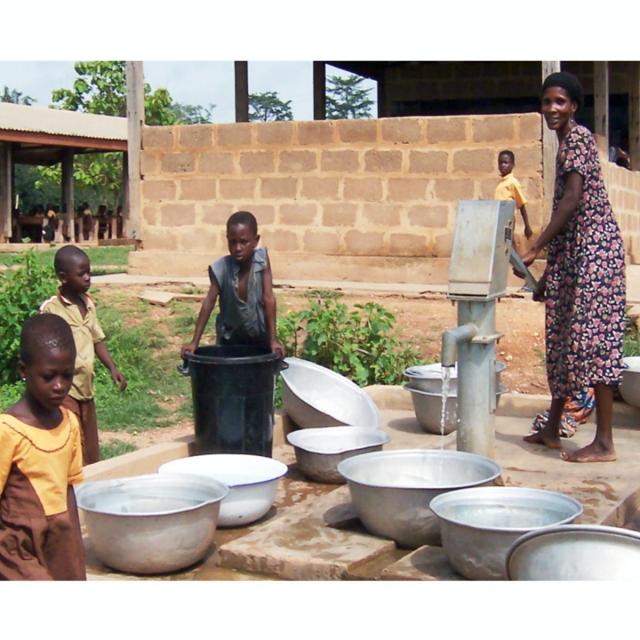
Water Supply and Sanitation Policy in Developing Countries Part 2 is our second MOOC in a two-part sequence, and looks at ‘Developing Effective Interventions’. Here we invite you to develop analytical skills and deep understanding about a complex, controversial policy problem – one with no simple, easy answers. About half a billion people on our planet still lack access to improved water supplies and about two billion do not have improved sanitation services, leading to an unknown but very large number of avoidable deaths each year from water-related diseases. Millions of dollars are spent on avoidable health care expenditures, and people – mostly women – spend many billions of hours carrying water from sources outside the home.

Class Deals by MOOC List - Click here and see Coursera's Active Discounts, Deals, and Promo Codes.

Reducing these costs is a major global challenge for us all in the 21st century. Join us to explore the challenging and complex political, economic, social, and technical dimensions of the policy interventions that donors, national governments and water utilities use to address this challenge.

Your instructors for this course have worked in and studied this sector for many years. Professor Dale Whittington has worked on water and sanitation policy and planning issues for over 40 years in more than two dozen low and middle-income countries. Dr Duncan Thomas has worked in the UK and European water sectors for 15 years, focusing on overcoming barriers to technological, organizational, regulatory and policy innovations.

Syllabus

WEEK 1: Introduction and how our ‘ancient instincts’ affect water policy intervention
WEEK 2: Planning better policy interventions: Roles, features and examples of planning protocols
WEEK 3: Roles, features and problems of water pricing, tariff design and subsidies
WEEK 4: Providing information to households and communities to improve water and sanitation conditions
WEEK 5: Changing the institutions that deliver water and sanitation services: Privatization in lesser developing countries
WEEK 6: Changing institutions: Lessons from the UK water privatization story
WEEK 7: Changing institutions: Improving regulation of the water and sanitation sector


Go to Class
MOOC List is learner-supported. When you buy through links on our site, we may earn an affiliate commission.

Related Courses

Sustainable Business: Big Issues, Big Changes (Coursera) Coursera
University of Colorado System

Sustainable Business: Big Issues, Big Changes (Coursera)

This is class 3 in the MOOC specialization, Become a Sustainable Business Change Agent. This class looks at the big issues companies are fixing - climate change, water, worker satisfaction and supply chain issues. You will learn tools to help your company address these issues intelligently. The class ends with an assignment to set a science-based carbon reduction target for a small company. Tis is absolutely cutting edge material. Only about 300 companies in the whole world are doing this as of July 2017. You could put your company in the elite group!

Oct 19th 2026
5-12 Weeks
Financial Markets (Coursera) Coursera
Yale University

Financial Markets (Coursera)

An overview of the ideas, methods, and institutions that permit human society to manage risks and foster enterprise. Emphasis on financially-savvy leadership skills. Description of practices today and analysis of prospects for the future. Introduction to risk management and behavioral finance principles to understand the real-world functioning of securities, insurance, and banking industries. The ultimate goal of this course is using such industries effectively and towards a better society.

Oct 26th 2026
5-12 Weeks
Marketing Mix Fundamentals (Coursera) Coursera
IE Business School

Marketing Mix Fundamentals (Coursera)

Marketing Mix Fundamentals prepares you for arguably the most important stage of bring your product to market - how and where are you going to market it? It sets out a detailed introduction to the four P’s of Marketing (Product, Pricing, Place and Promotion), this course forces you to strategically analyze your product and/or service. The Product session is designed to provide you with the knowledge to understand and manage the strategic role of brands and products in generating business results, whilst the focus on Pricing will cover the main concepts and techniques to formulate prices.

Oct 19th 2026
4 Weeks
Villes africaines: Environnement et enjeux de développement durable (Coursera) Coursera
École Polytechnique Fédérale de Lausanne

Villes africaines: Environnement et enjeux de développement durable (Coursera)

Le cours propose une lecture de l’environnement urbain en Afrique à travers les thématiques les plus pertinentes pour mesurer le niveau de développement d’un pays : eau et vie urbaine, assainissement (eaux usées et pluviales), gestion des déchets solides, agriculture urbaine. Après avoir analysé les différents enjeux de celles-ci, nous aborderons les liens entre environnement urbain et santé.

Oct 19th 2026
5-12 Weeks
AWS Cloud Practitioner Essentials (Coursera) Coursera
AWS

AWS Cloud Practitioner Essentials (Coursera)

Welcome to AWS Cloud Practitioner Essentials. If you’re new to the cloud, whether you’re in a technical or non-technical role such as finance, legal, sales, marketing, this course will provide you with an understand of fundamental AWS Cloud concepts to help you gain confidence to contribute to your organization’s cloud initiatives. This course is also the starting point to prepare for your AWS Certified Cloud Practitioner certification whenever it’s convenient for you.

Nov 2nd 2026
5-12 Weeks
Advanced Topics in Derivative Pricing (Coursera) Coursera
Columbia University

Advanced Topics in Derivative Pricing (Coursera)

This course discusses topics in derivative pricing. The first module is designed to understand the Black-Scholes model and utilize it to derive Greeks, which measures the sensitivity of option value to variables such as underlying asset price, volatility, and time to maturity. Greeks are important in risk management and hedging and often used to measure portfolio value change. Then we will analyze risk management of derivatives portfolios from two perspectives—Greeks approach and scenario analysis.

Oct 19th 2026
5-12 Weeks
Sustainability of Social-Ecological Systems: the Nexus between Water, Energy and Food (Coursera) Coursera
Universitat Autònoma de Barcelona

Sustainability of Social-Ecological Systems: the Nexus between Water, Energy and Food (Coursera)

In this course you will become familiar with the ideas of the water-energy-food nexus and transdisciplinary thinking. You will learn to see your community or country as a complex social-ecological system and to describe its water, energy and food metabolism in the form of a pattern, as well as to map the categories of social actors.

Nov 9th 2026
5-12 Weeks
Customer Value in Pricing Strategy (Coursera) Coursera
University of Virginia,Boston Consulting Group - BCG

Customer Value in Pricing Strategy (Coursera)

The traditional approach to pricing based on costs works to pay the bills, but it leaves revenue on the table. You can, in fact, price your products in a way that increases sales--if you know what your customers are willing to pay and can leverage psychology to create better deal and discount plans. In this course, we'll show you how to price a product based on how your customers value it and the psychology behind their purchase decisions.

Oct 19th 2026
4 Weeks
HI-FIVE: Health Informatics For Innovation, Value & Enrichment (Clinical Perspective) (Coursera) Coursera
Columbia University

HI-FIVE: Health Informatics For Innovation, Value & Enrichment (Clinical Perspective) (Coursera)

HI-FIVE (Health Informatics For Innovation, Value & Enrichment) Training is a 12-hour online course designed by Columbia University in 2016, with sponsorship from the Office of the National Coordinator for Health Information Technology (ONC). The training is role-based and uses case scenarios. Also, it has additional, optional modules on other topics of interest or relevance. Although we suggest to complete the course within a month's timeframe, the course is self-paced and so you can start and finish the course at anytime during a month's time period. No additional hardware or software are required for this course.

Oct 26th 2026
4 Weeks
Introduction to Sustainability (Coursera) Coursera
University of Illinois at Urbana-Champaign

Introduction to Sustainability (Coursera)

This course introduces the academic approach of Sustainability and explores how today’s human societies can endure in the face of global change, ecosystem degradation and resource limitations. The course focuses on key knowledge areas of sustainability theory and practice, including population, ecosystems, global change, energy, agriculture, water, environmental economics and policy, ethics, and cultural history.

Oct 26th 2026
5-12 Weeks
Public Health in Humanitarian Crises 1 (Coursera) Coursera
Johns Hopkins University

Public Health in Humanitarian Crises 1 (Coursera)

This course, Public Health in Humanitarian Crises 1, introduces discussions about the public health approach to problems experienced by people affected by disasters, both natural and related to conflict. The course discusses the many changes which occur in people’s lives when they are uprooted by a disaster, ranging from changes in disease patterns, access to health care, livelihoods, shelter, sanitary conditions, nutritional status, etceteras. We will explore what humanitarian interventions could look like if we want to mitigate the effects of disasters. The course content is a mix of theoretical knowledge and many practical examples from recent disasters. We think this course is unique because it contains so many practical ‘real-life’ examples and is taught by instructors and guest lecturers who together have over 200 years of experience in this field.

Oct 26th 2026
5-12 Weeks
Water Supply and Sanitation Policy in Developing Countries Part 1: Understanding Complex Problems (Coursera) Coursera
University of Manchester

Water Supply and Sanitation Policy in Developing Countries Part 1: Understanding Complex Problems (Coursera)

Our course explores what can be done to solve the complex problem that half a billion people worldwide do not have improved water supplies and two billion do not have improved sanitation. We look forward to you joining us. We want to help you develop the skills you need to address this major global challenge of the 21st century.

Oct 26th 2026
5-12 Weeks