Vehicle-to-Grid Charging for Electric Cars (FutureLearn)

Offered by Cenex,
Vehicle-to-Grid Charging for Electric Cars (FutureLearn)

Learn all you need to know about how bi-directional V2G charging works, and why it's important for sustainable energy systems. Explore the functions, applications, and potential of vehicle-to-grid charging.

Class Deals by MOOC List - Click here and see FutureLearn's Active Discounts, Deals, and Promo Codes.

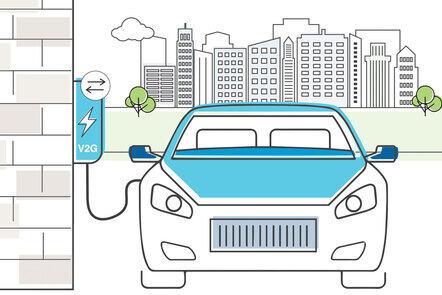
Vehicle-to-grid (V2G) charging technology is gaining a lot of traction in the electric car industry. By allowing the charging and discharging of vehicles, it turns them into mobile energy storage assets. The combination of the changing way electricity is generated and the increasing uptake of electric cars means that V2G charging could significantly reduce both costs and emissions.
With that in mind, understanding how V2G technology works and can be used is simply good business sense. This three-week course, presented by Cenex, gives you the foundation you need to work within this exciting industry.

Get to grips with vehicle-to-grid fundamentals
On this course, you’ll learn V2G charging basics and the different situations where it can be used. You’ll gain a good understanding of why the technology is as important for electric car users as it is for the energy system, and of the industry’s current state of development.

Explore the possibilities of the vehicle-to-grid industry
Once you know how far V2G charging has developed, you’ll delve into how much it can grow. By identifying barriers to adopting V2G charging, where its emerging opportunities are, and when the technology is likely to mature, you’ll gain insights into the industry’s potential. Use these to start making shrewd business decisions, or as a foundation for future learning.

Trust the high quality of this Cenex course
Cenex (the Centre of Excellence for Low Carbon and Fuel Cell Technologies)’s involvement in V2G charging research and demonstration goes back to 2016, from installing the UK’s first V2G charge points to delivering the world’s largest V2G trial in 2021. With over 15 years’ experience in low carbon transport and energy systems projects, the organisation is ideally suited to deliver this course.

Syllabus

Week 1: What is V2G?
Week 2: Why V2G?
Week 3: How to apply V2G

Learning on this course
You can take this self-guided course and learn at your own pace. On every step of the course you can meet other learners, share your ideas and join in with active discussions in the comments.
What will you achieve?
By the end of the course, you‘ll be able to...

  • To explore what V2G charging is and how it works.
  • To identify the different use cases for V2G charging.
  • To evaluate why V2G charging is important for customers and the energy system.
  • To explore the current state of development of V2G charging, including some example case studies.
  • To identify the current barriers to V2G charging, where the emerging opportunities lie and likely timescales for the technology to achieve commercial maturity.

Who is the course for?
This course is designed for anyone looking to understand more about the V2G and electric car industry. Private business owners, public administrators, electric car owners, and those interested in management positions will all find it invaluable.

Go to Class
MOOC List is learner-supported. When you buy through links on our site, we may earn an affiliate commission.

Related Courses

Understanding Biological Energy (FutureLearn) FutureLearn
Royal Holloway, University of London

Understanding Biological Energy (FutureLearn)

Get an introduction to energy and explore how humans and other living things obtain and use their biological energy sources. Discover applications of biological energy, from human energy to photosynthesis. On this course, you’ll learn what energy actually is and how living things acquire and convert it.

Self Paced
4 Weeks
Sustainability of Social-Ecological Systems: the Nexus between Water, Energy and Food (Coursera) Coursera
Universitat Autònoma de Barcelona

Sustainability of Social-Ecological Systems: the Nexus between Water, Energy and Food (Coursera)

In this course you will become familiar with the ideas of the water-energy-food nexus and transdisciplinary thinking. You will learn to see your community or country as a complex social-ecological system and to describe its water, energy and food metabolism in the form of a pattern, as well as to map the categories of social actors.

Sep 14th 2026
5-12 Weeks
Particle Dynamics (Coursera) Coursera
Korea Advanced Institute of Science and Technology - KAIST

Particle Dynamics (Coursera)

This course teaches dynamics, one of the basic mechanics subjects of Mechanical Engineering. Students would be able to organize their knowledge about force and motion, work-energy, impulse-momentum in view of Newton's 2nd law and its integration over time and displacement. The Engineering Dynamics consists of two parts: particle dynamics and rigid body dynamics.

Sep 14th 2026
13-24 Weeks
Global Resource Politics: the Past, Present and Future of Oil, Gas and Shale (FutureLearn) FutureLearn
Hanyang University

Global Resource Politics: the Past, Present and Future of Oil, Gas and Shale (FutureLearn)

Understand the critical energy challenges the world faces and analyse the political economy of the global energy industry. Energy is often said to be the lifeblood of modern society. Multiple sea changes are currently afoot in the global economy, at the heart of which lies energy.

No sessions available
5-12 Weeks
The Science of Nuclear Energy (FutureLearn) FutureLearn
The Open University

The Science of Nuclear Energy (FutureLearn)

Discover the science behind nuclear energy and its role in energy provision in the past, present and future. Understand the science of nuclear power and the arguments for and against it. With the need to reduce carbon emissions around the world, the way we generate our power has to change and nuclear energy is back on the political agenda.

No sessions available
4 Weeks
Global Energy and Climate Policy (Coursera) Coursera
University of London,SOAS University of London

Global Energy and Climate Policy (Coursera)

The Global Energy and Climate Policy course offers an introduction to the theoretical and practical understanding of how energy and climate change policies are designed, shaped, advocated and implemented. As energy markets go truly global, domestic energy policies are becoming more and more entangled with wider issues of international governance. Concurrently, the urgent need to mitigate and adapt to climate change and transition to a low-carbon future is adding a further layer of complexity.

Sep 21st 2026
5-12 Weeks
Introduction to Thermodynamics (FutureLearn) FutureLearn
University of Hull

Introduction to Thermodynamics (FutureLearn)

Discover the laws of thermodynamics as you learn how to calculate chemical properties and predict chemical reactions. Get an introduction to thermodynamic properties and systems. Curious about thermodynamics or thinking about studying it at university? This short course from the University of Hull offers a short introduction to the fundamentals of thermodynamics – the branch of physics that deals with heat and its relation to energy.

Available now
3 Weeks
Energy management for real estate. Methods and digital tools (Coursera) Coursera
Politecnico di Milano

Energy management for real estate. Methods and digital tools (Coursera)

The figure of the Energy Manager (EM), introduced in the United States in the early 1970s, during the first oil crisis, brought to light the need to get more work out of less energy. In Italy, this figure was officially introduced by Law 308/82, but had its first strong impulse thanks to Law 10/91, aimed at implementing the National Energy Plan on the rational use of energy, energy saving and the development of renewable energy sources. More in detail, an Energy Manager is a person whose task is to manage what concerns energy within a company, a public body, or more generally a structure, verifying the energy consumption, optimising it, and promoting interventions aimed at energy efficiency and the use of renewable sources.

Sep 21st 2026
4 Weeks
Mechanics: Motion, Forces, Energy and Gravity, from Particles to Planets (Coursera) Coursera
UNSW Sydney - University of New South Wales

Mechanics: Motion, Forces, Energy and Gravity, from Particles to Planets (Coursera)

Most of the phenomena in the world around you are, at the fundamental level, based on physics, and much of physics is based on mechanics. Mechanics begins by quantifying motion, and then explaining it in terms of forces, energy and momentum. This allows us to analyse the operation of many familiar phenomena around us, but also the mechanics of planets, stars and galaxies.

Sep 14th 2026
5-12 Weeks
Transforming Energy Systems: Why Governance Matters (FutureLearn) FutureLearn
University of Exeter

Transforming Energy Systems: Why Governance Matters (FutureLearn)

Tackling climate change demands profound and rapid energy system transformation. Discover how effective governance enables this. Understand the importance of governance for rapid energy system decarbonisation. Energy governance includes the rules, regulations, institutions and politics that affect energy system change. Effective governance is key to the transformation of energy systems in order to tackle climate change with the urgency that’s needed.

Available Now
4 Weeks
Energy Systems Integration: An Introduction (FutureLearn) FutureLearn
EIT InnoEnergy

Energy Systems Integration: An Introduction (FutureLearn)

Discover innovative sustainable energy systems solutions and explore an integrated perspective on the energy market.Learn how sustainable energy systems interact and solve big energy challenges. With the rising cost of energy and the threat of climate change on energy security, the world is facing critical energy challenges. On this course, you will explore sustainable energy solutions, and build skills to develop, plan and operate an integrated sustainable energy system.

May 25th 2020
4 Weeks