Understanding Biological Energy (FutureLearn)

Understanding Biological Energy (FutureLearn)

Get an introduction to energy and explore how humans and other living things obtain and use their biological energy sources. Discover applications of biological energy, from human energy to photosynthesis. On this course, you’ll learn what energy actually is and how living things acquire and convert it.

Class Deals by MOOC List - Click here and see FutureLearn's Active Discounts, Deals, and Promo Codes.

You’ll find out how biological energy is stored and released in fossil fuels and what advances in agriculture mean for feeding the world’s growing population.
As you explore biological energy in industry, you’ll consider the ways science can help us to reduce our reliance on fossil fuels as well as ways we might use and learn from plants to provide energy in the future.
You’ll also discover the concept of ‘energy overload’ and how it is threatening our bodies’ energy balance today.
What topics will you cover?

  1. Introduction to energy: How living things use energy; A brief history of thermodynamics; Enthalpy, entropy and free energy
  2. Human energy: Humans as chemotrophs; Chemical energy from food; Mitochondria; ion gradients and ATP
  3. Photosynthesis: Green plants and autotrophic bacteria; Solar energy to food; Oxygenation and evolution
  4. Industrial energy: Fossil fuels; Biomass; Artificial photosynthesis

What will you achieve?
By the end of the course, you‘ll be able to...

  • Describe what energy is and how concepts of energy, enthalpy and entropy were developed
  • Summarise how humans obtain, convert and store energy
  • Describe oxygenic photosynthesis and its ecological significance
  • Compare biologically-derived energy sources, both renewable and non-renewable

Who is the course for?
This course is designed for young learners who have studied at least GCSE science (chemistry, biology, or physics) and are interested in pursuing the connections between these subjects.
It will be of particular interest to those looking to study the life sciences at university level.
The course is also suitable for those who are simply interested in how living things store and use energy.

Go to Class
MOOC List is learner-supported. When you buy through links on our site, we may earn an affiliate commission.

Related Courses

The Science of Nuclear Energy (FutureLearn) FutureLearn
The Open University

The Science of Nuclear Energy (FutureLearn)

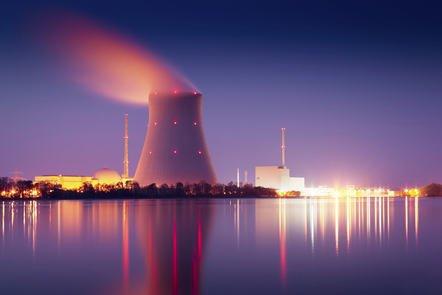
Discover the science behind nuclear energy and its role in energy provision in the past, present and future. Understand the science of nuclear power and the arguments for and against it. With the need to reduce carbon emissions around the world, the way we generate our power has to change and nuclear energy is back on the political agenda.

No sessions available
4 Weeks
Energy, the Environment and Our Future (FutureLearn) FutureLearn
Pennsylvania State University

Energy, the Environment and Our Future (FutureLearn)

Learn where we get our energy from today and why we need to change our energy system now, to avoid future changes to our climate. Our ancestors burned trees and whales far faster than nature produced more, gaining good from the energy but causing big problems. Today we burn fossil fuels, which allows us to live well, but will cause even bigger problems in the future.

No sessions available
5-12 Weeks
Electric Utilities Fundamentals and Future (Coursera) Coursera
University of Colorado System

Electric Utilities Fundamentals and Future (Coursera)

The approach of this course is truly unique in how it approaches and engages learners. It looks at the electric utility industry, which has remained critical to our quality of life, health and comfort from the eyes of numerous industry experts through on-location interviews, compelling visuals, and animation. You will benefit from having the inside track because you see some behind-the-scenes information not covered in news stories, social media or even if we are in the business ourselves.

Jun 22nd 2026
5-12 Weeks
Biochemical Principles of Energy Metabolism (Coursera) Coursera
Korea Advanced Institute of Science and Technology - KAIST

Biochemical Principles of Energy Metabolism (Coursera)

Everyone knows that energy is essential for sustaining life. How can you define energy in life? Have ever thought about ways of how carbohydrates like glucose from your diet can be used for extracting energy? A scientific field that focuses on energy production and flow though living cells and organisms is called bioenergetics. Energy metabolism covers various biochemical ways of energy transformation and regulatory mechanisms of over thousands chemical reactions. Without fine control of those metabolic processes, cells and organisms cannot maintain activities linked to life.

Jun 22nd 2026
5-12 Weeks
Carbon Markets: Examining EU Policies for Transnational Climate Action (FutureLearn) FutureLearn
European University Institute - EUI

Carbon Markets: Examining EU Policies for Transnational Climate Action (FutureLearn)

Explore the current policies being created by the EU and assess their efficacy in promoting global climate action. Understand and evaluate the steps taken to create a climate policy framework. As the impact of climate change continues to affect our planet, it’s imperative that our global community fights to reduce their emissions and live sustainably.

Feb 28th 2022
5-12 Weeks
Material Processing (Coursera) Coursera
Georgia Institute of Technology

Material Processing (Coursera)

Have you ever wondered why ceramics are hard and brittle while metals tend to be ductile? Why some materials conduct heat or electricity while others are insulators? Why adding just a small amount of carbon to iron results in an alloy that is so much stronger than the base metal? In this course, you will learn how a material’s properties are determined by the microstructure of the material, which is in turn determined by composition and the processing that the material has undergone.

Jun 22nd 2026
2 Weeks
Introduction to Thermodynamics (FutureLearn) FutureLearn
University of Hull

Introduction to Thermodynamics (FutureLearn)

Discover the laws of thermodynamics as you learn how to calculate chemical properties and predict chemical reactions. Get an introduction to thermodynamic properties and systems. Curious about thermodynamics or thinking about studying it at university? This short course from the University of Hull offers a short introduction to the fundamentals of thermodynamics – the branch of physics that deals with heat and its relation to energy.

Available now
3 Weeks
Ideal Gases (Coursera) Coursera
University of Colorado Boulder

Ideal Gases (Coursera)

Course 3 of Statistical Thermodynamics, Ideal Gases, explores the behavior of systems when intermolecular forces are not important. This done by evaluating the appropriate partition functions for translational, rotational, vibrational and/or electronic motion. We start with pure ideal gases including monatomic, diatomic and polyatomic species.

Jun 22nd 2026
3 Weeks
Energy Systems Integration: An Introduction (FutureLearn) FutureLearn
EIT InnoEnergy

Energy Systems Integration: An Introduction (FutureLearn)

Discover innovative sustainable energy systems solutions and explore an integrated perspective on the energy market.Learn how sustainable energy systems interact and solve big energy challenges. With the rising cost of energy and the threat of climate change on energy security, the world is facing critical energy challenges. On this course, you will explore sustainable energy solutions, and build skills to develop, plan and operate an integrated sustainable energy system.

May 25th 2020
4 Weeks
Battery Storage: Understanding the Battery Revolution (FutureLearn) FutureLearn
KIC InnoEnergy

Battery Storage: Understanding the Battery Revolution (FutureLearn)

Learn about the importance of energy storage and understand the role of batteries and battery technology. Learn about the importance of energy storage. What is energy storage, and why is it so important? On this course, you will learn about the most promising energy storage technologies, such as batteries, and how they can affect the future of the transportation and power sectors. As you’ll see, the rising global demand for a stable energy supply requires flexible energy storage.

Available now
3 Weeks