EdX

Urban Sewage Treatment (edX)

Urban Sewage Treatment (edX)

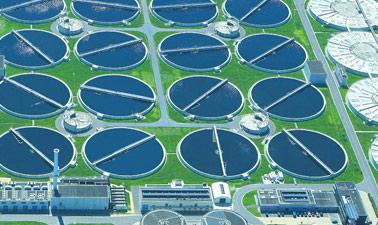
Learn about urban water services, focusing on basic sewage treatment technologies. This course will focus on basic technologies for the treatment of urban sewage. Unit processes involved in the treatment chain will be described as well as the physical, chemical and biological processes involved. There will be an emphasis on water quality and the functionality of each unit process within the treatment chain. After the course one should be able to recognise the process units, describe their function and make simple design calculations on urban sewage treatment plants.

Class Deals by MOOC List - Click here and see EdX's Active Discounts, Deals, and Promo Codes.

The course consists of 6 modules:

  1. Sewage treatment plant overview. In this module you will learn what major pollutants are present in the sewage and why we need to treat sewage prior to discharge to surface waters. The functional units will be briefly discussed
  2. Primary treatment. In this module you learn how coarse material, sand & grit are removed from the sewage and how to design primary clarification tanks
  3. Biological treatment. In this module you learn the basics of the carbon, nitrogen and phosphorous cycle and how biological processes are used to treat the main pollutants of concern.
  4. Activated sludge process. In this module you learn the design principles of conventional activated sludge processes including the secondary clarifiers and aeration demand of aeration tanks.
  5. Nitrogen and phosphorus removal. In this module you learn the principles of biological nitrogen removal as well as phosphorus removal by biological and/or chemical means.
  6. Sludge treatment. In this module you will the design principles of sludge thickeners, digesters and dewatering facilities for the concentration and stabilisation of excess sewage sludge. Potentials for energy recovery via the produced biogas will be discussed as well as the direct anaerobic treatment of urban sewage in UASB reactors when climate conditions allow.

This course in combination with the courses "Introduction to Water and Climate" and "Introduction to Drinking Water Treatment" forms the Water Management XSeries, by DelftX.

What you'll learn:

  • Recognize the process units in urban wastewater treatment technologies
  • Describe the function of these process units
  • Describe the physical, chemical and biological processes involved
  • Make simple design calculations on wastewater treatment plants
Go to Class
MOOC List is learner-supported. When you buy through links on our site, we may earn an affiliate commission.

Related Courses

The Basics of Transport Phenomena (edX) EdX
Delft University of Technology,DelftX

The Basics of Transport Phenomena (edX)

Learn the basic framework to work on a broad spectrum of engineering problems concerning transfer of heat, mass and momentum. Learn through examples of everyday processes at home, in the lab and in industry. Have you ever wondered why ventilation helps to cool down your hot chocolate? Do you know why a surfing suit keeps you warm? Why iron feels cold, while wood feels warm at room temperature? Or how air is transferred into aqueous liquids in a water treatment plant? How can we sterilize milk with the least amount of energy? How does medicine spread in our tissue? Or how do we design a new cooling tower of a power plant? All these are phenomena that involve heat transfer, mass transfer or fluid flow.

Self Paced
Self-Paced
Railway Engineering: An Integral Approach (edX) EdX
Delft University of Technology,DelftX

Railway Engineering: An Integral Approach (edX)

Discover the science and complexity behind the exciting world of metro, tram and railway systems. Have you ever wondered what it takes to get your train on the right platform at the scheduled time every day? Understanding the complexity behind today’s sophisticated railway systems will give you a better insight into how this safe and reliable transportation system works. We will show you the many factors which are involved and how multiple people, behind the scenes, have a daily task that enables you to get from home to work. Journey with us into the world of rail - a complex system that connects people, cities and countries.

Oct 14th 2026
5-12 Weeks
水力学 | Hydraulics (edX) EdX
Tsinghua University,TsinghuaX

水力学 | Hydraulics (edX)

This Hydraulics course explores the science of hydraulics and focuses on hydrodynamic laws and their applications, which are indispensable and a critical factor in the development and utilization of water resources. 水,是人类生活不可或缺的资源。水力学是人类开发利用水资源的有力工具。本课教你认识和掌握水流静止和运动的力学规律,了解在相关领域的工程应用。

Self Paced
Self-Paced
A System View of Communications: From Signals to Packets (Part 3) (edX) EdX
The Hong Kong University of Science and Technology - HKUST,HKUSTx

A System View of Communications: From Signals to Packets (Part 3) (edX)

Explore the tradeoffs in designing communication systems like mobile phones, and the engineering tools to handle them. Have you ever wondered how information is transmitted using your mobile phone or a WiFi hotspot? Gain an understanding of the basic engineering tools used and tradeoffs encountered in the design of these communication systems.

Self Paced
Self-Paced
The Engineering of Structures Around Us (edX) EdX
DartmouthX,Dartmouth College

The Engineering of Structures Around Us (edX)

Explore how engineers design bridges and buildings in our communities and iconic structures around the world. In this introductory course, you’ll learn some engineering principles that can be applied to structural systems everywhere: in nature, in furniture, in mechanical and aerospace systems, and in any solid object that resists a load. Together we’ll explore how structures work, why they were designed the way they were designed, how they support loads, and where forces flow through them.

Self Paced
Self-Paced
A System View of Communications: From Signals to Packets (Part 1) (edX) EdX
The Hong Kong University of Science and Technology - HKUST,HKUSTx

A System View of Communications: From Signals to Packets (Part 1) (edX)

Explore the tradeoffs in designing communication systems like mobile phones, and the engineering tools to handle them. Have you ever wondered how information is transmitted using your mobile phone or a WiFi hotspot? This introductory course seeks to enable you to understand the basic engineering tools used and tradeoffs encountered in the design of these systems.

Self Paced
Self-Paced
Viscoelasticidad y comportamiento mecánico-dinámico de materiales poliméricos. Modelización (edX) EdX
Universitat Politècnica de València,UPValenciaX

Viscoelasticidad y comportamiento mecánico-dinámico de materiales poliméricos. Modelización (edX)

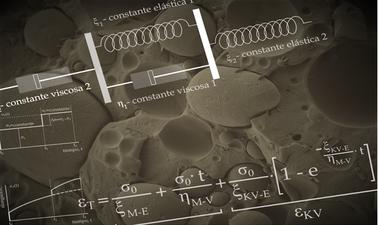
Aprende sobre el comportamiento viscoelástico de polímeros para el diseño de componentes con materiales poliméricos. Los materiales poliméricos se caracterizan por tener un comportamiento viscoelástico lo cual implica que sus propiedades mecánicas surgen de la combinación de unas propiedades elásticas y viscosas.

Self Paced
Self-Paced
Fundamentos de la obtención, estructura y modificación de materiales poliméricos (edX) EdX
Universitat Politècnica de València,UPValenciaX

Fundamentos de la obtención, estructura y modificación de materiales poliméricos (edX)

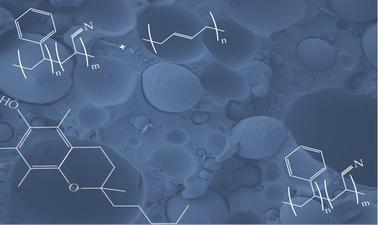
Aprende sobre la gran versatilidad de los polímeros en aplicaciones cotidianas así como también en sectores altamente tecnológicos como la aeronáutica, los deportes de competición y el sector médico. Los materiales poliméricos, se consideran materiales con un gran potencial de uso en el ámbito de la ingeniería. Actualmente, los polímeros se han convertido en materiales fundamentales en nuestra cultura y vida cotidiana, ya que los podemos encontrar en todo tipo de productos como ropa, automóviles, juguetes, etc.

Self Paced
Self-Paced
Dynamics and Control (edX) EdX
Universitat Politècnica de València,UPValenciaX

Dynamics and Control (edX)

This is an interactive course about the basic concepts of Systems, Control and their impact in all the human activities. First, the basic concepts of systems, dynamics, structure and control are introduced. Then, looking at many examples in Nature and human made devices, we will realize that the dynamic behavior of most systems can be modified by adding a control system. Later we will see how knowing how to evaluate the dynamic behavior of a system and measure its performance will provide the tools to design new controlled systems fulfilling some requirements.

Self Paced
Self-Paced