EdX

水力学 | Hydraulics (edX)

水力学 | Hydraulics (edX)

This Hydraulics course explores the science of hydraulics and focuses on hydrodynamic laws and their applications, which are indispensable and a critical factor in the development and utilization of water resources. 水,是人类生活不可或缺的资源。水力学是人类开发利用水资源的有力工具。本课教你认识和掌握水流静止和运动的力学规律,了解在相关领域的工程应用。

Class Deals by MOOC List - Click here and see EdX's Active Discounts, Deals, and Promo Codes.

Hydraulics is one of the basic courses of civil engineering, hydraulic engineering, environmental engineering, architecture, and engineering physics. This science focuses on the laws of fluid dynamics and their interactions with the boundaries.
The main objective of this course is to develop the following:

  • Understanding of the basic concepts and related theories of hydraulics
  • Innovation consciousness and scientific literacy
  • Analysis and the ability to solve the hydraulic problems met in practice

The course content focuses on basic theories:

  • Physical and mechanical properties of fluid
  • Hydrostatics
  • Hydrokinematics
  • Hydrodynamics
  • Dimensional analysis and similitude
  • Flow resistance and energy loss

Hydraulics will expose you to important and interesting applications of mathematics and mechanics in engineering. You’ll participate in experiments and view videos in this class. If you take this course, you will not only gain expertise, but also have fun and know more about the nature about hydraulics in a fun and engaging way.

What you'll learn:

  • Basic concepts and related theories of hydraulics
  • Innovation consciousness and scientific literacy
  • How to analyze and solve the hydraulic problems met in practice
Go to Class
MOOC List is learner-supported. When you buy through links on our site, we may earn an affiliate commission.

Related Courses

Nanophotonic Modeling (edX) EdX
Purdue University,PurdueX

Nanophotonic Modeling (edX)

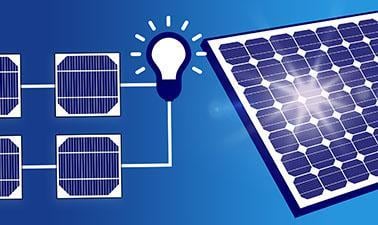
Learn a comprehensive set of simulation techniques to predict the performance of photonic nanostructures. This engineering course is an introduction to photonic materials and devices structured on the wavelength scale. Generally, these systems will be characterized as having critical dimensions at the nanometer scale. These can include nanophotonic, plasmonic, and metamaterial components and systems.

Feb 12th 2024
5-12 Weeks
Graphene Science and Technology (edX) EdX
Chalmers University of Technology,ChalmersX

Graphene Science and Technology (edX)

Graphene: its practical applications and how it offers new insights into quantum physics. Graphene is the world’s first 2-dimensional material and is the thinnest, strongest, and most flexible material known to exist. Graphene, a special form of carbon,,can conduct electricity and heat better than anything else.

No sessions available
5-12 Weeks
Signals and Systems, Part 2 (edX) EdX
IIT Bombay,IITBombayX

Signals and Systems, Part 2 (edX)

This course provides the basic toolkit for any signal processing application - the abstraction of signals and systems, from the point of view of analysis and characterisation. We encounter signals and systems extensively in our day-to-day lives, from making a phone call, listening to a song, editing photos, manipulating audio files, using speech recognition softwares like Siri and Google now, to taking EEGs, ECGs and X-Ray images. Each of these involves gathering, storing, transmitting and processing information from the physical world. This course will equip you to deal with these tasks efficiently by learning the basic mathematical framework of signals and systems.

No sessions available
5-12 Weeks
Introduction to Quantum Transport (edX) EdX
Purdue University,PurdueX

Introduction to Quantum Transport (edX)

This course introduces the non-equilibrium Green’s function (NEGF) method widely used to describe quantum effects in nanoscale devices, along with its applications to spintronic devices. This course introduces the Schrödinger equation, using the tight-binding method to discuss the concept of bandstructure and E(k) relations, followed by an introduction to the NEGF method with simple illustrative examples. Concept of spinors is introduced along with the application of the NEGF method to spintronic devices.

Feb 12th 2024
5-12 Weeks
Introducción al Control Numérico por Computadora (edX) EdX
TenarisUniversity

Introducción al Control Numérico por Computadora (edX)

El curso de Introducción al Control Numérico Computarizado te permitirá adquirir conocimientos básicos para la selección, programación y accionamiento de un CNC. Con este curso aprenderás a desarrollar y operar un proyecto con una máquina CNC. A través de la simulación de un caso real y con el objetivo de producir piezas de ajedrez para una empresa llamada “Jaque Mate”.

Self-Paced
Self-Paced
Railway Engineering: An Integral Approach (edX) EdX
Delft University of Technology,DelftX

Railway Engineering: An Integral Approach (edX)

Discover the science and complexity behind the exciting world of metro, tram and railway systems. Have you ever wondered what it takes to get your train on the right platform at the scheduled time every day? Understanding the complexity behind today’s sophisticated railway systems will give you a better insight into how this safe and reliable transportation system works. We will show you the many factors which are involved and how multiple people, behind the scenes, have a daily task that enables you to get from home to work. Journey with us into the world of rail - a complex system that connects people, cities and countries.

Apr 10th 2024
5-12 Weeks
Urban Sewage Treatment (edX) EdX
Delft University of Technology,DelftX

Urban Sewage Treatment (edX)

Learn about urban water services, focusing on basic sewage treatment technologies. This course will focus on basic technologies for the treatment of urban sewage. Unit processes involved in the treatment chain will be described as well as the physical, chemical and biological processes involved. There will be an emphasis on water quality and the functionality of each unit process within the treatment chain. After the course one should be able to recognise the process units, describe their function and make simple design calculations on urban sewage treatment plants.

Self Paced
Self-Paced
Wave-Based NDT Methods (edX) EdX
Purdue University,PurdueX

Wave-Based NDT Methods (edX)

Learn how to use wave-based NDT techniques, ultrasonic testing, acoustic emission, etc, to inspect the structural integrity of civil engineering structures, including highways, bridges, dams, and buildings. Wave-based NDT methods allow for reliable and rapid evaluation of civil engineering infrastructure. These methods are particularly useful in long-range inspection; for example, in pipelines, where the wave-based NDT can provide data on hundreds of meters of piping in a matter of seconds.

Feb 14th 2022
5-12 Weeks