EdX

A System View of Communications: From Signals to Packets (Part 3) (edX)

A System View of Communications: From Signals to Packets (Part 3) (edX)

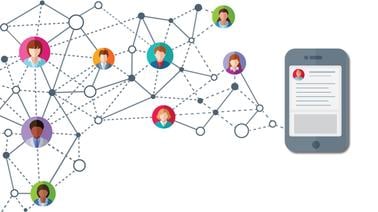
Explore the tradeoffs in designing communication systems like mobile phones, and the engineering tools to handle them. Have you ever wondered how information is transmitted using your mobile phone or a WiFi hotspot? Gain an understanding of the basic engineering tools used and tradeoffs encountered in the design of these communication systems.

Class Deals by MOOC List - Click here and see EdX's Active Discounts, Deals, and Promo Codes.

This course is divided into three parts. In Part 1, we examine the point-to-point link, which communicates information from a single transmitter to a single receiver. Part 2 examines how multiple transmitters can share the same physical channel. Part 3 discusses how information can be transmitted reliably from one station to another over a network that connects multiple stations. Online interactive exercises are included to help build your intuition.

This course was inspired by and built upon the course 6.02 Digital Communication Systems developed at MIT, which Prof Bertram Shi worked on during his sabbatical in 2009.

At the end of the course, you will:

  • Learn how information can be transmitted reliably from one station to another over a network that connects multiple stations.
  • Gain a basic understanding of the engineering tools used and tradeoffs faced in designing digital communications systems.
  • Discuss effective solutions to overcome these challenges and develop intuitive, useful systems.
Go to Class
MOOC List is learner-supported. When you buy through links on our site, we may earn an affiliate commission.

Related Courses

Engineering the Space Shuttle (edX) EdX
MIT,MITx

Engineering the Space Shuttle (edX)

Learn all about the world’s first reusable spacecraft - the Space Shuttle - from the very people who designed, built, and operated it for 30 years. This course examines how the Space Shuttle was designed and how its design was influenced by economics and politics. The course goes into detail on many of the Shuttle’s subsystems (e.g. rocket engines, thermal protection, aerodynamics, environmental control and life support, communications, etc.) and explains how the Shuttle was operated (launch, mission control, payloads, etc.). The course also uses the Space Shuttle to present the fundamentals of Systems Engineering.

Feb 16th 2022
5-12 Weeks
Robot Mechanics and Control, Part II (edX) EdX
Seoul National University,SNUx

Robot Mechanics and Control, Part II (edX)

A mathematical introduction to the mechanics and control of robots. This course is Part II of a two-part mathematical introduction to the mechanics and control of robots that can be modeled as kinematic chains. Topics covered include the concept of a robot’s configuration space and degrees of freedom, static grasp analysis, the description of rigid body motions, kinematics of open and closed chains, and the basics of robot control.

No sessions available
4 Weeks
High Conflict in Law: Personality Disorders and Disputes (edX) EdX
The University of Newcastle, Australia,NewcastleX

High Conflict in Law: Personality Disorders and Disputes (edX)

Law

Learn about the relationship between some personality disorders and high-conflict behaviour. Discover how to deal with high-conflict behaviours and manage conflicts in legal and business disputes. Have you ever been in the position where you need to manage a dispute? Have you encountered people who do not seem to behave in a rational way? How might you respond to stressful, high-conflict scenarios?

Nov 13th 2021
3 Weeks
Energy-The Technology You Must Know in the 21st Century | 能源─21世紀你必須了解的科技! (edX) EdX
OECx

Energy-The Technology You Must Know in the 21st Century | 能源─21世紀你必須了解的科技! (edX)

A comprehensive introduction to existing and emerging energy technologies and their applications. (Taught in Mandarin). Energy technology is a highly multidisciplinary subject, which extends from engineering (e.g. mechanical, chemical, civil, environmental and electrical) to economy and ecology.

No sessions available
4 Weeks
Wave-Based NDT Methods (edX) EdX
Purdue University,PurdueX

Wave-Based NDT Methods (edX)

Learn how to use wave-based NDT techniques, ultrasonic testing, acoustic emission, etc, to inspect the structural integrity of civil engineering structures, including highways, bridges, dams, and buildings. Wave-based NDT methods allow for reliable and rapid evaluation of civil engineering infrastructure. These methods are particularly useful in long-range inspection; for example, in pipelines, where the wave-based NDT can provide data on hundreds of meters of piping in a matter of seconds.

Feb 14th 2022
5-12 Weeks
Nanophotonic Modeling (edX) EdX
Purdue University,PurdueX

Nanophotonic Modeling (edX)

Learn a comprehensive set of simulation techniques to predict the performance of photonic nanostructures. This engineering course is an introduction to photonic materials and devices structured on the wavelength scale. Generally, these systems will be characterized as having critical dimensions at the nanometer scale. These can include nanophotonic, plasmonic, and metamaterial components and systems.

Feb 12th 2024
5-12 Weeks
Grappling with global communication challenges (edX) EdX
The Hong Kong Polytechnic University,HKPolyUx

Grappling with global communication challenges (edX)

With rapid globalization and proliferation of social media, businesses and organizations are in face of enormous communication challenges. By seeing challenge as opportunity, this course aims to unfold communication challenges induced by the rise of social media and offer solutions to overcome these challenges.

Jun 1st 2022
5-12 Weeks
Robot Mechanics and Control, Part I (edX) EdX
Seoul National University,SNUx

Robot Mechanics and Control, Part I (edX)

A mathematical introduction to the mechanics and control of robots. This course provides a mathematical introduction to the mechanics and control of robots that can be modeled as kinematic chains. Topics covered include the concept of a robot’s configuration space and degrees of freedom, static grasp analysis, the description of rigid body motions, kinematics of open and closed chains, and the basics of robot control.

No sessions available
4 Weeks