EdX

Viscoelasticidad y comportamiento mecánico-dinámico de materiales poliméricos. Modelización (edX)

Viscoelasticidad y comportamiento mecánico-dinámico de materiales poliméricos. Modelización (edX)

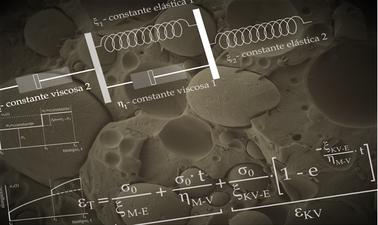
Aprende sobre el comportamiento viscoelástico de polímeros para el diseño de componentes con materiales poliméricos. Los materiales poliméricos se caracterizan por tener un comportamiento viscoelástico lo cual implica que sus propiedades mecánicas surgen de la combinación de unas propiedades elásticas y viscosas.

Class Deals by MOOC List - Click here and see EdX's Active Discounts, Deals, and Promo Codes.

Estos también se caracterizan por tener un comportamiento diferente cuando la aplicación de esfuerzos es a corto plazo o en cambio se prolonga a lo largo del tiempo. Por este motivo, para el diseño de componentes con materiales poliméricos se debe de tener en consideración el comportamiento viscoelástico.

Prerequisites:
Los conocimientos que se recomiendan para un correcto seguimiento son los siguientes:

  • Fundamentos básicos de Ciencia de Materiales.
  • Propiedades elásticas (módulos) y deformaciones de materiales
  • Conceptos básicos de CAE (Computer Aided Engineering).

What you'll learn
En este curso, aprenderás los diferentes modelos de comportamiento que surgen para cuantificar el comportamiento de los polímeros, así como la respuesta de los sólido viscoelástico ante la acción de diferentes esfuerzos.

Syllabus

  1. Introducción al comportamiento viscoelástico
  2. Modelos de viscoelasticidad simplificados
  3. Modelos de viscoelasticidad avanzados
  4. Respuesta de materiales viscoelásticos en condiciones dinámicas
Go to Class
MOOC List is learner-supported. When you buy through links on our site, we may earn an affiliate commission.

Related Courses

The Engineering of Structures Around Us (edX) EdX
DartmouthX,Dartmouth College

The Engineering of Structures Around Us (edX)

Explore how engineers design bridges and buildings in our communities and iconic structures around the world. In this introductory course, you’ll learn some engineering principles that can be applied to structural systems everywhere: in nature, in furniture, in mechanical and aerospace systems, and in any solid object that resists a load. Together we’ll explore how structures work, why they were designed the way they were designed, how they support loads, and where forces flow through them.

Self Paced
Self-Paced
Fundamentos de Mecánica para Ingeniería (edX) EdX
Universitat Politècnica de València,UPValenciaX

Fundamentos de Mecánica para Ingeniería (edX)

Estudiaremos la cinemática y la dinámica del punto, los conceptos de trabajo y potencia y la energía mecánica. Se aborda el estudio del universo físico analizando objetos en movimiento. Se definen y analizan todas las magnitudes y leyes físicas que permiten describir geométrica y causalmente el movimiento de cuerpos representados por un punto.

Self Paced
Self-Paced
Software Engineering: Introduction (edX) EdX
The University of British Columbia,UBCx

Software Engineering: Introduction (edX)

Learn how to apply engineering principles, such as Agile, to build a full-stack software system. You will learn software engineering principles that are applicable to the breadth of large-scale software systems. The course explores topics such as agile development, REST and Async programming, software specification, design, refactoring, information security, and more.

Self Paced
Self-Paced
Modeling and Simulation of Multibody Systems - Part I (edX) EdX
LouvainX,Université Catholique de Louvain - UCL

Modeling and Simulation of Multibody Systems - Part I (edX)

Vehicles, bicycles, cranes, human body and robots are multibody systems. Learn how to model them and compute their kinematic and dynamic characteristics, such as velocities, accelerations and forces. This course aims at acquainting you with the modeling and simulation of complex articulated mechanical systems, denoted as multibody systems, such as vehicles, merry-go-rounds, motorbikes, cranes, human bodies, suspensions, robot manipulators, mechanical transmissions, etc.

Self Paced
Self-Paced
Statistical Inference and Modeling for High-throughput Experiments (edX) EdX
HarvardX,Harvard University

Statistical Inference and Modeling for High-throughput Experiments (edX)

A focus on the techniques commonly used to perform statistical inference on high throughput data. In this course you’ll learn various statistics topics including multiple testing problem, error rates, error rate controlling procedures, false discovery rates, q-values and exploratory data analysis. We then introduce statistical modeling and how it is applied to high-throughput data. In particular, we will discuss parametric distributions, including binomial, exponential, and gamma, and describe maximum likelihood estimation.

Self Paced
Self-Paced
Data Science: Capstone (edX) EdX
HarvardX,Harvard University

Data Science: Capstone (edX)

Show what you’ve learned from the Professional Certificate Program in Data Science. To become an expert data scientist you need practice and experience. By completing this capstone project you will get an opportunity to apply the knowledge and skills in R data analysis that you have gained throughout the series. This final project will test your skills in data visualization, probability, inference and modeling, data wrangling, data organization, regression, and machine learning.

Self Paced
Self-Paced
Basics of Statistical Inference and Modelling Using R (edX) EdX
University of Canterbury,UCx

Basics of Statistical Inference and Modelling Using R (edX)

Learn why a statistical method works, how to implement it using R and when to apply it and where to look if the particular statistical method is not applicable in the specific situation. Basics of Statistical Inference and Modelling Using R is part one of the Statistical Analysis in R professional certificate.

Self Paced
Self-Paced
Introduction to Discrete Choice Models (edX) EdX
École Polytechnique Fédérale de Lausanne,EPFLx

Introduction to Discrete Choice Models (edX)

The course introduces the theoretical foundations to choice modeling and describes the steps of operational modeling. Human behavior is complexand unpredictable. Or is it? The focus of this course is methods for predicting the behavior using mathematical models. More specifically, we'll explore choice modeling in order to obtain disaggregate demand models.

Self Paced
Self-Paced
Caer o No caer. El secreto de las estructuras (edX) EdX
Universidad Carlos III de Madrid - UC3M,UC3Mx

Caer o No caer. El secreto de las estructuras (edX)

Las estructuras están presentes en todos los sistemas que nos rodean. Descubrirlas y comprender cómo funcionan es sencillo y fascinante. Las estructuras están implicadas en nuestras vidas: las plantas, los animales, casi todo lo que fabrica el ser humano, incluso nuestro propio cuerpo, deben soportar una serie de fuerzas sin romperse, y por lo tanto prácticamente cualquier elemento de nuestro entorno es una estructura de una clase u otra.

Self Paced
Self-Paced
The Basics of Transport Phenomena (edX) EdX
Delft University of Technology,DelftX

The Basics of Transport Phenomena (edX)

Learn the basic framework to work on a broad spectrum of engineering problems concerning transfer of heat, mass and momentum. Learn through examples of everyday processes at home, in the lab and in industry. Have you ever wondered why ventilation helps to cool down your hot chocolate? Do you know why a surfing suit keeps you warm? Why iron feels cold, while wood feels warm at room temperature? Or how air is transferred into aqueous liquids in a water treatment plant? How can we sterilize milk with the least amount of energy? How does medicine spread in our tissue? Or how do we design a new cooling tower of a power plant? All these are phenomena that involve heat transfer, mass transfer or fluid flow.

Self Paced
Self-Paced
Advanced Statistical Inference and Modelling Using R (edX) EdX
University of Canterbury,UCx

Advanced Statistical Inference and Modelling Using R (edX)

Extend your knowledge of linear regression to the situations where the response variable is binary, a count, or categorical as well as to hierarchical experimental set-up. Advanced Statistical Inference and Modelling Using R is part two of the Statistical Analysis in R professional certificate. This course is directed at people who are already familiar with basic linear regression and fundamentals of statistical inference. It extends the knowledge of linear regression to the situations where the response variable is binary, a count, or categorical as well as to hierarchical experimental set-up.

Self Paced
Self-Paced