Tropical Forest Landscapes 101: Conservation & Restoration (Coursera)

Offered by Yale University,
Tropical Forest Landscapes 101: Conservation & Restoration (Coursera)

Conserving and restoring tropical forest landscapes offers an opportunity to address pressing environmental and social challenges. Effective conservation and restoration initiatives support multiple objectives, including ecosystem functioning, climate change mitigation and adaptation, food security, and economic growth.

Class Deals by MOOC List - Click here and see Coursera's Active Discounts, Deals, and Promo Codes.

This seven-week course explores the technical, social, and funding aspects of this timely topic. You will learn:

  1. The importance of tropical forest landscapes and the actors and motivations driving restoration and conservation efforts.
  2. How tropical forest ecosystems work, and how they relate to climate change and biodiversity.
  3. Fundamental human dimensions to consider in any project, including human livelihoods and local property rights.
  4. Conservation theory and dynamic aspects of conserving species and landscapes.
  5. A spectrum of restoration strategies and key considerations for restoration, such as species selection and planting design.
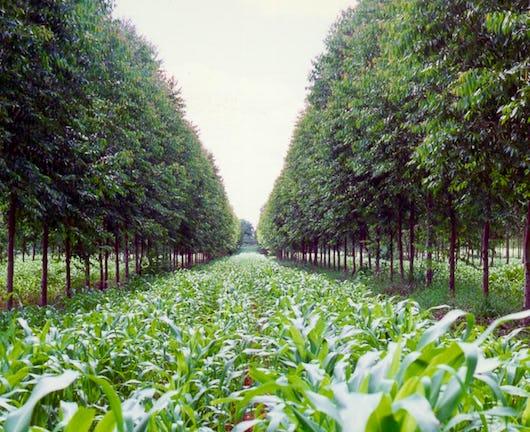
  6. How agroforestry systems can integrate trees and production to meet different goals.
  7. Basic financial concepts and potential sources of conservation and restoration funding.

The materials in this course offer a selection of key content from the Yale School of the Environment and Yale Environmental Leadership & Training Initiative's yearlong Tropical Forest Landscapes: Conservation, Restoration & Sustainable Use online certificate program.

What You Will Learn
(1) Fundamentals of tropical forest landscape management
(2) Conservation & restoration strategies
(3) Funding conservation & restoration

Syllabus

WEEK 1
Why conserve and restore tropical forest landscapes?
Welcome to the course! In this module, we will begin exploring what tropical forest landscapes are and why they are important. We will also discuss threats to forest landscapes and motivations for conserving and restoring them.

WEEK 2
Ecology of tropical forest landscapes
In this module, we will examine tropical forests from an ecological lens. Understanding how natural ecological processes work will lay the groundwork for knowing how to develop effective conservation and restoration techniques, which we will cover in later modules.

WEEK 3
Social considerations for restoration and conservation
Now that we have examined the ecological forces that shape tropical forest landscapes, we will shift our focus to people. In this module, we will consider how people are affected by and affect tropical forest landscapes and how considering local access to resources is a pivotal consideration when considering effective, equitable interventions.

WEEK 4
Conservation strategies
In this module, we will look at some fundamental conservation concepts. At its core, conservation involves protecting existing habitat or forest cover, but selecting where to prioritize protection, is more complicated. Conservation decisions depend on a suite of considerations, such as how one measures biodiversity, how one considers changes in the landscape over time, and how conservation affects other goals, such as ecosystem function.

WEEK 5
Restoration fundamentals
In this module, we will explore the process of restoration. As you will soon see, forest restoration encompasses a range of different practices. Selecting which practice to use will depend on a variety of considerations, starting with the level of degradation and the overall goals of the initiative.

WEEK 6
Agroforestry and agroecology
In the last two modules, we looked at fundamental concepts for both conservation and restoration. Here, we will look at a third approach to sustainable land management, which integrates tree cover with other agricultural practices: agroforestry. Agroforestry systems have many different forms and applications - we will learn about several of them here.

WEEK 7
Funding conservation and restoration
In this last part of the course, we will learn about funding conservation and restoration initiatives. This module introduces some financial terminology and tools that are useful for communicating to investors, then discusses obtaining two different types of funding: philanthropic and public.

Go to Class
MOOC List is learner-supported. When you buy through links on our site, we may earn an affiliate commission.

Related Courses

Animal Behaviour in Conservation (edX) EdX
Wageningen University,WageningenX

Animal Behaviour in Conservation (edX)

How can we coexist with wildlife in our rapidly changing human-dominated world? The instructors behind Wageningen University & Research’s high ranking ‘Introduction to Animal Behaviour’ have created a sequel. Equip yourself with the skills to assess human-caused impact on diverse species. Learn to apply behavioural principles to design more effective conservation actions. Enrol now.

Self Paced
Self-Paced
Agroforestry II: Major Systems of the World (Coursera) Coursera
University of Florida

Agroforestry II: Major Systems of the World (Coursera)

Welcome to Agroforestry II: Major Systems of the World. A focused exploration of agroforestry practices from around the world. This is the second module of the five-module course covering the various aspects of agroforestry including the global distribution of the practices, their underlying principles, and major scientific advances during the past nearly five decades, presented by leading experts in the field.

Aug 31st 2026
2 Weeks
Agroforestry V: Ecosystem Services, Food and Sustainability (Coursera) Coursera
University of Florida

Agroforestry V: Ecosystem Services, Food and Sustainability (Coursera)

Welcome to Agroforestry V: Ecosystem Services, Food Security and Sustainable Development, a detailed review of fundamental principles and best practices for successful agroforestry projects. This interdisciplinary module, presented by leading experts in the field, is the final in the five-module course covering the various aspects of agroforestry including the global distribution of the practices, their underlying principles, and major scientific advances during the past nearly five decades.

Aug 31st 2026
2 Weeks
Sharks! (edX) EdX
University of Queensland,CornellX,Cornell University,UQx

Sharks! (edX)

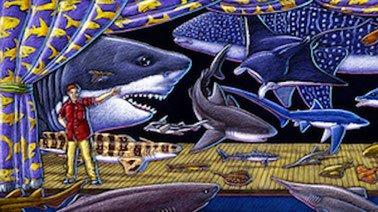
Learn about the most fascinating animals on Earth, their sophisticated senses and how sharks and their relatives have impacted human history and culture. Did you know that you can track some sharks’ movements on Twitter? Or that the scales on their skin have influenced the way humans design boats, planes, and even swimsuits? Or that sharks have more senses than humans?

Jul 3rd 2023
4 Weeks
Ingénierie écologique (FUN) FUN
Université Virtuelle Environnement et Développement - UVED

Ingénierie écologique (FUN)

Restaurer des écosystèmes dégradés, dépolluer des milieux, créer des continuités écologiques, développer une agriculture plus respectueuse de l'environnement, sont autant de défis qui se posent aujourd'hui à nous. Pour y répondre, de plus en plus de réflexions et de pratiques se tournent vers l'ingénierie écologique, solutions que l'on dit "basées sur la nature". Ce MOOC vous propose d'en découvrir les fondements, les enjeux, les outils, les acteurs ainsi que les conditions de mise en œuvre.

No sessions available
4 Weeks
The Biology of Bugs, Brains, and Beasts (FutureLearn) FutureLearn
University of York

The Biology of Bugs, Brains, and Beasts (FutureLearn)

Improve your understanding of some of the key concepts in A level biology and discover what's involved in higher level study. Prepare for university study with this online biology course. Are you a student in sixth form and thinking of studying at university? On this course, you will use innovative research to enhance your understanding of basic biological concepts taught in A level biology.

Self Paced
3 Weeks
Life Below Water: Conservation, Current Issues, Possible Solutions (FutureLearn) FutureLearn
University of the Sunshine Coast

Life Below Water: Conservation, Current Issues, Possible Solutions (FutureLearn)

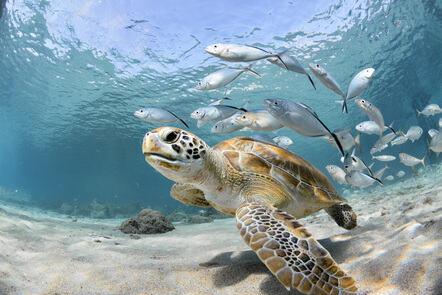
Explore the human impact on underwater biodiversity, ecosystems, and animals, and solutions for preserving life below water. Develop knowledge and research skills in marine conservation. It is widely accepted that the phenomenal biodiversity within underwater ecosystems and habitats has been very negatively affected by human interaction. The exact nature and course of the damage, and what can be done about it, are not as clearly understood. This four-week course by the University of the Sunshine Coast aims to change that.

Jan 24th 2022
4 Weeks