The Biology of Bugs, Brains, and Beasts (FutureLearn)

Offered by University of York,
The Biology of Bugs, Brains, and Beasts (FutureLearn)

Improve your understanding of some of the key concepts in A level biology and discover what's involved in higher level study. Prepare for university study with this online biology course. Are you a student in sixth form and thinking of studying at university? On this course, you will use innovative research to enhance your understanding of basic biological concepts taught in A level biology.

Class Deals by MOOC List - Click here and see FutureLearn's Active Discounts, Deals, and Promo Codes.

You will also be introduced to university-level material so you can get a sense of what it’s like to study biosciences at the University of York.
Over three weeks, you will take a fascinating look into bugs, brains and neuroscience, and the interaction of animals with the environment. You will also discover what makes the University of York a unique place to study.

What topics will you cover?

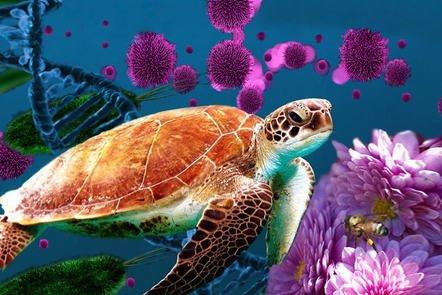
  • Bugs (microorganisms and the biochemistry of life)
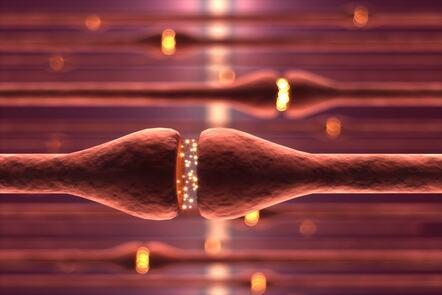
  • Brains (neuroscience: learning and memory)
  • Beasts (interaction of animals with the environment - ecology and conservation)

What will you achieve?
By the end of the course, you'll be able to...

  • Demonstrate an appreciation of the ubiquity and importance of microbes
  • Explore the biological basis of learning and memory
  • Describe how species interact in biological communities, considering their wider habitat and the influence of humans
Go to Class
MOOC List is learner-supported. When you buy through links on our site, we may earn an affiliate commission.

Related Courses

So You Want to Study Life Science? (FutureLearn) FutureLearn
University of Glasgow

So You Want to Study Life Science? (FutureLearn)

Explore the exciting subjects within life sciences and the rewarding careers that studying life sciences at university lead to. This short, free online course will introduce you to studying life sciences at university level.We’ll take you on a whistle stop tour of the exciting world of life sciences, exploring the vast array of subjects within the discipline – from anatomy to zoology and everything in between, including immunology, cellular and molecular biology, genetics, physiology and parasitology.

Self Paced
2 Weeks
Foundations of Science for Undergraduate Degrees (FutureLearn) FutureLearn
The University of Nottingham

Foundations of Science for Undergraduate Degrees (FutureLearn)

Develop the right skills for study and assessment in higher education while refreshing your core science knowledge.Give yourself an advantage for starting a university degree. With interruptions to education occurring all the time, many school students intending to go to university in the coming years may not feel prepared.

Aug 23rd 2021
5-12 Weeks
Introduction to Philosophy (Coursera) Coursera
University of Edinburgh

Introduction to Philosophy (Coursera)

This course will introduce you to some of the main areas of research in contemporary philosophy. Each module a different philosopher will talk you through some of the most important questions and issues in their area of expertise. We’ll begin by trying to understand what philosophy is – what are its characteristic aims and methods, and how does it differ from other subjects? Then we’ll spend the rest of the course gaining an introductory overview of several different areas of philosophy.

Nov 2nd 2026
5-12 Weeks
Introduction to Systems Biology (Coursera) Coursera
Icahn School of Medicine at Mount Sinai

Introduction to Systems Biology (Coursera)

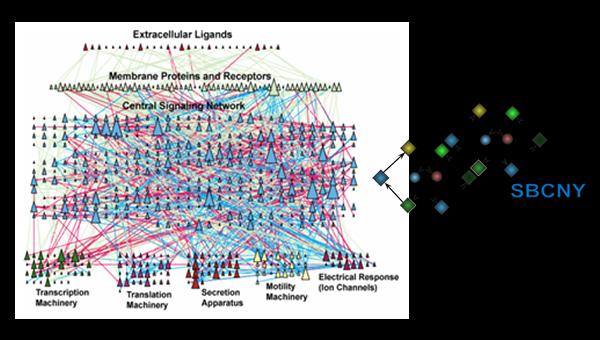
This course will introduce the student to contemporary Systems Biology focused on mammalian cells, their constituents and their functions. Biology is moving from molecular to modular. As our knowledge of our genome and gene expression deepens and we develop lists of molecules (proteins, lipids, ions) involved in cellular processes, we need to understand how these molecules interact with each other to form modules that act as discrete functional systems.

Nov 2nd 2026
5-12 Weeks
Ageing and The Brain: The Impact of Neurodegenerative Diseases (FutureLearn) FutureLearn
Complutense University of Madrid

Ageing and The Brain: The Impact of Neurodegenerative Diseases (FutureLearn)

Learn what happens to the brain as neurodegenerative diseases progress and study the latest research on brain disorder prevention. Explore the challenges of treating and preventing neurodegenerative diseases. There is a distinct difference between normal brain ageing and a brain affected by a neurodegenerative disease. This course will show you how patients diagnosed with brain and neurological disorders are affected and consider the impact of neurodegenerative disorders on our society.

Available now
5-12 Weeks
Invitation to Ex-Noguchi Room: Preservation and Utilization of Cultural Properties in Universities (FutureLearn) FutureLearn
Keio University

Invitation to Ex-Noguchi Room: Preservation and Utilization of Cultural Properties in Universities (FutureLearn)

Learn how to preserve, restore and utilize cultural properties in universities—a case study from Keio University, Tokyo. In this course, we will examine how to bring attention to cultural properties in a university, preserve and utilize them. The course focuses on the ‘Ex-Noguchi Room’ as a case study, which is a cultural property of Keio University in Tokyo. The space and what its contents are no longer in thier original state due to the partial reconstruction.

Self Paced
2 Weeks
Ecology and Wildlife Conservation (FutureLearn) FutureLearn
University of Leeds

Ecology and Wildlife Conservation (FutureLearn)

Discover ecology and how we can protect wildlife and conserve the natural world. Do you worry about the effects of climate change on nature? This course will show you how the work of conservation biologists and study of ecosystems can help with conserving the world’s biodiversity. You’ll explore the impact that the presence of wind farms on populations of seabirds and understand how the use of advanced techniques can be used to study different populations.

Self Paced
2 Weeks
Biochemistry: the Molecules of Life (FutureLearn) FutureLearn
University of East Anglia

Biochemistry: the Molecules of Life (FutureLearn)

Explore the impact of biochemistry on bioenergy and health, discovering why graduates are in demand; with the Biochemical Society. Biochemistry brings together all of the sciences to study the chemical and physical processes that occur in living organisms. It truly is the science of life. As a scientific discipline in its own right, biochemistry has a major impact on all areas of the life sciences and biochemists are in high demand among employers.

Self Paced
3 Weeks
Bioinformatics for Biologists: An Introduction to Linux, Bash Scripting, and R (FutureLearn) FutureLearn
Wellcome Genome Campus Advanced Courses and Scientific Conferences

Bioinformatics for Biologists: An Introduction to Linux, Bash Scripting, and R (FutureLearn)

Get familiar with Linux and its command line in order to access the full range of bioinformatics tools available to researchers. Explore the full range of bioinformatics software through Linux command line. Bioinformatics is a rapidly growing academic field, and one that promises to change how we analyse and compare biological data. On this course, you’ll get familiar with Linux – the operating system often used to access and analyse biological data.

Self Paced
3 Weeks
Teaching Students Who Have Suffered Complex Trauma (FutureLearn) FutureLearn
Queensland University of Technology

Teaching Students Who Have Suffered Complex Trauma (FutureLearn)

Find out what complex trauma is, how it affects children and adolescents, and what can be done to help. Learn how to support students who have experienced complex trauma. Complex trauma affects the physical, emotional and social development of children and adolescents. In order to minimise harm, teachers and school leaders need to respond appropriately using trauma-informed practices and policies. In this course, you’ll get an introduction to what complex trauma is and how it affects young people’s development at school.

Self Paced
2 Weeks