Transportation, Sustainable Buildings, Green Construction (Coursera)

Transportation, Sustainable Buildings, Green Construction (Coursera)

This course will include the evaluation of best practices in parking strategies for sustainable cities. Some of the examples include downtown parking policy, understanding the high cost of free parking, the development of parking sheds, managing neighborhood parking, hiding parking lots and other parking strategies and practices.

Class Deals by MOOC List - Click here and see Coursera's Active Discounts, Deals, and Promo Codes.

There will also be a case study of the Victoria Canada parking management approach that investigates problems with current work on parking planning and discusses the cost of parking facilities and potential savings from improved management. There will also be an introduction to the use of form-based codes for application to sustainable cities. A variety of building forms such as mid-rise and high-rise buildings, apartment houses, live/work buildings, single-family homes, and row houses will be assessed. A particular emphasis will be on vacant property strategies for equitable and healthy communities. Vacant property strategies for reclamation will be evaluated with an analysis of the revitalization cycle. Green building construction principles will be evaluated in consideration for natural light and ventilation, solar orientation, use of sustainable building materials, energy efficient design and on-site energy generation as well as other considerations. Building architectural design will leverage climate, construction materials, and the culture and history of the area. Architecture choices should have a consistent appearance within the community and provide residential privacy. Other considerations include protection and preservation of historic buildings, use of universal design concepts, careful placement of civic buildings and the appropriate use of subsidized housing.
By the end of this course, you will be able to:

  1. Survey and evaluate a variety of parking policies that support sustainable cities and environmental quality.
  2. Compare different parking options such as parking sheds, neighborhood parking, parking lot access, permeable parking spaces, and a variety of ways to hide parking lots.
  3. Describe the approach that the state of Minnesota used in developing a greenhouse gas reduction plan for their transportation sector.
  4. Examine issues of implementing climate – friendly transportation pricing and the concept of “fix it first” transportation policy.
  5. Evaluate the concept of form-based codes and their benefits for creating sustainable cities.
  6. Assess smart green construction practices such as use of sustainable building materials, on site energy generation, proper solar orientation, and the use of green building standards.

Target Audience
• Government Officials involved planning, designing, monitoring, enforcement, and assessment of sustainable project developments at the local, state, and federal level.
• Private sector companies in the transportation and municipal design and construction business
• Architects interested in advancing sustainable concepts for cities and communities
• Foundations, associations, and other NGOs that support smart growth strategies
• Academic faculty and students studying and researching community sustainability and resilience
• Private citizens interested in improving their communities and living conditions
Course 4 of 4 in the Sustainable Cities Specialization

Syllabus

WEEK 1
Parking Management and Minnesota Transportation GHG Reduction Plan
This module will present and evaluate the following topics: downtown parking policy, the high cost of free parking, the use of parking sheds, neighborhood parking, hiding parking lots, parking lot environmental quality, parking conversions, parking lot access, and rear access parking. The module will also introduce a parking rating system and an overview of the Victoria Canada parking management best practices.

WEEK 2
Sustainable Cities Building Types, Vacant Property Strategies for Equitable and Healthy Communities, and the Revitalization Cycle
Sustainable smart growth codes describe buildings, not in terms of their use for specific measurements, but in terms of their form. Using this framework, the resulting building types that will be described in this module. This module will also address vacant property strategies for equitable and healthy communities as well as the revitalization cycle.

WEEK 3
Green Construction and Architectural Design
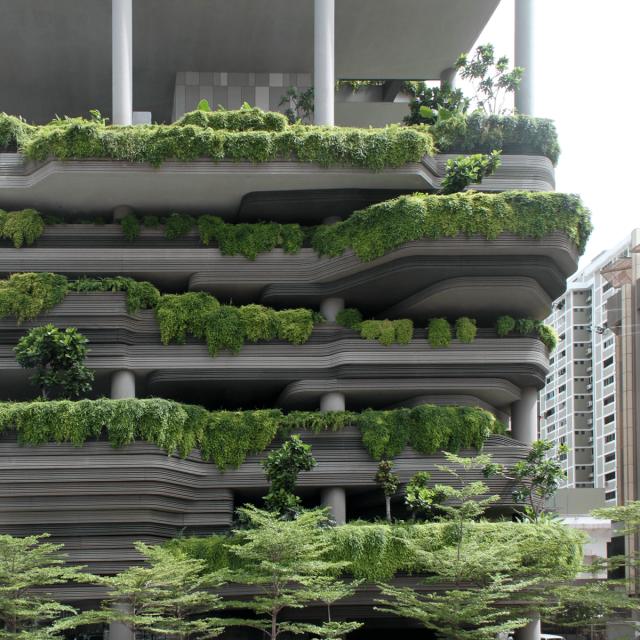
Green Construction and Green buildings are an important part of the sustainable city. This module will assess 12 different aspects of green buildings and green construction to meet smart growth objectives. The importance of architecture will also be accessed.
The architectural design of the building should be reflective of the climate and culture of the neighborhood. Most appropriate and ecological buildings often have the character of the local building traditions. The consistency of appearance is also valuable in fortifying the character of the neighborhood and establishing pride in the community.

Go to Class
MOOC List is learner-supported. When you buy through links on our site, we may earn an affiliate commission.

Related Courses

Planning for Autonomous Vehicles: A People-Centred Approach (FutureLearn) FutureLearn
EIT Urban Mobility

Planning for Autonomous Vehicles: A People-Centred Approach (FutureLearn)

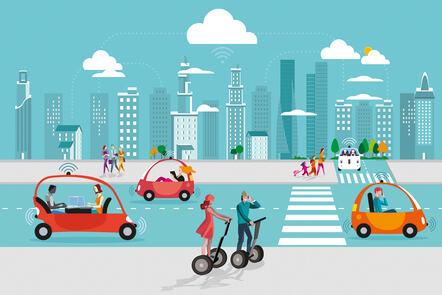
Learn how autonomous vehicles can improve urban mobility, and how good town planning can ensure they do just that. Successfully incorporate autonomous vehicles into sustainable urban planning. For sustainable future cities, the way people use and move around urban spaces must be reviewed. The town planning done now will have massive impacts on city dwellers’ quality of life in the years to come.

Jan 31st 2022
4 Weeks
Distribution: product delivery (edX) EdX
LOGYCAX,LOGYCA

Distribution: product delivery (edX)

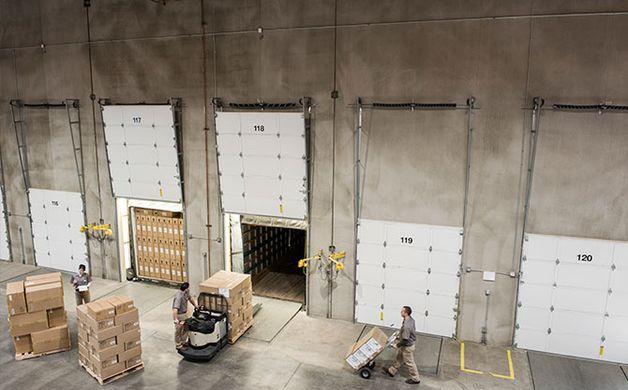
Processes related to transportation cover the election of routes up to ensuring the reception of returns. In this online course you will learn about product delivery to perform timely and quality delivery. No matter the volume of production of a micro or small company, delivery to clients will always be indispensable. Designing the best way to transport goods may mean performing the process by the company’s own means or through outsourcing (an important part of an organization’s logistic process).

Self Paced
Self-Paced
Modeling and Debugging Embedded Systems (Coursera) Coursera
University of Colorado Boulder

Modeling and Debugging Embedded Systems (Coursera)

This is part 3 of the specialization. In this course students will learn : * About SystemC and how it can be used to create models of cyber-physical systems in order to perform "what-if" scenarios; * About Trimble Engineering's embedded systems for heavy equipment automation; * A deeper understanding of embedded systems in the Automotive and Transportation market segment; * How to debug deeply embedded systems; * About Lauterbach's TRACE32 debugging tools; * How to promote technical ideas within a company; * What can be learned from studying engineering failures.

Aug 24th 2026
4 Weeks
Sustainable Cities (edX) EdX
SDGAcademyX,SDG Academy

Sustainable Cities (edX)

Learn how government, the private sector, and other actors can support sustainable urban development. Did you know that experts estimate an additional three billion people will live in cities by 2050? What will the impact be on the current world population – half of which currently lives in cities and contributes to about three-fourths of global economic output?

Self Paced
Self-Paced
Achieving Transitions to Zero Carbon Emissions and Sustainable Urban Mobility (FutureLearn) FutureLearn
University College London,Transforming Urban Mobility Initiative - TUMI,EIT Urban Mobility,ICLEI

Achieving Transitions to Zero Carbon Emissions and Sustainable Urban Mobility (FutureLearn)

Discover how cities can transform their urban mobility systems to become more sustainable and reach zero carbon emissions. Understand the steps to becoming sustainable city. Transport accounts for a large proportion of carbon emissions, so ensuring urban mobility systems are sustainable is key to helping cities to achieve zero-carbon goals. On this four-week course, you’ll discover how cities can transition their mobility systems to become sustainable, innovative, and inclusive.

Self Paced
4 Weeks
Sustainable Transportation Networks and Streetscapes (Coursera) Coursera
Johns Hopkins University

Sustainable Transportation Networks and Streetscapes (Coursera)

This course will evaluate best practices in transportation networks, thoroughfares, and streetscape designs for the effective movement of people, goods, and services in a region. Sustainable public and private streetscape design and application will be reviewed and evaluated for applications for sustainable cities. Considerations are assessed for smart urban planning, growth, and lifestyle. Strategies for creating equitable, healthy, and sustainable communities are also evaluated.

Aug 24th 2026
3 Weeks
Act on Climate: Steps to Individual, Community, and Political Action (Coursera) Coursera
University of Michigan

Act on Climate: Steps to Individual, Community, and Political Action (Coursera)

Are you concerned about climate change? Would you like to learn how to address and respond to this challenge? If so, this course is for you. Act on Climate: Steps to Individual, Community, and Political Action is intended to help learners understand, address and respond to climate change as individuals and in partnership with their communities and political leaders.

Sep 7th 2026
5-12 Weeks
Sustainable Regional Principles, Planning and Transportation (Coursera) Coursera
Johns Hopkins University

Sustainable Regional Principles, Planning and Transportation (Coursera)

This course will provide students with an introduction to sustainable regional principles, regional planning concepts and evaluate regional transportation system issues. This will be achieved through dynamic video lectures, practical case studies and the evaluation of practices for success. These will include discussions of the importance of the regional plan, how to engage community involvement, the importance of understanding a development transect and others.

Aug 24th 2026
4 Weeks
International Business Operations (Coursera) Coursera
University of Colorado Boulder

International Business Operations (Coursera)

This course provides learners with a solid foundation in international supply, logistics, and foreign currency exchange. Foreign exchange is included in this course since it plays such an important role in planning and executing international operations. The first half of the course reviews critical roles that supply chain management, sourcing, logistics, and transportation play in contemporary global business. In the second half, the focus shifts to foreign currency exchange risks and methods for mitigating those risks, both financial and non-financial.

Aug 31st 2026
5-12 Weeks
Resource and Waste Management in Buildings (Coursera) Coursera
L&T EduTech

Resource and Waste Management in Buildings (Coursera)

This course explores the concept of energy efficiency and sustainability in building design, covering topics such as forms of energy, strategies for energy efficiency, and the role of renewable energy and water management. The module emphasizes the importance of certified fixtures and rainwater harvesting for water efficiency. It also discusses waste management, including types of waste, treatment methods, and strategies for different building purposes.

Aug 24th 2026
4 Weeks