Learn how the principles of the Circular Economy can be applied to the built environment ranging from products and buildings to metropolitan and regional development strategies. In this course you will become familiar with circularity as a systemic, multi-disciplinary approach, concerned with the different scale, from material to product, building, city, and region.
Class Deals by MOOC List - Click here and see EdX's Active Discounts, Deals, and Promo Codes.
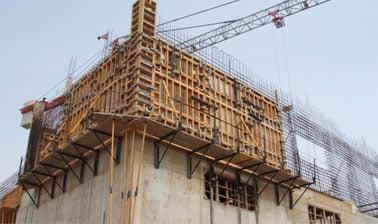
Building construction is one of the most waste producing sectors. In the European Union, construction alone accounts for approximately 30% of the raw material input. In addition, the different life-cycle stages of buildings, from construction to end-of-life, cause a significant environmental impact related to energy consumption, waste generation and direct and indirect greenhouse gas emissions.
The Circular Economy model offers guidelines and principles for promoting more sustainable building construction and reducing the impact on our environment. If you are interested in taking your first steps in transitioning to a more sustainable manner of construction, then this course is for you!
Some aspects of circularity that will be included in this course are maximizing reuse and recycle levels by closing the material loops. You will also learn how the Circular Economy can help to realign business incentives in supply chains, and how consumers can be engaged and contribute to the transition through new business models enabling circular design, reuse, repair, remanufacturing and recycling of building components.
In addition, you will learn how architecture and urban design can be adapted according to the principles of the Circular Economy and ensure that construction is more sustainable. You will also learn from case studies how companies already profitably incorporate this new theory into the design, construction and operation of the built environment.
What you'll learn
At the end of the course you will be able to:
- Recognize the principles of circularity and their application to the built environment
- Identify the scales of the built environment from materials and products to cities and regions
- Identify the life-cycle phases of building products and how they can be circular
- Discuss design principles in building of products and key aspects such as stakeholders, incentives, time-frames, business models
- Discuss the circular design and development approach for buildings and recognize the impact of a building on society and the environment during its life-cycle
- Recognize the flows at different city scales and how they differ depending on the actors and the local context
- Reflect on the complexity and variety of possible circular solutions in terms of energy, water and waste management
- Analyze and map the different stages and value webs of building materials at the regional level
- Reflect on possible environmental impacts of the different building life-cycle stages and activities along the value web
- Explore the potential of intervening to steer the value web towards more circularity
Syllabus
The course is divided into six modules:
1. Introduction: Motivation for the Circular Built Environment and basic terms
The massive existing building stock and constantly increasing housing demand requires new building technologies and design strategies. Is circularity the answer? We will discuss the principles of the Circular Economy and how the Circular Built Environment can apply to a number of systemic levels.
2. Building products: Materials and components
This week focuses on the products and materials, the base ingredient of buildings. What their life-cycle is and how they determine the overall life-cycle performance of buildings. We will explore design for disassembly and how this process can extend the useful life of the built product or bring them back to the circle.
3. Architecture and building: Sustainable construction and operation
This week we will discuss the buildings’ layers and their life-cycle and explore how the principles of Circular Economy influenced the design of the featured case study buildings. We discuss the role of business models within the design and development process.
4. Cities and neighborhoods: Buildings, infrastructure and resource flows
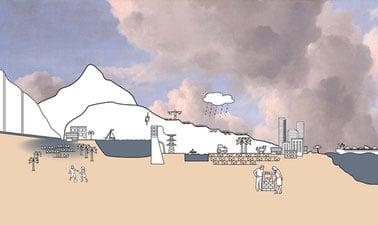
Buildings cannot be seen as isolated entities. During this week we will explore how circularity is connected to the neighborhood and city level. We will discuss the three most important flows that enter, circulate and leave the urban environment every day: water, energy and waste. We acknowledge that potential circular solutions depend on scale (building block, neighborhood, city) and on the various ways in which solutions can be organized (individually, collectively or centrally).
5. Regions: From supply chains to value webs
The week centers around one comprehensive assignment which aims to explore the different impacts of thinking through scales. Furthermore, the assignment focuses on the geographical value chains of building products and reflects on possible environmental impacts of the different life-cycle stages and activities along the value web.
6. Conclusion: Addressing the transition to a Circular Built Environment, a practical approach
We will discuss how the various aspects learned are impacting the implementation of circular building principles. Finally, we will sum up and come to an integrated view on a future circular built environment.
Prerequisites
The course will be of interest and value to students and working professionals in the fields of architecture, urbanism, and building/infrastructure engineering.
The course builds upon basic knowledge of architectural and urban design and engineering, as well as general knowledge of Circular Economy theory. For background information we recommend you follow the courses: “Circular Economy: An Introduction” and/or “Engineering Design for a Circular Economy”.