EdX

Zero-Energy Design: an approach to make your building sustainable (edX)

Zero-Energy Design: an approach to make your building sustainable (edX)

Learn how to get to a net zero energy use of an existing building. Reduction of energy consumption of buildings is an important step in the move towards a sustainable economy. How can buildings be made net zero energy, in different climates?

Class Deals by MOOC List - Click here and see EdX's Active Discounts, Deals, and Promo Codes.

This course introduces you to zero energy design. It will teach you a stepped approach to design a zero energy climate concept for existing buildings: homes, schools, offices, shops etc. It will demonstrate how an integrated approach, which takes into account both passive measures (such as thermal insulation and sun shading) and active measures (such as heat pumps and photovoltaic panels), can deliver the best results.
It will do so by providing you with an overview of possible measures, and through reviewing several case studies of zero energy buildings in the Netherlands, with lessons for other climates as well. Thus, you will learn which measures are most suitable for individual buildings under local climate conditions.
This course is for anyone interested in making buildings more energy efficient, who already possess basic technical knowledge.

What you'll learn

  • Apply a stepped approach to find energy reducing measures
  • Analyse the energy use of a building
  • Analyse the local climate and select appropriate measures
  • Develop an integrated net-zero-energy concept for the building

Syllabus

Week 1 Energy in the built environment
Introduction to Zero Energy Design
Analyse the energy consumption of a selected building

Week 2 REDUCE: Passive measures
Analyse the local climate and choose passive measures to reduce the energy demand, like thermal insulation and sun shading.

Week 3 REDUCE: Active measures
Overview of active measures to reduce the energy demand, like demand-controlled heating and ventilation.

Week 4 REUSE
Overview of the opportunities to reuse energy flows in buildings, like heat recovery from ventilation air and warm waste water

Week 5 PRODUCE
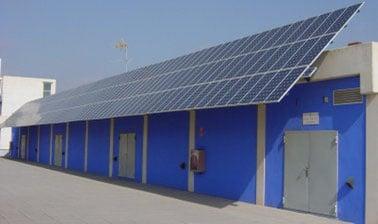
Overview of the opportunities to produce heat and electricity in the building, like PV-systems, ground source heat pumps.

Week 6 INTEGRATE
Apply all the measures from the previous weeks in an integrated net zero energy concept for the selected building

Week 7 Wrap up
Go to Class
MOOC List is learner-supported. When you buy through links on our site, we may earn an affiliate commission.

Related Courses

Energy Markets of Today (edX) EdX
Delft University of Technology,DelftX

Energy Markets of Today (edX)

Understand the European energy market and the economic principles behind it. This course will help you understand the functioning of energy markets as the necessary first step to promotion of the energy transition. By using the European electricity market as an example, you will obtain a deeper understanding of its principles and effectiveness.

Self Paced
5-12 Weeks
Using Photovoltaic (PV) Technology in Desert Climates (edX) EdX
Hamad Bin Khalifa University - HBKU,HBKUx

Using Photovoltaic (PV) Technology in Desert Climates (edX)

Learn how to mitigate the challenges related to PV technology and enhance the performance of solar cells and PV modules in desert climates. The high insolation in desert regions can result in a lower cost of solar energy. While this may be a key motivation to deploying PV in desert climates, there are also several challenges related to the technology that must be considered.

Self Paced
Self-Paced
Circular Economy for a Sustainable Built Environment (edX) EdX
Delft University of Technology,DelftX

Circular Economy for a Sustainable Built Environment (edX)

Learn how the principles of the Circular Economy can be applied to the built environment ranging from products and buildings to metropolitan and regional development strategies. In this course you will become familiar with circularity as a systemic, multi-disciplinary approach, concerned with the different scale, from material to product, building, city, and region.

Self Paced
Self-Paced
Environmental Protection and Sustainability (edX) EdX
IsraelX

Environmental Protection and Sustainability (edX)

Uncover better solutions to help manage a wide range of environmental problems and challenges facing our world today. Do you want to understand more about the environmental problems we currently face? Do you want to learn ways we can reduce the negative effects of these problems, and keep our environment more sustainable? If so, this course is for you.

Self Paced
Self-Paced
Solar Energy: Photovoltaic (PV) Energy Conversion (edX) EdX
Delft University of Technology,DelftX

Solar Energy: Photovoltaic (PV) Energy Conversion (edX)

Learn how solar cells generate electricity, and about the semiconductor physics and optics required to design and manufacture solar cells. The key factor in getting more efficient and cheaper solar energy panels is the advance in the development of photovoltaic cells. In this course you will learn how photovoltaic cells convert solar energy into useable electricity. You will also discover how to tackle potential loss mechanisms in solar cells.

Self Paced
5-12 Weeks
Sustainable Food Systems: A Mediterranean Perspective (edX) EdX
SDGAcademyX,SDG Academy

Sustainable Food Systems: A Mediterranean Perspective (edX)

How do we produce more, better quality, and safer food while simultaneously achieving social and environmental goals? The Mediterranean region is one of the most biodiverse in the world, home to a complex and intricate patchwork of cultures, climates, and cuisines. Food systems in the region -- represented worldwide by the "Mediterranean diet" -- are equally complex, demanding analysis across the political, social, cultural, economic and nutritional spectrums from landscape to table.

Self Paced
Self-Paced
Minerals and Mining in a Sustainable World (edX) EdX
University of Queensland,UQx

Minerals and Mining in a Sustainable World (edX)

This course provides learners with an overview of the role of minerals in society, the history of the sustainable development agenda, and the emerging focus on the relationship between mineral development and the Sustainable Development Goals. What is the role of mining in a sustainable world? What challenges lie ahead, and how is the mining industry responding to meet our demand for minerals as well as our expectations of a sustainable future?

Self Paced
Self-Paced
Sustainability & Major Sport Events: Principles (edX) EdX
Hamad Bin Khalifa University - HBKU,HBKUx

Sustainability & Major Sport Events: Principles (edX)

Learn the five pillars of sustainability and how to apply these when planning and hosting a major sport event. While any major sport event can pose great opportunities for the host city or region, there are also challenges associated with hosting these events. The environmental impact on the country's natural resources, the workforce, and infrastructure are just some of the considerations. It is essential to ensure that your major sport event is sustainable for your city throughout the event, but also after the event has been completed.

Self Paced
Self-Paced
Sustainable Urban Development (edX) EdX
Wageningen University,Delft University of Technology,DelftX,WageningenX

Sustainable Urban Development (edX)

Learn why cities are key in resolving global urbanization and sustainability challenges and how you can engineer tomorrow’s cities today. Did you know that cities take up less than 3% of the earth’s land surface, but more than 50% of the world’s population live in them? And, cities generate more than 70% of the global emissions? Large cities and their hinterlands (jointly called metropolitan regions) greatly contribute to global urbanization and sustainability challenges, yet are also key to resolving these same challenges.

Self Paced
Self-Paced
Sustainable Packaging in a Circular Economy (edX) EdX
Delft University of Technology,DelftX

Sustainable Packaging in a Circular Economy (edX)

Learn how to apply the principles of the circular economy to sustainable packaging systems. It has become almost impossible to imagine what our lives would be like without the many benefits of packaging - just think about the different packaging and single-use items you use on a daily basis. Yet as our global population grows in size and affluence, both our collective demand for packaging materials and the waste we generate as a result will increasedramatically.

Self Paced
Self-Paced
Cities and the Challenge of Sustainable Development (edX) EdX
SDGAcademyX,SDG Academy

Cities and the Challenge of Sustainable Development (edX)

What is a sustainable city? Learn the basics here. According to the United Nations, urbanization and population growth could result in an increase of 2.5 billion people into urban populations by 2050, with associated impacts ranging from increased transportation needs to more building. How do we make cities sustainable to support this growth?

Self Paced
Self-Paced