Sustainable Regional Principles, Planning and Transportation (Coursera)

Sustainable Regional Principles, Planning and Transportation (Coursera)

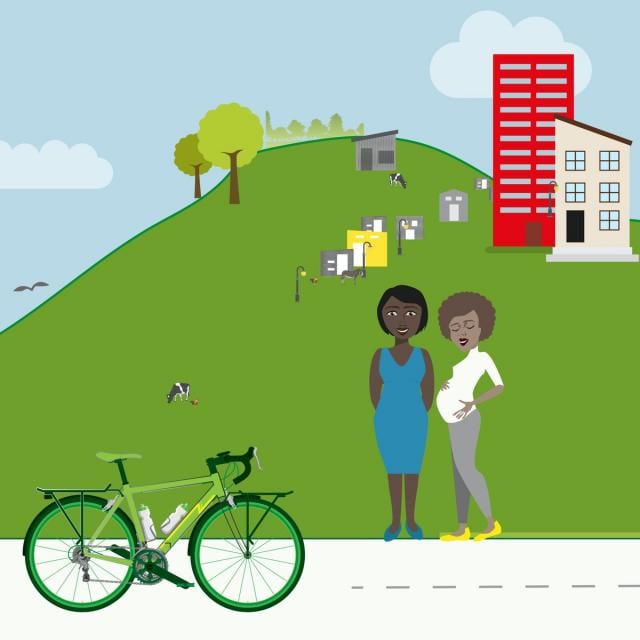
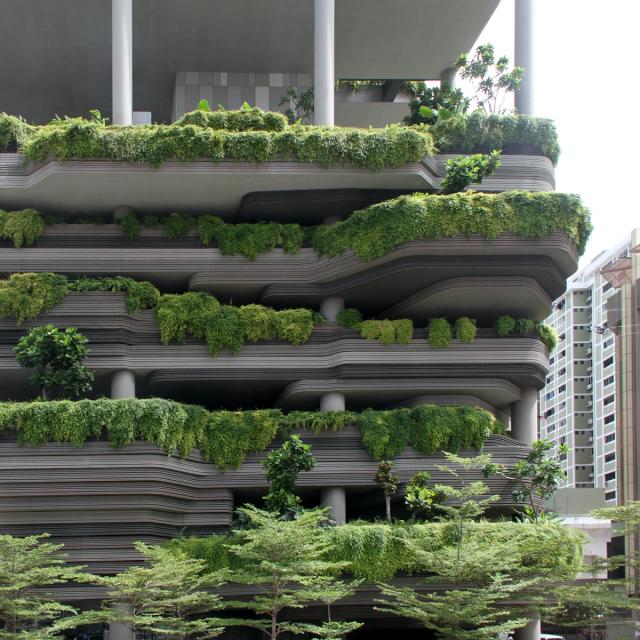
This course will provide students with an introduction to sustainable regional principles, regional planning concepts and evaluate regional transportation system issues. This will be achieved through dynamic video lectures, practical case studies and the evaluation of practices for success. These will include discussions of the importance of the regional plan, how to engage community involvement, the importance of understanding a development transect and others.

Class Deals by MOOC List - Click here and see Coursera's Active Discounts, Deals, and Promo Codes.

Strategies for growth priorities, along with consideration of available housing and food security will also be addressed. The concepts of providing a rural preserve and a rural reserve will be evaluated and mapping of key aspects of the region, such as neighborhoods and districts will be explained. Evaluation of regional transportation systems will be addressed including multi-mobile balance and building choices into the transportation system modes. The considerations for including a regional railway system along with accommodating user mobility and accessibility will be explored.
By the end of this course, you will be able to:

  • Formulate the relationship between regional principles, smart growth, and sustainability.
  • Evaluate growth priorities, community involvement and scale of governance to achieve sustainable smart growth.
  • Evaluate and explain regional mapping of rural preserves, rural reserves, neighborhoods, and districts as important tools in regional smart growth planning.
  • Describe the implications of mapping corridors and regional centers to the overall smart growth planning at the regional level.

This course is for :

  • Government Officials involved planning, designing, monitoring, enforcement, and assessment of sustainable project developments at the local, state, and federal level.
  • Private sector companies in the transportation and municipal design and construction business.
  • Architects interested in advancing sustainable concepts for cities and communities.
  • Foundations, associations, and other NGOs that support smart growth strategies.
  • Academic faculty and students studying and researching community sustainability and resilience.
  • Private citizens interested in improving their communities and living conditions.

The following list identifies background knowledge that will help you succeed in this course.

  • helpful to have a general understanding of how public/private projects are planned and implemented
  • have a strong interest or experience in planning and developing regional sustainable development plans
  • familiar with how government organizations function in the areas of transportation planning and project development
  • served as a volunteer committee member or leader on regional transportation projects and/or regional policy development initiatives
  • have a background and interest in environmental protection plans and projects
  • a general knowledge of regional transportation project planning and implementation
  • general knowledge or experience in public participation in governmental policy development
  • a strong interest and/or experience in improving the urban environment for the benefit of its citizens
  • have a general knowledge of legal and policy issues involved in sustainable development
  • have experience or general knowledge of social equity issues

Course 1 of 4 in the Sustainable Cities Specialization

Syllabus

WEEK 1
Sustainable Regional Fundamentals
This module will evaluate important regional issues that provide part of the foundation for a sustainable city. Regional principles will be evaluated in the context of developing a regional plan for sustainability.

WEEK 2
Regional Planning Including Developmental Priorities
This module will address issues related to neighborhood strategies for protecting the natural context of the neighborhood as well as the importance of the different, opponents necessary to have a welcoming and functional neighborhood. Structures will also be evaluated as an important part of the character of the neighborhood.

WEEK 3
Regional Transportation System and the Land – Use Connection
This module will evaluate sustainable options for the important physical, components for the transportation infrastructure within the region.

WEEK 4
Case Study of the Fairfax County, Virginia Comprehensive Transportation Plan
This module will evaluate sustainable options for the important physical, components for the transportation infrastructure within the Fairfax County Virginia Comprehensive Transportation Plan.
Go to Class
MOOC List is learner-supported. When you buy through links on our site, we may earn an affiliate commission.

Related Courses

The Cycle: Management of Successful Arts and Cultural Organizations (Coursera) Coursera
University of Maryland, College Park

The Cycle: Management of Successful Arts and Cultural Organizations (Coursera)

What makes a successful arts and cultural organization? Led by DeVos Institute Chairman Michael M. Kaiser and President Brett Egan, this course will introduce you to a management theory called the Cycle which supports thriving arts and cultural organizations. Learning from our work with managers from over 80 countries around the world, the DeVos Institute developed the Cycle as a simple, but powerful tool to assist managers in their effort to respond to an increasingly complex environment and propel their institutions to excellence.

Sep 7th 2026
5-12 Weeks
Sustainable Food Production Through Livestock Health Management (Coursera) Coursera
University of Illinois at Urbana-Champaign

Sustainable Food Production Through Livestock Health Management (Coursera)

Learn about the impact of infectious disease on sustainable animal-based food production by understanding the science of growth, immunity, and infection and by learning the problem-solving skills needed to advance animal health and food production through optimal management practices. In this course we will explore the effect of infectious disease on sustainable animal-based food production. The content and learning outcomes of this new course will be designed to be relevant across different food production sectors (i.e., beef, dairy, poultry, and pigs).

Sep 7th 2026
5-12 Weeks
Planning for Climate Change in African Cities (Coursera) Coursera
Erasmus University Rotterdam,United Cities and Local Governments of Africa,African Local Government Academy,Institute for Housing and Urban Development

Planning for Climate Change in African Cities (Coursera)

Climate change poses a threat to economic growth and long-term prosperity of many countries around the world. Africa is not an exception, considering the actual and potential impacts of climate change and climate variability that will threaten its vulnerable sectors and human populations. African countries are projected to experience changing rainfall patterns, rising sea levels, and higher temperatures that will affect food security, agricultural production, water availability, and public health, among others. These climate change impacts and climate variability can further produce social and political problems, such as rural-urban migration and water resource disputes.

Sep 14th 2026
5-12 Weeks
OKR Certification: Leadership and Goal Setting (Coursera) Coursera
Measure What Matters

OKR Certification: Leadership and Goal Setting (Coursera)

“Ideas are easy. Execution is everything.” -John Doerr. In this one-of-a-kind OKR Certification, John Doerr builds on his New York Times best-selling book, Measure What Matters. The chairman of the venture capital firm Kleiner Perkins, Doerr reveals how the goal-setting system of Objectives and Key Results (OKRs) can lead to exponential growth.

Sep 14th 2026
4 Weeks
Our Earth's Future (Coursera) Coursera
American Museum of Natural History

Our Earth's Future (Coursera)

Our Earth’s Future is about the science of climate change and how to talk about it. You will learn from scientists in the fields of climatology, oceanography, Earth science, and anthropology who study how climate change is affecting people, populations, and ways of life. Explore the multiple lines of evidence for the human-induced climate change that is happening today, and consider what that means for the future of our planet. At the end of this course you will be able to understand key scientific principles, identify and address misconceptions, and contribute confidently to conversations about climate change.

Sep 7th 2026
5-12 Weeks
Introduction to Household Water Treatment and Safe Storage (Coursera) Coursera
École Polytechnique Fédérale de Lausanne

Introduction to Household Water Treatment and Safe Storage (Coursera)

It is well known that water treatment at the household level can lead to dramatic improvements in drinking water quality. But does Household Water Treatment and Safe Storage (HWTS) also have global relevance? What are the potential treatment solutions and how do they function? Is there a standard strategy for successful HWTS implementation, or can we identify key components which make programs more likely to succeed? In this course you will learn about the most important water treatment methods at household level, successful implementation strategies and about assessing the impact of HWTS.

Sep 7th 2026
5-12 Weeks
Sustainable Agricultural Land Management (Coursera) Coursera
University of Florida

Sustainable Agricultural Land Management (Coursera)

This course will cover the agricultural and urban water quality issues in Florida, their bases, land and nutrient management strategies, and the science and policy behind the best management practices (BMPs). Students will learn to evaluate BMP research and analyze its role in determining practices and policies that protect water quality.

Sep 7th 2026
5-12 Weeks
Global Health Security, Solidarity and Sustainability through the International Health Regulations (Coursera) Coursera
University of Geneva

Global Health Security, Solidarity and Sustainability through the International Health Regulations (Coursera)

Welcome to the MOOC "Global Health Security, Solidarity and Sustainability through the International Health Regulations". We are very excited to have you on board and hope you will enjoy the course! In the coming 6 weeks, you will learn about the International Health Regulations (IHR), history of its creation and evolution, its major principles and implementation procedures, as well as challenges and future opportunities.

Sep 14th 2026
5-12 Weeks
Business Sustainability in the Circular Economy (Coursera) Coursera
University of London

Business Sustainability in the Circular Economy (Coursera)

We are surrounded by so much discussion of sustainability that it can sometimes become overwhelming. Important questions include: What role can business have in ensuring the sustainability of the planet? How should business work with society to preserve the environment? These questions will be answered in this course as we explore the meaning of sustainability and its impact on modern organisations as they move to circular ideas to reduce waste, increase recycling and become fit for our modern society.

Sep 14th 2026
3 Weeks
Management of Urban Infrastructures – part 1 (Coursera) Coursera
École Polytechnique Fédérale de Lausanne

Management of Urban Infrastructures – part 1 (Coursera)

Sustainability, Resilience and Efficiency are fundamental considerations for city managers in managing urban infrastructures. Today, more than 3.9 billion people, making up more than 54% of the global population, live in cities. Urbanization is expected to continue in the coming years, raising the urban population to 6.0 billion by 2045. This dramatic increase in urban populations will inevitably increase the demand for energy, mobility (transportation), water, and other urban services in every city around the world. Without functional governance and management structures that ensure efficient, resilient and sustainable performance in cities, the current urbanization growth might become a catastrophic risk threatening the quality of life of the humanity.

Sep 14th 2026
5-12 Weeks
Greening the Economy: Lessons from Scandinavia (Coursera) Coursera
Lund University

Greening the Economy: Lessons from Scandinavia (Coursera)

How can we live a good life on one planet with over seven billion people? This course will explore greening the economy on four levels – individual, business, city, and nation. We will look at the relationships between these levels and give many practical examples of the complexities and solutions across the levels. Scandinavia, a pioneering place advancing sustainability and combating climate change, is a unique starting point for learning about greening the economy. We will learn from many initiatives attempted in Scandinavia since the 1970s, which are all potentially helpful and useful for other countries and contexts.

Sep 7th 2026
5-12 Weeks