Planning for Autonomous Vehicles: A People-Centred Approach (FutureLearn)

Offered by EIT Urban Mobility,
Planning for Autonomous Vehicles: A People-Centred Approach (FutureLearn)

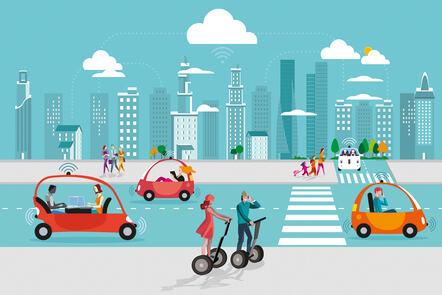
Learn how autonomous vehicles can improve urban mobility, and how good town planning can ensure they do just that. Successfully incorporate autonomous vehicles into sustainable urban planning. For sustainable future cities, the way people use and move around urban spaces must be reviewed. The town planning done now will have massive impacts on city dwellers’ quality of life in the years to come.

Class Deals by MOOC List - Click here and see FutureLearn's Active Discounts, Deals, and Promo Codes.

This four-week course will explore how autonomous vehicles should be incorporated into sustainable urban planning. Its people-centred approach helps to ensure the systems are adopted, ultimately creating eco-friendly urban mobility for a greener tomorrow.

Discover the potential of autonomous vehicles
You’ll see what self-driving vehicles are capable of, beyond the hype. The training material will show you how to critically evaluate what the ‘automotive revolution’ promises for future cities and what, based on the technology, we can actually expect.

Let people determine the focus of sustainable transportation
The central idea of this course is that for clean, sustainable transportation systems to be successful, they need to meet people’s needs and be easy to use.
Once you’ve understood the potential capabilities of automated vehicles, you’ll get to apply that knowledge to typical town planning challenges.
Mobility requirements, general acceptance of new urban planning policies and transport systems, and other key obstacles will be explored.

Learn from transport systems experts dedicated to green cities
EIT Urban Mobility focuses on changing the way people move around and interact with cities, to make them more livable. With equal dedication to human societies and the environment, EIT Urban Mobility experts will show you how to improve both with automated transport.

What topics will you cover?

  • Will this ‘automotive revolution’ be different?
  • Understand existing market, infrastructural, and behavioural contexts
  • Explore the challenges to change in urban planning
  • Develop ideas for creating and taking opportunities for automated mobility

Learning on this course
You can take this self-guided course and learn at your own pace. On every step of the course you can meet other learners, share your ideas and join in with active discussions in the comments.
What will you achieve?
By the end of the course, you‘ll be able to...

  • Critique reports and claims related to automated vehicles and other forms of “new mobility”
  • Describe human, social and urban factors in planning decision making, in contrast to technical factors
  • Reflect on potential second- and third-order impacts of the deployment of AVs
  • Develop a city plan outline, including plan staging, toward your stated end goals

Who is the course for?
This course is designed for anyone interested or involved in sustainable transport systems. Urban mobility and town planning professionals will find it especially beneficial.
Go to Class
MOOC List is learner-supported. When you buy through links on our site, we may earn an affiliate commission.

Related Courses

Introduction to Environmental Cost-Benefit Analysis (FutureLearn) FutureLearn
Deakin University

Introduction to Environmental Cost-Benefit Analysis (FutureLearn)

Boost your sustainability career as you gain the practical skills to conduct an environmental cost-benefit analysis. This two-week course will arm you with the skills to be able to choose and implement strategies for carbon reduction in your organisation. What’s more, you’ll gain expertise in environmental cost-benefit analysis to translate climate action into real value for your company.

Aug 28th 2023
2 Weeks
Bringing Urban Nature Into the Cities of Tomorrow (FutureLearn) FutureLearn
RMIT University,EIT Community

Bringing Urban Nature Into the Cities of Tomorrow (FutureLearn)

Learn why bringing nature into cities is essential for future urban planning, and how to do it successfully. See how nature can protect cities against extreme weather and other threats. There are many challenges facing cities today, including rapid population growth, climate change, extreme weather threats, food security, and the social and economic impact that these issues bring. This course from RMIT will show you how effective urban nature can be in overcoming these challenges.

Self Paced
2 Weeks
Educating for Sustainable Development (ESD) in Schools and Universities (FutureLearn) FutureLearn
University College London

Educating for Sustainable Development (ESD) in Schools and Universities (FutureLearn)

Explore the global challenges facing sustainable development worldwide and how to introduce them in schools and HE institutions. Develop the skills to examine sustainable development with all learners. As part of the UN Sustainable Development Goals, schools and universities have a responsibility to educate all learners on sustainability. On this three-week course, you’ll gain an overview of the key issues relating to sustainability and how to deliver this knowledge, whether you teach in schools or higher education.

Self Paced
3 Weeks
Sustainability Through Film (FutureLearn) FutureLearn
INTO FILM

Sustainability Through Film (FutureLearn)

Engage and empower your students when teaching sustainability, using film analysis and basic filmmaking principles. Use film and filmmaking to provide meaningful lessons in sustainability. Film is an engaging way to reach young people on any topic or subject, bringing important topics to life and adding context to learning. With that in mind, Into Film presents this two-week course showing you how to teach learners aged 5 to 19 about sustainable practices using short films.

Self Paced
2 Weeks
Introduction to Sustainable Practices in Food Service (FutureLearn) FutureLearn
International Culinary Studio

Introduction to Sustainable Practices in Food Service (FutureLearn)

Create a more sustainable food service business and make a difference to your bottom line, your stakeholders, and the environment. Improve your sustainable practices within your organisation. Sustainability isn’t just about ‘greening’; sustainability actually means ‘meeting the needs of the present without compromising the ability of future generations to meet their needs.’ On this course, you’ll look at general global sustainability concepts, issues, and concerns, before focusing on sustainability specifically within food service and what you can do to reduce your impact.

Self Paced
2 Weeks
Social Innovation: Global Solutions for a Sustainable Future (FutureLearn) FutureLearn
MINCA,Biji-biji Initiative

Social Innovation: Global Solutions for a Sustainable Future (FutureLearn)

Discover the power of social innovation, and how it can change the world for the better. Explore the importance of social innovation in a changing world. Social innovation is the process by which new ways of doing things are created to respond to society’s needs. This can be technological – embracing open-source or online technology, for example – or it can be social, via encouraging local entrepreneurship.

Self Paced
3 Weeks
Migration, Mobilities and Citizenship (FutureLearn) FutureLearn
University of Bristol

Migration, Mobilities and Citizenship (FutureLearn)

Explore who counts as a ‘migrant’ to better understand the processes and experiences of migration. Develop critical thinking skills around the concepts of migration and mobilities. This two-week multidisciplinary course will enable you to develop all the critical thinking skills you need surrounding the twin concepts of migration and mobilities. You’ll explore contemporary human movements within their historical context, and will also cover the current global situation of COVID-19, as well as the relation of race and racism to migration.

Self Paced
2 Weeks
Global Intimacies: Sex, Power, Gender and Migration (FutureLearn) FutureLearn
National Tsing Hua University

Global Intimacies: Sex, Power, Gender and Migration (FutureLearn)

Law

Study the evolution of intimacy in the context of global capitalism and probe the intersections of sex, love, labour and mobility. Explore how freedom of movement impacts sex, gender and our ideas of intimacy. In this time of global capitalism, travelling between countries for work and leisure is common. Global mobility has blurred the boundary between strangers and changed the meaning of intimacy.

Self Paced
4 Weeks
Climate and Energy: An Interdisciplinary Perspective (FutureLearn) FutureLearn
University of Glasgow,CIVIS

Climate and Energy: An Interdisciplinary Perspective (FutureLearn)

Explore climate change issues from an interdisciplinary perspective to find innovative solutions for a better future. Gain interdisciplinary skills for climate change solutions. On this four-week course, you’ll join educators from ten universities on a virtual field trip to a remote Swedish island to gain perspectives on climate and energy from a multitude of disciplines.

Self Paced
4 Weeks
City Liveability: The Intersections of Place, Mobility, and Health (FutureLearn) FutureLearn
RMIT University,EIT Urban Mobility

City Liveability: The Intersections of Place, Mobility, and Health (FutureLearn)

Understand how places, urban mobility and health impact each other, and use your knowledge to design sustainable cities. Create urban spaces with maximum liveability. A key issue in a city’s liveability is the availability of mobility options. This two-week course from RMIT University and EIT Urban Mobility will explain how transport impacts the overall liveability of urban spaces. By the end, you’ll have a clear understanding of how mobility relates to the social determinants of health in a city.

Self Paced
2 Weeks
Renewable Energy: Achieving Sustainability through Bioenergy (FutureLearn) FutureLearn
University of Leeds

Renewable Energy: Achieving Sustainability through Bioenergy (FutureLearn)

Understand the principles of bioenergy and learn how to harness this form of renewable energy to achieve sustainability. Learn about the principles and environmental implications of bioenergy. On this two week course, you will explore bioenergy, one of the most diverse and readily available sources of renewable energy. You’ll look into what types of biomass can be used and how sustainable energy solutions can be developed in a wide range of communities.

Self Paced
2 Weeks