EdX

Tourism and Climate Change (edX)

Tourism and Climate Change (edX)

Join this online course and understand how tourism and climate change are inextricably connected. Strategically position yourself, and your organisation, and address the causes and challenges of climate change that we are facing now and in the future. Climate change, global warming, extreme weather, a rising sea level; we all hear and see the results of climate change in the daily news. But that’s not all, it’s becoming visible in our own environment and day to day life. Climate change is a growing challenge for the survival of life and mankind on earth.

Class Deals by MOOC List - Click here and see EdX's Active Discounts, Deals, and Promo Codes.

Tourism – in all its forms - is contributing substantially to global warming and climate- and ecosystem changes. Given the fact that international tourism is growing exponentially, there are serious concerns about its contributions to global climate change. We know that this growth will lead to short- and long-term effects for life on earth. For instance, numerous island destinations are becoming flooded. At the same time, we can see how other places are gradually turning into deserts. And if tourism will grow as it does today, we expect it to be solely responsible for an increase of 1,5-2 percent on planet earth by 2070. It is likely that something must change, or that we have to rethink the very ways in which people experience travel in the future.
In this online course we address the key challenges that tourism is facing in context of drastic climate change-, mitigation and adaptation challenges. By joining this MOOC you will also gain insights about your personal position and attitude towards - what we frame as - a climate change emergency.
You can enrol in a free audit track or upgrade to a verified certificate. If you upgrade to a verified certificate you will get an additional opportunity to position yourself in relation to diverse debates concerning climate change and (calculate) your own travel footprint. You will also engage with fellow learners in (re-)modelling various adaptation and mitigation challenges. These exercises will help you to get a better understanding and reflection of what is at stake and how we may further engage with future tourism issues.
The MOOC ends with a range of potential future scenarios of tourism in context of climate change but will also invite you to vote how this course can further develop in the coming years. On basis of this joint decision making, the teaching staff will further equip the content of this course to best address emergent challenges and need for further action.
Join and support the successful tourism team at Wageningen University & Research by enrolling in this MOOC and in taking up this climate change challenge towards a more sustainable tourism of tomorrow!
This course is part of the Tourism in Transition: Exploring a Sustainable Future Professional Certificate.

What you'll learn
By joining this course you will gain awareness & understanding of:
The relationship- and mutual impacts of- tourism and climate change

  • Climate change mitigation/adaptation strategies
  • Future challenges in tourism related to climate change

Apply lessons learned on your own/organisational situation
Reflect upon your own behaviour/calculate travel footprint/model future scenarios

Syllabus

Module 1: Planetary overview
In module 1 you will become aware of planetary context of tourism and climate change. We address topics such as:

  • Planetary boundaries
  • Climate change
  • The greenhouse effect
  • Emissions
  • Tourism emissions

Exercise: Self-positioning in the tourism and climate change debate

Module 2: Tourism impacts
The goal of module 2 is to become aware of impacts of tourism on the climate and climate change. You will learn about:

  • Emissions, trends and future
  • Paris Agreement
  • Mitigation challenges
  • Adaptation challenges

Exercise: Calculate your travel footprint & interpret/discuss

Module 3: Climate impacts
In the third module of the course you will become aware of

  1. Climate change effects on environment, tourism and society
  2. Potential use of climate services

We will address topics such as:

  • (in)Direct effects
  • Mitigation effects
  • Societal effects
  • Vulnerabilities of places and people
  • Climate Services and decision making

Module 4: Connecting Agenda’s
In this module you will understand the linkages between mitigation and adaptation agendas and create awareness of future challenges of tourism.
You will learn about:

  • Mutual influence mitigation and adaptation strategies
  • Extreme tourism scenarios
  • Future course scenarios

Prerequisites:
None, although we do recommend you to enrol in the the MOOC Sustainable Tourism: Society & Environmental Aspects as a preparation for this MOOC.
Go to Class
MOOC List is learner-supported. When you buy through links on our site, we may earn an affiliate commission.

Related Courses

Climate Change in Water and Sanitation Utilities (edX) EdX
Inter-American Development Bank - IDB,IDBx

Climate Change in Water and Sanitation Utilities (edX)

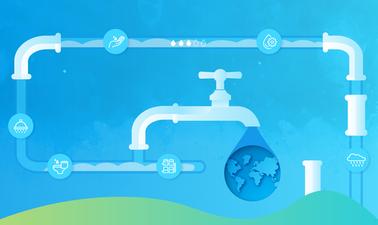
Did you know that some water and sanitation utilities are beginning to lead the transition towards a carbon-neutral future? If you are a professional or an active stakeholder in the water and sanitation sector and want to learn more about how to reduce greenhouse gas emissions at every stage of the urban water cycle, this course is for you. In this course, you will learn about the actions to reduce greenhouse gas emissions in urban water and sanitation utilities and the benefits this brings in terms of economics, environmental impact, and efficiency. Discover the unexplored potential of water and sanitation utilities in global greenhouse gas emissions reduction.

Self Paced
Self-Paced
Making Sense of Climate Science Denial (edX) EdX
University of Queensland,UQx

Making Sense of Climate Science Denial (edX)

Climate change is real, so why the controversy and debate? Learn to make sense of the science and to respond to climate change denial. In public discussions, climate change is a highly controversial topic. However, in the scientific community, there is little controversy with 97% of climate scientists concluding humans are causing global warming.

Self Paced
Self-Paced
Sustainable Aviation: The Route to Climate-Neutral Aviation (edX) EdX
Delft University of Technology,DelftX

Sustainable Aviation: The Route to Climate-Neutral Aviation (edX)

To reduce the environmental footprint of the aviation sector we need to start a clean sky revolution. Discover the latest developments in this field – from airplane design, energy carriers, operations – and learn how you can play a role. Sustainable aviation is a key area for climate action. In this course, we will introduce you to various aircraft technologies, and recent innovations and promising future developments in the field of aviation. All necessary mathematical and engineering concepts will explained.

Self Paced
Self-Paced
Salmon, People, and Place (edX) EdX
University of Alaska Fairbanks,AlaskaX

Salmon, People, and Place (edX)

This course explores the relationships between salmon and people with an emphasis on the special ties of salmon to Indigenous peoples and to Alaska Natives in particular. No wild animal has more profoundly influenced the cultures and well-being of societies in North America than salmon. Salmon and people have been entwined in a relationship for millennia. This six-week course is an exploration and celebration of this relationship, as well as an examination of the current major issues, including habitat alterations, climate change, and management actions currently straining the relationship between salmon and salmon-dependent people.

Self Paced
Self-Paced
Why Move Towards Cleaner Power (edX) EdX
Imperial College London,ImperialX

Why Move Towards Cleaner Power (edX)

Learn why we need to clean up our power supply, and why is it urgent that we take action now. Gain the tools you need to present arguments in favour of a cleaner power sector in your part of the world. This course looks at how increasing greenhouse gases are warming the climate and what it means to decarbonise - reduce the greenhouse gas intensity of - the power sector. It will also provide a range of arguments in favour of decarbonisation, including consideration of ease of access to a secure and affordable energy supply and improvements to health and the environment.

Self Paced
Self-Paced
Climate Change: The Science and Global Impact (edX) EdX
SDGAcademyX,SDG Academy

Climate Change: The Science and Global Impact (edX)

We need to understand the science behind global warming to avoid the most damaging and irreversible climate change impacts on people and planet. Climate change is arguably the greatest challenge of our time. Human activity has already warmed the planet by one degree Celsius relative to pre-industrial times, and we are feeling the effects through record heat waves, droughts, wildfires and flooding.

Self Paced
Self-Paced
Climate Change Science and Negotiations (edX) EdX
SDGAcademyX,SDG Academy

Climate Change Science and Negotiations (edX)

Humanity is up against a tight timeline to address climate change. Learn how we can deeply decarbonize the global energy systems, and put the world on a 2°C pathway. In this course, learn solutions to mitigate the effects of the global greenhouse gas emissions causing temperature rise, and how to apply these solutions in different national contexts improvements.

Self Paced
Self-Paced
Climate Change: Financial Risks and Opportunities (edX) EdX
Imperial College Business School,Imperial College London

Climate Change: Financial Risks and Opportunities (edX)

Explore the risks and opportunities that climate change presents to financial markets, hearing from a range of investment industry leaders and scientific researchers. Do you want to know more about how a warming planet is changing the landscape for investing? Geared towards professionals working in financial markets, this course provides a solid introduction to the financial risks and opportunities arising from man-made climate change.

Self Paced
Self-Paced
Climate Change: Carbon Capture and Storage (edX) EdX
University of Edinburgh,EdinburghX

Climate Change: Carbon Capture and Storage (edX)

Explore the technology that can provide a long-term solution to protect our atmosphere from an excess of carbon dioxide, in the context of global energy, our use of fossil fuels, and climate change. The atmosphere is a shared resource and the amount of greenhouse gases it can absorb is a finite resource. This introductory course to the technology of Carbon Capture and Storage is designed for a wider audience with an interest in energy, sustainability and climate change.

Self Paced
Self-Paced