EdX

Sustainable Aviation: The Route to Climate-Neutral Aviation (edX)

Sustainable Aviation: The Route to Climate-Neutral Aviation (edX)

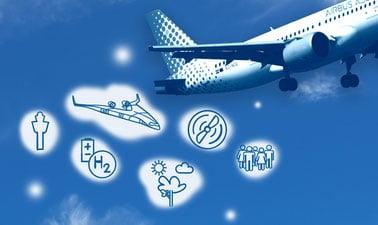
To reduce the environmental footprint of the aviation sector we need to start a clean sky revolution. Discover the latest developments in this field – from airplane design, energy carriers, operations – and learn how you can play a role. Sustainable aviation is a key area for climate action. In this course, we will introduce you to various aircraft technologies, and recent innovations and promising future developments in the field of aviation. All necessary mathematical and engineering concepts will explained.

Class Deals by MOOC List - Click here and see EdX's Active Discounts, Deals, and Promo Codes.

We will start from the basics of how aircraft fly and how they impact the environment. You will gain present-day knowledge of technical solutions and possibilities of modern engineering to make aviation more sustainable.
Next, we will discuss solutions. you will learn about alternative propulsion methods, energy carriers (batteries, fuel cells) and novel aircraft designs (including the Flying V project at TU Delft, a new design for a highly energy-efficient and long-distance commercial aircraft.) We will also bust some common myths about the topics along the way, like why it is a very unpractical thought to simply cover up the entire aircraft with solar cells.
But the solutions presented will not cover just the technical aspects. You will discover the importance of the ecosystem surrounding aviation for its sustainability: manufacturing, operations, and the role of the individual in our airborne society. The course will stimulate critical and creative thought about the future of aviation and how you can be part of those solutions.
With its long history of research of aircraft design, operations and climate effects, the world-class experts from the The Faculty of Aerospace Engineering at TU Delft will guide you through this journey to sustainable aviation. The course will also include guest lectures from industry professionals from leading aviation companies such as Airbus.
“We need climate-neutral aviation. The challenges are enormous, but solutions must and will be found. Through this MOOC we want to share what we know, so that all of you can be part of this ‘clean sky revolution’.” – Henri Werij, Dean Faculty of Aerospace Engineering at TU Delft

What you'll learn
After completing this course, you will be able to:

  • Recognize how the fundamentals of commercial air transport operations and the life cycle of aircraft impact the environment.
  • Explain the inherent challenges in making aviation sustainable, and how these challenges stem from the principles of flight, propulsion, production and operation (there are no easy solutions!)
  • Present the current technological possibilities for making aviation more sustainable, how these possibilities can be implemented, and what their limitations are.
  • Discuss solutions for reducing the environmental impact of aviation on both the personal and the larger scale.

Syllabus

Week 0: Welcome
In the Welcome section of this course we will explain how the course is set up, how the EdX platform works and we will give you an opportunity to introduce yourself and find out who else is following this course.

Week 1: Aviation and Climate Change
In the first week of the MOOC, we will kick things off by taking a birds-eye look at aviation and climate change.
How do aircraft impact the environment
Current situation

Week 2: How do Aircraft Fly?
To understand how we can decrease aviation’s impact on the environment, you will first learn exactly how an aircraft is able to fly.
The physics of flight: Lift and weight, thrust and drag
Aircraft performance
How to propel an aircraft

Week 3: Propulsion and Energy Carriers
In this week, we will take a more detailed look at the elements of a propulsion system and the energy sources that drive them.
Elements of propulsion systems
Engine efficiency
Aircraft energy carriers: options and limitations
Sustainable aviation fuels

Week 4: Production and End of Life
Of course, there is more to an aircraft than flying it. In week 4 of the MOOC, we will discuss the lifecycle of the aircraft.
Lifecycle Assessment
Production of aircraft
During lifetime
Aircraft end of life

Week 5: Novel Aircraft Design and Climate Effects
As we near the end of the MOOC, there are two topics we want to touch upon in more detail: firstly, concepts for the aircraft of the future, and secondly, the actual impact of aircraft on climate.
Novel aircraft designs
Aircraft emissions and their effect on the atmosphere
Aircraft noise

Week 6: Operations and Conclusion
Lastly, we will consider aircraft and airline operations.
Airline planning
Air traffic management
Airport operations

Week 7: Conclusion and Final Assignment

Go to Class
MOOC List is learner-supported. When you buy through links on our site, we may earn an affiliate commission.

Related Courses

Global Warming Science (edX) EdX
MIT,MITx

Global Warming Science (edX)

Learn about the physics, chemistry, biology, and geology of the earth’s climate system. Global Warming Science teaches you about the risks and uncertainties of future climate change by examining the science behind the earth’s climate. You will be able to answer such questions as, “What is the Greenhouse Effect?” and “How and why has earth’s climate changed through geologic history?”

No sessions available
13-24 Weeks
Sustainable Food Security: The value of systems thinking (edX) EdX
Wageningen University,WageningenX

Sustainable Food Security: The value of systems thinking (edX)

Learn how to solve the ‘Rubik’s cube’ of systems thinking and how it’s applied to improve the environmental sustainability of food production systems! Have you ever considered how many aspects of food production affect the natural environment? Every aspect needs to be considered in attaining the future goal to produce enough food for the growing population while at the same time preserving our planet. It’s as difficult as solving a Rubik’s cube; changing one aspect may affect the environment in a major way.

Self Paced
Self-Paced
Worldviews - From Sustainability to Regeneration (edX) EdX
ETH Zurich,ETHx

Worldviews - From Sustainability to Regeneration (edX)

To deal with sets of environmental and social crises, we need a cultural and mental transformation. This MOOC is the first part of an interconnected series of four MOOCS which bring together science, design and transformative praxis as a fluid, intervention-based and synergistic process for addressing complex challenges. This is explored through broadening worldviews, reframing complexity, designing as nature, activating our minds through physical movement, and connecting with new communities.

May 9th 2022
3 Weeks
Sustainability Science - A Key Concept for Future Design (edX) EdX
The University of Tokyo,UTokyoX

Sustainability Science - A Key Concept for Future Design (edX)

Discover sustainability science by learning theoretical concepts and practical applications in Japan and around the world. Sustainability is indispensable for the future of humankind. Sustainability science has emerged as an effort to tackle the complex problems the world is facing today. Lecturers from different disciplines provide a holistic overview of key issues in sustainability including industrial pollution, an aging society, human-nature connection, urban planning, resilience, environmental governance, and education for sustainable development.

Self Paced
Self-Paced
Essential Tools For The Low Carbon Economy (edX) EdX
University of Queensland,UQx

Essential Tools For The Low Carbon Economy (edX)

Investigate global climate change policies and learn the essential skills organisations need to be financially competitive in a low carbon economy. Want to be a key player in transitioning your organisation to the low carbon economy? This course is ideally suited to business managers, financial managers, business-intelligent analysts and data scientists interested in remaining competitive in a low carbon economy.

Self Paced
Self-Paced
Climate Change Science and Negotiations (edX) EdX
SDGAcademyX,SDG Academy

Climate Change Science and Negotiations (edX)

Humanity is up against a tight timeline to address climate change. Learn how we can deeply decarbonize the global energy systems, and put the world on a 2°C pathway. In this course, learn solutions to mitigate the effects of the global greenhouse gas emissions causing temperature rise, and how to apply these solutions in different national contexts improvements.

Self Paced
Self-Paced
Industrias sostenibles y competitivas (edX) EdX
The Pontificia Universidad Javeriana,JaverianaX

Industrias sostenibles y competitivas (edX)

Introducir el concepto de Sostenibilidad y analizar la relación entre la responsabilidad ambiental de las compañías y su competitividad. Una compañía que pretenda ser sostenible debe pensar en generar un valor económico, social y medioambiental, en el corto y largo plazo, a fin de contribuir al aumento del bienestar y el progreso de las generaciones presentes y futuras.

No session available
4 Weeks
Sustainable Soil Management: Soil for life (edX) EdX
Wageningen University,WageningenX

Sustainable Soil Management: Soil for life (edX)

Learn why soil is so important, how it’s being threatened and what we can do to protect this natural resource so vital to our lives. Soil is the earth’s fragile skin that anchors all life. We depend on soil to build our homes and cities, to grow crops for food and raise livestock, to support transportation and enable recreation. Yet we disregard this crucial and precious resource that lies right under our feet.

Self Paced
Self-Paced
Small Organisms, Big Solutions: Microbiomes & Sustainability (edX) EdX
National University of Singapore,NUS

Small Organisms, Big Solutions: Microbiomes & Sustainability (edX)

The course is an introduction to microbiomes and sustainability. It argues that global microbiomes are fundamentally relevant to sustainability. Topics include principles of sustainability, sustainable development, microbiomes in humans and the environment, bioremediation, and bioretention.

Apr 20th 2022
4 Weeks