EdX

Climate Change: The Science and Global Impact (edX)

Offered by SDGAcademyX, SDG Academy,
Climate Change: The Science and Global Impact (edX)

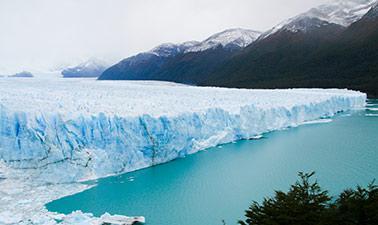
We need to understand the science behind global warming to avoid the most damaging and irreversible climate change impacts on people and planet. Climate change is arguably the greatest challenge of our time. Human activity has already warmed the planet by one degree Celsius relative to pre-industrial times, and we are feeling the effects through record heat waves, droughts, wildfires and flooding.

Class Deals by MOOC List - Click here and see EdX's Active Discounts, Deals, and Promo Codes.

If we continue to burn fossil fuels at the current rate, the planet will reach two degrees of warming by 2050—the threshold that many scientists have identified as a dangerous tipping point. What is the science behind these projections?

Join climate science expert Michael Mann to learn about the basic scientific principles behind climate change and global warming. We need to understand the science in order to solve the broader environmental, societal and economic changes that climate change is bringing.

By the end of this course, you will:

  • Develop a deep scientific understanding of HOW the climate system has been changing;
  • Articulate WHY the climate system is changing;
  • Understand the nature of these changes;
  • Develop a systems thinking approach to analyzing the impacts of climate change on both natural and human systems.

The course covers the basic principles of atmospheric science, methods of climate data collection and tracking of greenhouse gas emissions. It introduces basic climate modeling and explores the impact of various greenhouse gas emissions scenarios. Finally, it outlines the impacts of climate change on environmental, social, economic and human systems, from coral reefs and sea level rise to urban infrastructure.

What you'll learn

  • Principles of atmospheric science
  • Climate data collection and interpretation
  • Zero-dimensional Energy Balance Models
  • One-dimensional Energy Balanced Models
  • General Circulation Models
  • Carbon emissions scearios
  • Future climate change projections
  • Impacts on human systems
  • Emissions reduction pathways

Syllabus

Module 1: Introduction to Climate and Climate Change
1.0 Course Introduction
1.1 What is climate change
1.2 What should we care about climate change?
1.3 Overview of the climate system: How is the climate system constructed?
1.4 Overview of the climate system: How do energy balances work?
1.5 Overview of the climate system: Global circulation systems
1.6 Other fundamental principles: Feedback mechanisms and the carbon cycle

Module 2: Observing and Measuring Anthropogenic Climate Change
2.1 Changes in atmospheric greenhouse gases
2.2 Modern surface temperature trends
2.3 The oceans
2.4 Extreme weather
2.5 Sea ice, glaciers and global sea level
2.6 Paleoclimate evidence of climate change

Module 3: Modeling the Climate System: The Basics
3.1 Introduction to climate modeling
3.2 Expressing a zero-dimensional energy model as a linear equation
3.3 0d-EBM demonstration
3.4 Estimating climate sensitivity

Module 4: Modeling the Climate System: Advanced
4.1 One-dimensional energy balance models
4.2 Case Study: Using a one-dimensional EBM to model the ice ages
4.3 General circulation models
4.4 Validating climate models
4.5 Detecting climate change
4.6 Interpreting climate sensitivity

Module 5: Carbon Emission Scenarios
5.1 Emissions Scenarios
5.2 Stabilizing CO2 concentrations

Module 6: Applying Climate Models: Projected Changes in the Climate System
6.1 Surface temperature projections
6.2 Projected changes in global precipitation and drought
6.3 Atmospheric and oceanic circulation changes
6.4 The melting cryosphere
6.5 Sea level rise projections
6.6 Tropical cyclone and hurricane projections
6.7 Extreme weather projections

Module 7: Climate Change Impacts: The Future for People and Planet
7.1 Carbon cycle feedbacks
7.2 Sea level rise and coastal impacts
7.3 Ecosystems and biodiversity
7.4 Shifting water and food resources
7.5 Human health impacts
7.6 Security concerns
7.7 Tipping points

Module 8: What Is Our Path Forward?
8.1 Geoengineering: A scientist’s perspective, Part 1
8.2 Geoengineering: A scientist’s perspective, Part 2
8.3 Emissions reductions: The only viable way forward
8.4 Conclusion: A path of hope


Go to Class
MOOC List is learner-supported. When you buy through links on our site, we may earn an affiliate commission.

Related Courses

An Introduction to Evidence-Based Undergraduate STEM Teaching (edX) EdX
CornellX,Cornell University

An Introduction to Evidence-Based Undergraduate STEM Teaching (edX)

Learn how to implement evidence-based teaching strategies in your university classroom as well as effective methods for assessing teaching and learning. This course is designed to provide future STEM faculty, graduate students and post-doctoral fellows with an introduction to effective teaching strategies and the research that supports them.

Jun 17th 2024
5-12 Weeks
Stand up for Science: Practical Approaches to Discussing Science that Matters (edX) EdX
University of Michigan,MichiganX

Stand up for Science: Practical Approaches to Discussing Science that Matters (edX)

In this Teach-Out, scientists and non-scientists reach out and RELATE to build communication skills to more effectively discuss knowledge. Everyone - non-scientists and scientists alike - has some form of expertise, but communicating across a gap in knowledge or experience is challenging. In this Teach-Out, we address this challenge by helping participants to develop core communication skills and more effectively communicate with one another.

No sessions available
1 Week
International Climate Change Law and Policy (edX) EdX
Newcastle University,NewcastleX

International Climate Change Law and Policy (edX)

Law

Learn about the evolution and architecture of international law and policy to combat climate change. Take a close look at the 2015 Paris Agreement (UNFCCC) from both a legal and economic perspective. This course will equip you with the fundamentals of International Climate Change Law and Policy.

No sessions available
4 Weeks
Climate Change: The Science (edX) EdX
The University of British Columbia,UBCx

Climate Change: The Science (edX)

Master the basics of climate science so you can better understand the news, evaluate scientific evidence, and explain global warming to anyone. Do you want to talk about climate change from an informed perspective? Are you interested in how global warming works? Climate change is the biggest challenge of our time, and climate science is critical to finding solutions. How can we make the best decisions about our present and future? By taking this course, you can be part of the global conversation.

No sessions available
5-12 Weeks
Climate Change Education (edX) EdX
Inter-American Development Bank - IDB,IDBx

Climate Change Education (edX)

Learn how to work with your students to help them explore climate change through the use of interactive and engaging activities. These activities are designed for students at the primary and secondary levels. Our climate is changing rapidly, and now more than ever we need to be ready to act and prepare the next generation to take care of our planet. This course explores the basic science behind climate change and presents the tools to teach it in a positive, engaging and participatory way. The course also introduces some of the ethical and social issues around climate change.

Self Paced
Self-Paced
Making Sense of Climate Science Denial (edX) EdX
University of Queensland,UQx

Making Sense of Climate Science Denial (edX)

Climate change is real, so why the controversy and debate? Learn to make sense of the science and to respond to climate change denial. In public discussions, climate change is a highly controversial topic. However, in the scientific community, there is little controversy with 97% of climate scientists concluding humans are causing global warming.

Self Paced
Self-Paced
Science & Cooking: From Haute Cuisine to Soft Matter Science (physics) (edX) EdX
HarvardX,Harvard University

Science & Cooking: From Haute Cuisine to Soft Matter Science (physics) (edX)

Top chefs and Harvard researchers explore how traditional and modernist cooking techniques can illuminate basic principles in chemistry, physics, and engineering. Learn about elasticity, viscosity, mayonnaise, baking, and more! In this course, which investigates physical transformations in food, we will be visited by world-famous chefs who use a number of different styles and techniques in their cooking. Each chef will demonstrate how he or she prepares delicious and interesting creations, and we will explore how fundamental scientific principles make them possible.

Self Paced
Self-Paced
Natural Disasters (edX) EdX
McGill,McGillX

Natural Disasters (edX)

Learn the science behind different types of natural disasters and our ability, or inability, to control and predict these events. No region on Earth is immune from natural disasters. As we gain scientific understanding into the causes and nature of such phenomena, we become better able to mitigate the effects of disasters. Yet as the world's population continues to grow, an increasingly large number of people are at risk.

No sessions available
5-12 Weeks