Through Engineers' Eyes: Engineering Mechanics by Experiment, Analysis and Design (FutureLearn)

Through Engineers' Eyes: Engineering Mechanics by Experiment, Analysis and Design (FutureLearn)

Learn the techniques of Engineering Mechanics, use them to interpret experiments and apply them to design. When you design anything, how do you know that the design will work? You need Engineering Mechanics - the science-based analysis that engineers use to predict how their designs will perform, so they can meet their responsibilities for performance and safety. It starts with physics - forces, equilibrium, acceleration, gravity - but then engineers adapt it to their own purposes.

Class Deals by MOOC List - Click here and see FutureLearn's Active Discounts, Deals, and Promo Codes.

In this free online course, you will learn analytical skills, use them to understand experiments, and apply them in design. You will be living in the engineer’s world.

An unusual approach to learning Engineering Mechanics
Each of the seven weeks of this course has:

  • an introduction to set the scene;
  • experiments to introduce physical reality;
  • analysis videos, paper and pencil tutorials and on-line Adaptive Tutorials to help you develop insights and skills;
  • a design activity to give you engineering context (except Week 1);
  • and a review process to consolidate your learning.

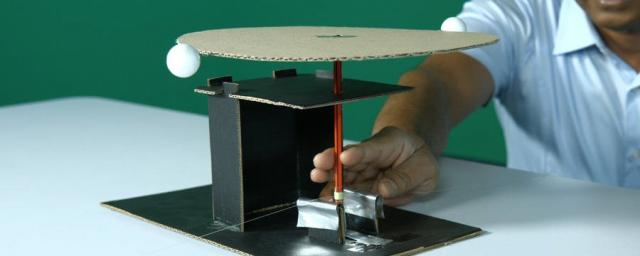
Experiments will be a special feature. You can do them yourself using common household items such as rubber bands, paper clips, string and cardboard, a toy vehicle. Videos and downloadable instructions will guide you. We hope you’ll do some of them, but if not, you can get what you need from watching the videos.
Adaptive Tutorials will be another special feature. They provide a personalised learning experience through virtual ‘learning by doing’ activities that adapt to your progress.
Here are two examples of typical weekly activities:
Week 3 - the experiments and analysis will present tools for finding forces by applying equilibrium, and for the design activity you will specify the size of a bolt that acts as a pin on a fold-out frame.
Week 6 - the experiments will explore various types of resistance to motion, the analysis will introduce concepts of work and energy, and for the design activity, you will estimate the power requirement and range of an electric car.

A life-changing experience
On completing this course you will have:

  • learnt how to manipulate forces as vectors;
  • learnt techniques and skills in using free body diagrams and equilibrium to analyse and predict forces;
  • understood centres of gravity, friction and various types of resistance;
  • and applied these capabilities to design.

And by living in the world of the engineer, you will see how they operate effectively and safely. You will have begun to develop “Engineers’ Eyes”.
Go to Class
MOOC List is learner-supported. When you buy through links on our site, we may earn an affiliate commission.

Related Courses

Moons (FutureLearn) FutureLearn
The Open University

Moons (FutureLearn)

Explore the many moons of our Solar System. Find out what makes them special and ask whether we send humans to our Moon again. Discover the amazing diversity of moons in our Solar System. There are lots of moons in our Solar System. The Earth is the only planet with just a single moon. Some are bigger than ours. Many are much smaller. Some moons have ongoing volcanic eruptions. Others have rivers of liquid methane. A small handful may even be home to primitive life. This online course will allow you to explore the rich diversity of moons in our Solar System.

Self Paced
5-12 Weeks
Frontier Physics, Future Technologies (FutureLearn) FutureLearn
University of York

Frontier Physics, Future Technologies (FutureLearn)

Expand your understanding of modern physics and discover how we can solve societal problems by developing future technologies. Explore the mysteries of the universe through cutting-edge physics. Physics is the most fundamental of the sciences. By studying the properties of energy and matter, physicists aim to explain the many mysteries of the universe.

Self Paced
3 Weeks
Understanding Modern Physics III: Simplicity and Complexity (Coursera) Coursera
The Hong Kong University of Science and Technology - HKUST

Understanding Modern Physics III: Simplicity and Complexity (Coursera)

The 20th century was known as the century of physics. In the past 120 years, concepts such as space, time, energy, entropy and particles were understood to much deeper levels. New paradigms of thinking such as relativity and quantum mechanics emerged. This course is the third course in the Understanding Modern Physics series, which covers an introduction to action principle, fundamental particle physics, entropy & information and complexity.

Sep 7th 2026
4 Weeks
Introduction to Statistics (Coursera) Coursera
Stanford University

Introduction to Statistics (Coursera)

Stanford's "Introduction to Statistics" teaches you statistical thinking concepts that are essential for learning from data and communicating insights. By the end of the course, you will be able to perform exploratory data analysis, understand key principles of sampling, and select appropriate tests of significance for multiple contexts. You will gain the foundational skills that prepare you to pursue more advanced topics in statistical thinking and machine learning.

Sep 7th 2026
5-12 Weeks
Through Engineers' Eyes: Engineering Mechanics by Experiment, Analysis and Design (FutureLearn) FutureLearn
UNSW Sydney - University of New South Wales

Through Engineers' Eyes: Engineering Mechanics by Experiment, Analysis and Design (FutureLearn)

Learn the techniques of Engineering Mechanics, use them to interpret experiments and apply them to design. When you design anything, how do you know that the design will work? You need Engineering Mechanics - the science-based analysis that engineers use to predict how their designs will perform, so they can meet their responsibilities for performance and safety.

No sessions available
5-12 Weeks
The Finite Element Method for Problems in Physics (Coursera) Coursera
University of Michigan

The Finite Element Method for Problems in Physics (Coursera)

This course is an introduction to the finite element method as applicable to a range of problems in physics and engineering sciences. The treatment is mathematical, but only for the purpose of clarifying the formulation. The emphasis is on coding up the formulations in a modern, open-source environment that can be expanded to other applications, subsequently.

Sep 7th 2026
13-24 Weeks
Conceptos y Herramientas para la Física Universitaria (Coursera) Coursera
Tecnológico de Monterrey

Conceptos y Herramientas para la Física Universitaria (Coursera)

Este curso provee al estudiante con conceptos y herramientas matemáticas para modelar problemas en física, que al aplicar podrá enfrentar con éxito los cursos de física universitarios. Así pues, la filosofía de este curso consiste en cubrir temas conceptuales relativos a la Física y desarrollar tu capacidad de aprender y aplicarlos en tu vida profesional.

Sep 14th 2026
5-12 Weeks
Física: Vectores, Trabajo y Energía (Coursera) Coursera
Tecnológico de Monterrey

Física: Vectores, Trabajo y Energía (Coursera)

Este curso provee al estudiante con conceptos y herramientas matemáticas para modelar problemas en física, que al aplicar podrá enfrentar con éxito los cursos de física universitarios. Así pues, la filosofía de este curso consiste en cubrir temas conceptuales relativos a la Física y desarrollar tu capacidad de aprender y aplicarlos en tu vida profesional.

Sep 14th 2026
5-12 Weeks
Introduction to Thermodynamics (FutureLearn) FutureLearn
University of Hull

Introduction to Thermodynamics (FutureLearn)

Discover the laws of thermodynamics as you learn how to calculate chemical properties and predict chemical reactions. Get an introduction to thermodynamic properties and systems. Curious about thermodynamics or thinking about studying it at university? This short course from the University of Hull offers a short introduction to the fundamentals of thermodynamics – the branch of physics that deals with heat and its relation to energy.

Available now
3 Weeks