Controle de Sistemas no Plano-s (Coursera)

Controle de Sistemas no Plano-s (Coursera)

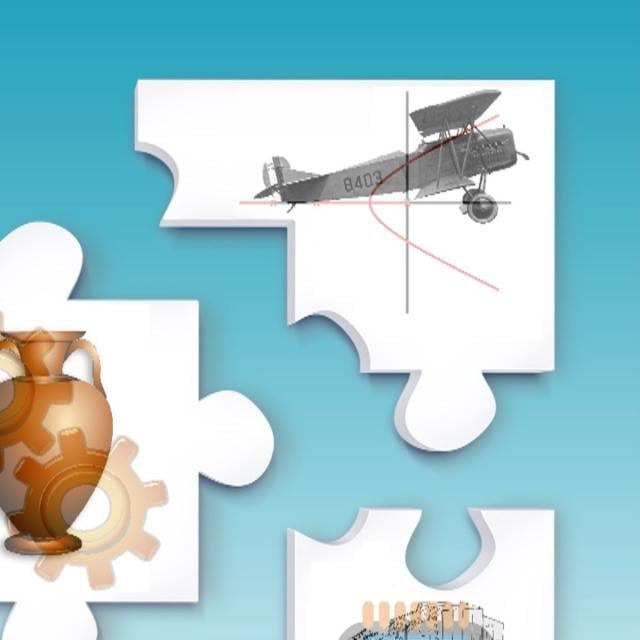
Após esse curso você será capaz de esboçar o Lugar Geométrico das Raízes (LGR - Root Locus) do denominador da Função de Transferência em Malha Fechada a partir dos polos e zeros da Função de Transferência em Malha aberta. Você também será capaz de projetar controladores de avanço de fase para atender simultaneamente requisitos de desempenho de amortecimento e de velocidade da resposta.

Class Deals by MOOC List - Click here and see Coursera's Active Discounts, Deals, and Promo Codes.

Você também será capaz de projetar controladores de atraso de fase para atender requisitos de erro em regime permanente sem alterar as características de estabilidade e da resposta transitória do sistema. Você verá que os controladores PD e PI podem ser considerados como casos especiais dos controladores de avanço e de atraso de fase e verá também que você pode combinar os dois tipos de controladores em controladores de avanço e atraso de fase ou em controladores PID.
Por fim você será capaz de modelar o efeito do atraso de transporte em um sistema com realimentação e de contrapor esse efeito projetando um controlador ou fazendo ajustes em um controlador já projetado.
Desso modo dado um sistema linear e invariante no tempo e requisitos de amortecimento, velocidade e erro em regime permanente você será capaz de projetar um controlador que fará com que o sistema em malha fechada atenda simultaneamente a esses três tipos de requisitos.
E você aprenderá tudo isso usando o MATLAB, uma ferramenta computacional extremamente útil para a análise, projeto e simulação de sistemas.

Syllabus

WEEK 1
Regiões de desempenho e aproximação de segunda ordem
Neste módulo fazemos uma breve introdução incluindo uma revisão sobre as fórmulas da resposta ao degrau de um sistema subamortecido.Você aprenderá o que é o Plano-s e como representar requisitos de desempenho no Plano-s e verá também que em alguns casos podemos desprezar a contribuição de alguns polos e zeros na resposta ao degrau.

WEEK 2
O Lugar Geométrico das Raízes
Neste módulo você aprenderá o que é o Lugar Geométrico das Raízes, também conhecido como Root Locus e aprenderá também como esboçar o LGR a partir da função de transferência do sistema em malha aberta.

WEEK 3
Controlador de avanço de fase
Neste módulo você aprenderá a projetar um controlador de avanço de fase, também conhecido como controlador lead, para atender a requisitos de desempenho que não poderiam ser atendidos com um sistema controle proporcional. Você aprenderá também o que é o controlador PD.

WEEK 4
Controlador de atraso de fase
Neste módulo você verá que não pode tentar atender a um requisito de erro em regime permanente simplesmente aumentando o ganho do sistema. Para atender a um requisito de erro em regime sem alterar outras características da resposta do sistema é preciso usar um controlador de atraso de fase. Você também vai aprender o que é um controlador PI.

WEEK 5
Controladores de avanço e atraso, atraso de transporte
Neste módulo você vai aprender a projetar controladores de avanço e atraso de fase, ou lead-lag. Você também verá um projeto de controlador PID e aprenderá como lidar com o atraso de transporte usando um controlador de avanço de fase.

Go to Class
MOOC List is learner-supported. When you buy through links on our site, we may earn an affiliate commission.

Related Courses

Engineering Practices for Building Quality Software (Coursera) Coursera
University of Minnesota

Engineering Practices for Building Quality Software (Coursera)

Agile embraces change which means that team should be able to effectively make changes to the system as team learns about users and market. To be good at effectively making changes to the system, teams need to have engineering rigor and excellence else embracing change becomes very painful and expensive. In this course, you will learn about engineering practices and processes that agile and traditional teams use to make sure the team is prepared for change. In additional, you will also learn about practices, techniques and processes that can help team build high quality software. You will also learn how to calculate a variety of quantitative metrics related to software quality.

Aug 31st 2026
4 Weeks
Materials Science: 10 Things Every Engineer Should Know (Coursera) Coursera
University of California, Davis

Materials Science: 10 Things Every Engineer Should Know (Coursera)

We explore “10 things” that range from the menu of materials available to engineers in their profession to the many mechanical and electrical properties of materials important to their use in various engineering fields. We also discuss the principles behind the manufacturing of those materials. By the end of the course, you will be able to: recognize the important aspects of the materials used in modern engineering applications; explain the underlying principle of materials science: “structure leads to properties,”; identify the role of thermally activated processes in many of these important “things” – as illustrated by the Arrhenius relationship; relate each of these topics to issues that have arisen (or potentially could arise) in your life and work.

Aug 31st 2026
5-12 Weeks
Ingeniería de Tráfico (Coursera) Coursera
Pontificia Universidad Católica de Chile

Ingeniería de Tráfico (Coursera)

El curso presenta en primer lugar las principales relaciones que caracterizan la circulación de vehículos y que dan pie a la teoría de circulación de vehículos sobre redes de transporte. Posteriormente se discutirán aspectos relativos al control de tráfico en intersecciones, sean estas de prioridad o semaforizadas. Finalmente, discutiremos sobre las características que presentan algunos modelos dinámicos de tráfico bastante utilizados en la actualidad.

Sep 7th 2026
4 Weeks
Interpersonal Communication for Engineering Leaders (Coursera) Coursera
Rice University

Interpersonal Communication for Engineering Leaders (Coursera)

This course covers communication skills that engineering leaders use every day to motivate, inspire, and support the people in their organizations. Speaking and writing are basic leadership communication skills. (We covered these topics in the Specialization course 1 and 3.) However, leaders also need to be skillful interpersonal communicators.

Sep 14th 2026
4 Weeks
Probabilistic Graphical Models 1: Representation (Coursera) Coursera
Stanford University

Probabilistic Graphical Models 1: Representation (Coursera)

Probabilistic graphical models (PGMs) are a rich framework for encoding probability distributions over complex domains: joint (multivariate) distributions over large numbers of random variables that interact with each other. These representations sit at the intersection of statistics and computer science, relying on concepts from probability theory, graph algorithms, machine learning, and more. They are the basis for the state-of-the-art methods in a wide variety of applications, such as medical diagnosis, image understanding, speech recognition, natural language processing, and many, many more. They are also a foundational tool in formulating many machine learning problems.

Aug 31st 2026
5-12 Weeks
Advanced Engineering Systems in Motion: Dynamics of Three Dimensional (3D) Motion (Coursera) Coursera
Georgia Institute of Technology

Advanced Engineering Systems in Motion: Dynamics of Three Dimensional (3D) Motion (Coursera)

This course is an advanced study of bodies in motion as applied to engineering systems and structures. We will study the dynamics of rigid bodies in 3D motion. This will consist of both the kinematics and kinetics of motion. Kinematics deals with the geometrical aspects of motion describing position, velocity, and acceleration, all as a function of time. Kinetics is the study of forces acting on these bodies and how it affects their motion.

Sep 7th 2026
5-12 Weeks
Nanotechnology: A Maker’s Course (Coursera) Coursera
Duke University,University of North Carolina,North Carolina State University

Nanotechnology: A Maker’s Course (Coursera)

How can we create nano-structures that are 10,000 times smaller than the diameter of a human hair? How can we “see” at the nano-scale? Through instruction and lab demonstrations, in this course you will obtain a rich understanding of the capabilities of nanotechnology tools, and how to use this equipment for nano-scale fabrication and characterization.

Sep 7th 2026
5-12 Weeks
Cómo autoconstruir tu vivienda (Coursera) Coursera
Universidad Nacional Autónoma de México

Cómo autoconstruir tu vivienda (Coursera)

Aprenderás las bases y los procedimientos precisos paso a paso para que puedas llevar a cabo la autoconstrucción de una vivienda básica, segura y económica para ti y tu familia; también te será de gran utilidad si estás buscando aprender a reparar, mejorar la estructura de tu vivienda e incluso si buscas autoemplearte.

Sep 14th 2026
4 Weeks
Nanotechnology and Nanosensors, Part 2 (Coursera) Coursera
Technion - Israel Institute of Technology

Nanotechnology and Nanosensors, Part 2 (Coursera)

Learn about novel sensing tools that make use of nanotechnology to screen, detect and monitor various events in personal or professional life. Together, we will lay the groundwork for infinite innovative applications, starting from diagnosis and treatments of diseases, continuing with quality control of goods and environmental aspects, and ending with monitoring security issues.

Sep 7th 2026
5-12 Weeks
Writing Skills for Engineering Leaders (Coursera) Coursera
Rice University

Writing Skills for Engineering Leaders (Coursera)

Engineering leaders must write extensively for their jobs, and their writing needs to be professional, reader-focused, and error-free. What leaders write in particular can affect productivity and the bottom line, so the written communication that leaders create must be clear and concise. In this course, you’ll learn essential writing skills that you can apply in your daily activities on the job as an engineering leader.

Sep 14th 2026
4 Weeks
Introduction to Programming with MATLAB (Coursera) Coursera
Vanderbilt University

Introduction to Programming with MATLAB (Coursera)

This course teaches computer programming to those with little to no previous experience. It uses the programming system and language called MATLAB to do so because it is easy to learn, versatile and very useful for engineers and other professionals. MATLAB is a special-purpose language that is an excellent choice for writing moderate-size programs that solve problems involving the manipulation of numbers.

Aug 31st 2026
5-12 Weeks