Through Engineers' Eyes - Introducing the Vision: Engineering Mechanics by Experiment, Analysis and Design (FutureLearn)

Through Engineers' Eyes - Introducing the Vision: Engineering Mechanics by Experiment, Analysis and Design (FutureLearn)

Learn the basic techniques of engineering mechanics and use them to interpret experiments and make designs that will work. When you design anything, how do you know that the design will work? Engineering mechanics is the science-based analysis that engineers use to predict how their designs will perform. It is vital to ensure engineers can meet their responsibilities for performance and safety.

Class Deals by MOOC List - Click here and see FutureLearn's Active Discounts, Deals, and Promo Codes.

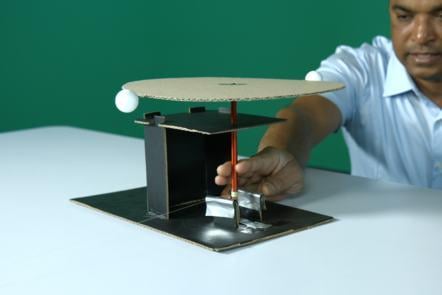
In this course and its companion course Through Engineers’ Eyes: Expanding the Vision, you will learn analytical skills, use them to understand experiments and apply them in design. Through experiments, analysis videos, paper and pencil tutorials and adaptive tutorials, you will experience living in the engineer’s world.

What topics will you cover?

  • Effects of loads on springs
  • Forces that meet in a point
  • Understanding and analysing twist
  • Forces in rigid bodies (two dimensions)
  • Engineering mechanics and design

What will you achieve?
By the end of the course, you'll be able to...

  • Describe how to manipulate forces as vectors
  • Apply techniques and skills in using free-body diagrams and equilibrium to analyse and predict forces;
  • Explore how engineering mechanics is used in design
  • Describe and calculate the twisting effect of a force

Go to Class
MOOC List is learner-supported. When you buy through links on our site, we may earn an affiliate commission.

Related Courses

Applied Data Science (FutureLearn) FutureLearn
Birkbeck, University of London,Coventry University,Institute of Coding

Applied Data Science (FutureLearn)

Develop your data science and analytics skills and improve your understanding of using data in the workplace. Have the opportunity to build data science skills to advance your career. On this course, you’ll be introduced to the tools and techniques used in applied data science. You’ll explore the answers to important questions asked of business professionals today, such as why data science and machine learning have become so prevalent and what problems data science can address.

Jan 16th 2023
2 Weeks
Value Co-Creation in Sport Management – A New Logic in a Changing Society (edX) EdX
University of Bayreuth,BayreuthX

Value Co-Creation in Sport Management – A New Logic in a Changing Society (edX)

Do you want to become a successful sport management expert? Learn the importance of value co-creation and gather new insights that will make you more competitive in the field of sport management. Are you a passionate sports lover interested in exploring a new innovative logic in sport management? Enroll in this online course.

Self Paced
Self-Paced
Through Engineers' Eyes: Engineering Mechanics by Experiment, Analysis and Design (FutureLearn) FutureLearn
UNSW Sydney - University of New South Wales

Through Engineers' Eyes: Engineering Mechanics by Experiment, Analysis and Design (FutureLearn)

Learn the techniques of Engineering Mechanics, use them to interpret experiments and apply them to design. When you design anything, how do you know that the design will work? You need Engineering Mechanics - the science-based analysis that engineers use to predict how their designs will perform, so they can meet their responsibilities for performance and safety.

No sessions available
5-12 Weeks
Lightweight Design (edX) EdX
RWTH Aachen,RWTHx

Lightweight Design (edX)

Learn the fundamental principles and rules of lightweight design. Deepen your understanding of how structures work and get a first insight on nonlinear calculation methods and lightweight design algorithms. This course will introduce you to lightweight design and its goals. You will learn basic rules for weight optimization of a structure on a material and structural level. The important aspect of cost management in the process of light weight design is discussed. You will get a deeper understanding of how structures work and how they are designed regarding lightweight optimum.

Self Paced
Self-Paced
Network Analysis in Systems Biology (Coursera) Coursera
Icahn School of Medicine at Mount Sinai

Network Analysis in Systems Biology (Coursera)

An introduction to data integration and statistical methods used in contemporary Systems Biology, Bioinformatics and Systems Pharmacology research. The course covers methods to process raw data from genome-wide mRNA expression studies (microarrays and RNA-seq) including data normalization, differential expression, clustering, enrichment analysis and network construction. The course contains practical tutorials for using tools and setting up pipelines, but it also covers the mathematics behind the methods applied within the tools.

Aug 31st 2026
5-12 Weeks
Random Models, Nested and Split-plot Designs (Coursera) Coursera
Arizona State University

Random Models, Nested and Split-plot Designs (Coursera)

Many experiments involve factors whose levels are chosen at random. A well-know situation is the study of measurement systems to determine their capability. This course presents the design and analysis of these types of experiments, including modern methods for estimating the components of variability in these systems. The course also covers experiments with nested factors, and experiments with hard-to-change factors that require split-plot designs.

Aug 24th 2026
3 Weeks
Framework for Data Collection and Analysis (Coursera) Coursera
University of Maryland, College Park

Framework for Data Collection and Analysis (Coursera)

This course will provide you with an overview over existing data products and a good understanding of the data collection landscape. With the help of various examples you will learn how to identify which data sources likely matches your research question, how to turn your research question into measurable pieces, and how to think about an analysis plan.

Aug 17th 2026
4 Weeks
Probability and Statistics I: A Gentle Introduction to Probability (edX) EdX
Georgia Institute of Technology,GTx

Probability and Statistics I: A Gentle Introduction to Probability (edX)

This course provides an introduction to basic probability concepts. Our emphasis is on applications in science and engineering, with the goal of enhancing modeling and analysis skills for a variety of real-world problems. In order to make the course completely self-contained (and to bring back long-lost memories), we’ll start off with Bootcamp lessons to review concepts from set theory and calculus.

Self Paced
Self-Paced
Applications in Engineering Mechanics (Coursera) Coursera
Georgia Institute of Technology

Applications in Engineering Mechanics (Coursera)

This course applies principles learned in my course “Introduction to Engineering Mechanics” to analyze real world engineering structures. You will need to have mastered the engineering fundamentals from that class in order to be successful in this course offering. This course addresses the modeling and analysis of static equilibrium problems with an emphasis on real world engineering systems and problem solving.

Sep 7th 2026
5-12 Weeks
Data Mining Methods (Coursera) Coursera
University of Colorado Boulder

Data Mining Methods (Coursera)

This course covers the core techniques used in data mining, including frequent pattern analysis, classification, clustering, outlier analysis, as well as mining complex data and research frontiers in the data mining field. Data Mining Methods can be taken for academic credit as part of CU Boulder’s Master of Science in Data Science (MS-DS) degree offered on the Coursera platform.

Aug 17th 2026
4 Weeks
Preparing for University (FutureLearn) FutureLearn
University of East Anglia

Preparing for University (FutureLearn)

Build the academic skills you need for learning at university and ease your transition from school learning to higher education. Develop writing, critical thinking, and analytical skills for university study. Learning at a university level requires enhanced critical thinking skills, as well as being able to hold a supported, substantive argument and critically analyse sources or data.

Self Paced
5-12 Weeks
Starting a Business 1: Vision and Opportunity (FutureLearn) FutureLearn
University of Leeds

Starting a Business 1: Vision and Opportunity (FutureLearn)

Interested in starting a business? This course will help you define your vision and discover opportunities to make it happen. A successful business starts with a clear vision and a thorough understanding of the opportunities available to turn that vision into a reality. Whether you have an idea for a future venture or you already have a side-line business whilst studying, this course will help you consider your vision and explore the opportunities available.

Self Paced
2 Weeks