EdX

Space Mission Design and Operations (edX)

Space Mission Design and Operations (edX)

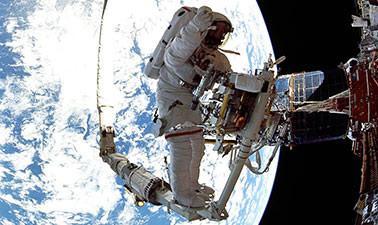
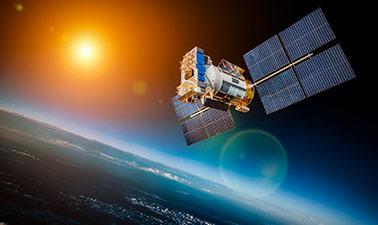
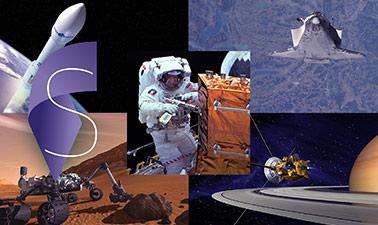
Learn the concepts used in the design of space missions, manned or unmanned and operations, based on the professional experience of the lecturer. This course builds on university level physics and mechanics to introduce and illustrate orbital dynamics as is applied in the design of space missions. Simple tools will be provided to allow planning of missions on orbit around Earth or in the Solar System. You will learn from the experience of Claude Nicollier, one of the first ESA astronauts, specifically through his involvement in the Shuttle project and his role in the maintenance of the Hubble Space Telescope on two occasions.

Class Deals by MOOC List - Click here and see EdX's Active Discounts, Deals, and Promo Codes.

Space exploration is a very exciting subject. Consider the achievements of Sputnik 1, Yuri Gagarin's first flight in space, the Apollo missions to the Moon, followed by the Shuttle program, the Hubble Space Telescope launch and maintenance on orbit, and finally the assembly and exploitation of the International Space Station. These were challenging undertakings involving space agencies and industrial teams of several nations, and private companies as well. Space telescopes are in service, and several components of the solar system have been and are still actively visited by a number of unmanned probes and robots providing us with precious knowledge about our space environment as well as the far away Universe.
The course focuses on conceptual understanding of space mechanics, maneuvers, propulsion and control systems used in all spacecraft. You will gain knowledge of the challenges related to the use of the space environment as a platform for scientific and utilitarian purposes.

What you'll learn:

  • Fundamental laws of mechanics and orbital mechanics
  • Orbital manoeuvers
  • Types of space missions and their objectives
  • Space environment
  • General concepts of space vehicles architecture
  • Propulsion
  • Attitude determination and control
  • On board systems
  • Risk management and reliability
  • Key design elements for successful missions, in particular related to human spaceflight

Syllabus

Unit 0 - Introduction to the Course
Course objectives
Motivation behind space exploration and utilization
The space pioneers, and brief history of human space exploration
The main space agencies in the world
Space utilization and exploration

Unit 1 - Introduction to Space Environment
Review of Laws of Mechanics
Introduction to the space environment including the transition from the atmosphere to space, microgravity, the electrical and thermal environments, orbital lifetime, space debris and asteroids/comets collision threats

Unit 2 – Introduction to Orbital Mechanics (I and II)
Orbital Mechanics I - dynamics of spaceflight; concept of gravitational well; orbital motion; Kepler’s Laws; the case of circular orbits
Orbital Mechanics II - elliptical orbits; reference frames; orbital maneuvers; perturbations of orbital motion; peculiar orbits

Unit 3 - Orbital Mechanics Part III
Rendezvous in Low Earth Orbit (LEO); relative motion of the chaser vs. the target; the case of the Space Shuttle and ESA’s Automatic Transfer Vehicle (ATV)

Unit 4 - Orbital Mechanics Part IV
Interplanetary trajectories; Gravity Assist or Slingshot principle
Propulsion in space - law of propulsion; concept of specific impulse; types of thrusters; electric propulsion; ascent into space; and re-entry

Unit 5 - Introduction to Space Systems and Space Tethers
Attitude measurement and control; attitude change; electrical power generation and distribution (overview); thermal balance (overview)
Space tethers as an alternate method to generate electrical power on orbit; Dynamic applications of Space Tethers, Shuttle-based Tether missions
Reliability; systems redundancy; risk management; safety design for space systems; human rating concept

Unit 6 – The Space Shuttle and the International Space Station (ISS)
Space Shuttle - concept; design; operations; Challenger and Columbia accidents
ISS; Soyuz and Progress; Logistic supply to ISS with ATV, HTV, and commercial vehicles

Unit 7 – Special Subjects on Human Spaceflight, and Future of Space Exploration
Extravehicular Activity (EVA) and space suits, space robotics
Astronaut training • Commercial space – The suborbital segment
Orion and the Space Launch System (SLS)
Future of Space Exploration and Conclusion


Go to Class
MOOC List is learner-supported. When you buy through links on our site, we may earn an affiliate commission.

Related Courses

Supply Chain Logistics (Coursera) Coursera
Rutgers University

Supply Chain Logistics (Coursera)

Have you ever wondered how goods get delivered to us so quickly as soon as we order them? One word: Logistics! In this introductory Supply Chain Logistics course, I will take you on a journey to this fascinating backbone of global trade. We cover the three major building blocks of logistics networks: transportation, warehousing, and inventory. After completing this course, you will be able to differentiate the advantages and disadvantages of different modes of transportation. You will understand what goes into designing and setting up a warehousing facility. Finally, you will be able to select the options that enable you to develop logistics networks, that minimize costs and deliver top customer service.

Jun 1st 2026
4 Weeks
Super-Earths And Life (edX) EdX
HarvardX,Harvard University

Super-Earths And Life (edX)

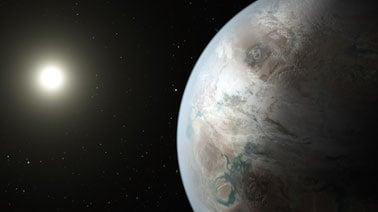
Learn about the Earth, life, and how we can search for life elsewhere in the universe. Are we alone in this universe? What new information and observations on exoplanets have we discovered? In the past decade, astronomers have made incredible advances in the discovery of planets outside our solar system. Thirty years ago, we knew only of the planets in our own solar system. Now we know of thousands circling nearby stars.

Self Paced
Self-Paced
Planet Earth ... and You! (Coursera) Coursera
University of Illinois at Urbana-Champaign

Planet Earth ... and You! (Coursera)

Earthquakes, volcanoes, mountain building, ice ages, landslides, floods, life evolution, plate motions—all of these phenomena have interacted over the vast expanses of deep time to sculpt the dynamic planet that we live on today. Planet Earth presents an overview of several aspects of our home, from a geological perspective. We begin with earthquakes—what they are, what causes them, what effects they have, and what we can do about them. We will emphasize that plate tectonics—the grand unifying theory of geology—explains how the map of our planet's surface has changed radically over geologic time, and why present-day geologic activity—including a variety of devastating natural disasters such as earthquakes—occur where they do. We consider volcanoes, types of eruptions, and typical rocks found there.

Jun 1st 2026
5-12 Weeks
Astrophysics: Exploring Exoplanets (edX) EdX
Australian National University - ANU,ANUx

Astrophysics: Exploring Exoplanets (edX)

Explore the mysteries of exoplanets - planets around other stars – in this introductory astrophysics course. The discovery of exoplanets is one of the greatest revolutions in modern astrophysics. Twenty years ago, we had no idea whether any of the countless stars out there beyond our solar system had planets or not.

Self Paced
Self-Paced
Greatest Unsolved Mysteries of the Universe (edX) EdX
Australian National University - ANU,ANUx

Greatest Unsolved Mysteries of the Universe (edX)

Exploring the biggest mysteries of modern astrophysics. Despite spectacular recent progress, there is still a lot we don't know about our universe. We don't know why the Big Bang happened. We don't know what most of the universe is made of. We don't know whether there is life in space. We don't know how planets form, how black holes get so big, or where the first stars have gone. This course will take you through nine of the greatest unsolved problems of modern astrophysics.

Self Paced
Self-Paced
Space Safety (Coursera) Coursera
Technische Universität München - TUM

Space Safety (Coursera)

How can we prevent satellites from colliding? How can satellites be protected from meteorite impacts? How important are satellites in today’s age? How safe are astronauts on the ISS and why does their research help mankind in general? What happens with space debris distributed in orbit?

Jun 1st 2026
5-12 Weeks
Big Bang and the Origin of Chemical Elements (edX) EdX
Seoul National University,SNUx

Big Bang and the Origin of Chemical Elements (edX)

Discover the ultimate origin of all chemical elements essential for life. Explore the Big Bang through Nobel Lectures and scientific papers in part 2 of Life in the Universe. This course will start with the nuclear structure of atoms and discuss the creation of hydrogen in the big bang universe and the fusion of hydrogen to make heavier elements in stars. Three pillars of the big bang cosmology will be elaborated.

This course is archived
4 Weeks
Star Trek: Inspiring Culture and Technology III (edX) EdX
Smithsonian,SmithsonianX

Star Trek: Inspiring Culture and Technology III (edX)

Explore how Star Trek inspires reflection on our own history, humanity, and place in the universe. Why has Star Trek , which began as a failed network series, become so influential? Instead of fading away, the Star Trek universe now encompasses feature films, additional television series, and a universe of fan conventions and memorabilia.

Self Paced
Self-Paced
Vers l'infiniment petit (Coursera) Coursera
École Polytechnique

Vers l'infiniment petit (Coursera)

Partez à la découverte de l'infiniment petit, en compagnie de physiciens et de physiciennes qui vont vous faire découvrir les secrets de la matière quand on l'étudie aux distances les plus courtes, aux énergies les plus élevées. Vous vous initierez aux progrès les plus récents de la recherche en physique nucléaire et de la physique des particules, et vous découvrirez les principes des accélérateurs et des détecteurs avec lesquels on a pu étudier la matière à ces échelles, pour arriver jusqu'à la découverte du boson de Higgs en 2012 auprès du collisionneur de particules du CERN, le LHC.

Jun 1st 2026
4 Weeks
Flight mechanics - Propulsive balance and energy (Coursera) Coursera
ISAE-SUPAERO

Flight mechanics - Propulsive balance and energy (Coursera)

This course is dedicated to energy management, i.e. speed and altitude control. The various sources of drag are first described and modeled, as well as thrust origin, and evolution with speed and altitude. Using these models, we can evaluate the propulsive balance and derive important concepts like flight regimes, best climb speed, or propulsion ceiling.

Jun 1st 2026
3 Weeks
Astrophysics: The Violent Universe (edX) EdX
Australian National University - ANU,ANUx

Astrophysics: The Violent Universe (edX)

Explore the deadliest places in the universe, from black holes to supernovae. Interested in exploring the deadliest and most mysterious parts of our universe? Or, investigating black holes, which warp the very fabric of space-time around them? We will look at what we know about these objects, and also at the many unsolved mysteries that surround them. We will also study white-dwarf stars and neutron stars, where the mind-bending laws of quantum mechanics collide with relativity. And, examine dwarf novae, classical novae, supernovae and even hypernovae: the most violent explosions in the cosmos.

Self Paced
Self-Paced