EdX

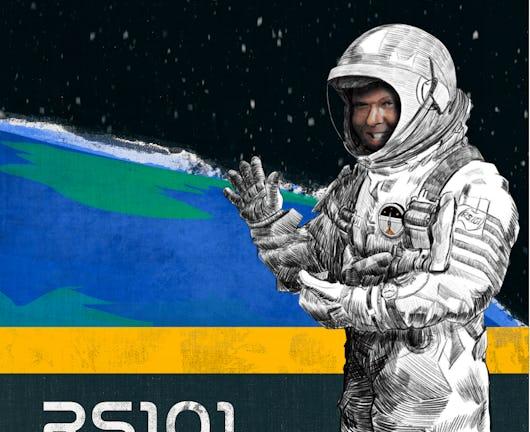
The Conquest of Space: Space Exploration and Rocket Science (edX)

The Conquest of Space: Space Exploration and Rocket Science (edX)

Explore the history of space travel and learn the basics of aerospace engineering. Space exploration plays a major role in the history of humankind. The cultural, political and sociological repercussions are extraordinary, and the amount of resources dedicated to space exploration is enormous. This aerospace course is a first step for those interested in learning more about the history of the space and the impact of space exploration on our daily lives.

Class Deals by MOOC List - Click here and see EdX's Active Discounts, Deals, and Promo Codes.

Each week we will focus on a major chapter in the history of space exploration accompanied by an introduction to the relevant technical topics to fully understand these historical developments. During the seven weeks of the course, we will follow the technical, political and cultural contexts that lead to the birth of the space age, uncover the evolution of space exploration from competition to cooperation in the Apollo and post-Apollo era and finally, analyze current trends in space exploration.

By successfully completing this course, you will acquire the critical tools to understand the key events and developments of the Space Age. You will learn to solve basic technical and engineering problems of space travel, rocket propulsion, space systems, and human space flight.

What you'll learn:

  • The history of space exploration and its cultural, political, and scientific impact
  • Fundamentals of aerospace engineering, including how to move in space and how rockets work
  • The key aspects of space systems and the space environment
  • Current trends and future projects in space exploration

Syllabus

WEEK 1: The first dreamers and visionaries. Frau im Mond (1929)
Towards space travel. When the story begins. Imagining space travel. Spaceflight literature. Promoting space travel. Pioneers and visionaries. The motion of celestial bodies.

WEEK 2: The first missiles. The vengeance weapon V-2 (1944)
Times of Weimar Republic and the Third Reich. Principles of rocket operation. V-2. Rockets and the birth of the Cold War. Chemical rockets.

WEEK 3: The dawn of the Space Age. Sputnik (1957)
Treaty of Rome and Sputnik. Intercontinental Ballistic Missiles. International Astronautical Federation. Rockets and Atmospheric exploration. IGY. The Space Environment. Sputnik and the birth of the space era.

WEEK 4: The Giant Leap. Apollo 11 (1969)
The Giant Leap. First Man in Orbit. Moon Race. Apollo. Introduction to Space Systems I.

WEEK 5: Space Cooperation. Birth of ESA (1975)
Post-Moon-race cooperation. Soyuz-Apollo programme. ESA example of cooperation. The International Space Station (ISS). Introduction to Space Systems II. Life in space. Accessing space.

WEEK 6: Using space for Humankind. The exploitation of space
Today’s life needs space. Telecommunications. Earth Observation. GNSS. Space Situational Awareness. Space technologies back on the Earth.

WEEK 7: Looking ahead. Ambition (2015)
What’s next? Human Exploration of the Solar System. Robotic Exploration of the Solar System. Scientific Exploration of the Universe. Space Tourism. Getting farther and beyond: electric propulsion.


Go to Class
MOOC List is learner-supported. When you buy through links on our site, we may earn an affiliate commission.

Related Courses

Electrotechnique II (edX) EdX
École Polytechnique Fédérale de Lausanne,EPFLx

Electrotechnique II (edX)

Découvrez les systèmes alternatifs triphasés et leurs charges associées ainsi que les régimes transitoires, base des alimentations à découpage. Ce cours traite des systèmes alternatifs triphasés, piliers de l'alimentation électrique industrielle et de certains types de machines électriques. Les charges triphasées associées, symétriques ou dissymétriques, seront étudiées ainsi que les puissances actives, réactives et apparentes qui en découlent. Des méthodes de compensation de la puissance réactive seront développées.

Self Paced
Self-Paced
The History of Rocket Science (Coursera) Coursera
University of Michigan

The History of Rocket Science (Coursera)

Modern rocket design started amidst World War II, pushing the boundaries of what rocketry was capable of. In The History of Rocket Science, you’ll gain a deeper understanding of this complicated history and discuss key advancements, like the creation of the V2 rocket. Examine the ramifications of the advancements of rocket science from a historical and societal perspective, going beyond the technological advancements during the war. This course also explores the Cold War, culminating in the United States’ creation of the Apollo 11 — the pivotal creation that landed the U.S. on the moon.

Aug 24th 2026
4 Weeks
The Business, Politics, Policy, & Players of Space Programs (Coursera) Coursera
University of Colorado Boulder

The Business, Politics, Policy, & Players of Space Programs (Coursera)

Welcome Course 3 - The Business, Politics, Policy, & Players of Space Programs. If you are here, you have successfully completed both Course 1 and 2 of this specialization. Course 3 has nine lessons spread out over 4 weeks with 31 Learning Objectives. In this course, we will discover who and what funds the exploration that we have enjoyed learning about in Course 1 and 2. We will also focus on a few specific applications of some of the concepts we have learned about so far with two companies, the Global Positioning System, and the an academic program that could be implemented at your institution of higher learning.

Aug 31st 2026
4 Weeks
Our Solar System and Beyond: Teaching Primary Science (FutureLearn) FutureLearn
Royal Observatory Greenwich

Our Solar System and Beyond: Teaching Primary Science (FutureLearn)

Improve your knowledge of space science to help you deliver primary science lessons that are out of this world. Understanding the Solar System and how to teach it can be a tricky business. Fortunately astronomers at the Royal Observatory Greenwich are here to help. In this online course, they’ll help you understand space, address some common misconceptions, and introduce you to the science and people behind real-life, cutting-edge discoveries.

Available now
3 Weeks
The Frozen Frontier: Monitoring the Greenland Ice Sheet from Space (FutureLearn) FutureLearn
European Space Agency

The Frozen Frontier: Monitoring the Greenland Ice Sheet from Space (FutureLearn)

Learn how the Greenland ice sheet is monitored from space and the ground, to understand our past, present and future climate. Made up of layers of compressed snow from over the last 100,000 years, the vast Greenland ice sheet acts as both a valuable record of our past climate and a bellwether for future climate change. This online course highlights how the Greenland ice sheet is monitored from space and the ground. You’ll look at the measurements made possible by Earth Observation (EO) satellites like Cryosat, the technologies and techniques involved, the data generated, and its uses and challenges.

No sessions available
3 Weeks
Exploring Space Weather and 5E Instructional Model with NASA MMS Team (Canvas.net) Canvas Network
University of North Texas

Exploring Space Weather and 5E Instructional Model with NASA MMS Team (Canvas.net)

The purpose of this four-week learning exchange is to bring together organizations, teachers, students, and community stakeholders to assist elementary and middle school students choose a STEM career pathway by exploring topics and problems surrounding space weather through the lens of NASA's Multiscale Magnetosphere Mission.

Feb 9th 2015
4 Weeks
Navigation through the ages (European Schoolnet Academy) European Schoolnet Academy
European Schoolnet

Navigation through the ages (European Schoolnet Academy)

Since early times, the observation of the sky has been a key cultural element and has played an important role in the way we live. In The Navigation through the Ages MOOC, we will explore the rich history of navigation, and journey together from ancient Greece, the fifteenth century European explorers and their missions of global discovery, to the importance of Europe's Galileo programme for the current needs of citizens (mobile devices, increased mobility, safety, security etc.).

Legacy Course
Self-Paced
Digitalisation in Space Research (Coursera) Coursera
Technische Universität München - TUM

Digitalisation in Space Research (Coursera)

This course provides an overview of the most important digital applications in the field of aerospace research. The course instructors discuss how digitalisation is impacting and changing both satellite-based and manned spaceflight research. One unit is specifically devoted to exploring the use of artificial intelligence in the evaluation of satellite data.

Aug 24th 2026
3 Weeks
Aerospace materials (Coursera) Coursera
National Research Tomsk State University,Irkutsk National Research Technical University

Aerospace materials (Coursera)

The course involves the study of the main types of metallic materials used in the manufacture of aerospace parts, their properties and technological aspects of production. The course examines the dependence of strength and other properties of titanium, aluminum alloys and high-strength steels on their composition, production and machining technologies. The course is aimed at developing competencies required when selecting and using modern aerospace materials, equipment and quality control tools. A number of issues, including the choice of materials for aircraft and spacecraft parts and additive powder-based technologies, will be studied.

Jul 18th 2022
5-12 Weeks