Social Psychology (Coursera)

Offered by Wesleyan University,
Social Psychology (Coursera)

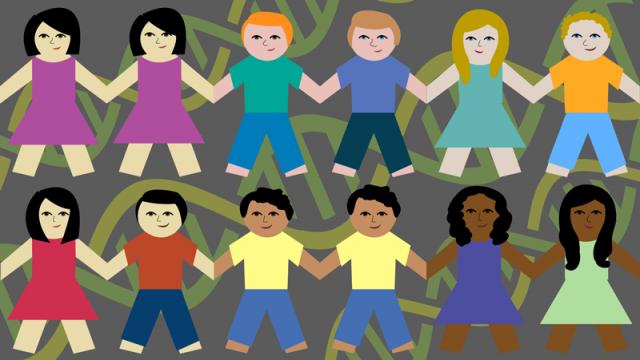
This course offers a brief introduction to classic and contemporary social psychology, covering topics such as decision making, persuasion, group behavior, personal attraction, and factors that promote health and well-being. Ever wonder why people do what they do? This course—which includes more than $1,000 of video and reading materials—offers some answers based on the latest research from social psychology.

Class Deals by MOOC List - Click here and see Coursera's Active Discounts, Deals, and Promo Codes.

Course description from professor Plous:
Each of us is dealt a different hand in life, but we all face similar questions when it comes to human behavior: What leads us to like one person and dislike another? How do conflicts and prejudices develop, and how can they be reduced? Can psychological research help protect the environment, and if so, how?
Our focus will be on surprising, entertaining, and intriguing research findings that are easy to apply in daily life. The course will also draw from the websites of Social Psychology Network, the world's largest online community devoted to social psychology. I hope you'll join me for this course, have fun, and learn some useful information that enriches your life.

Syllabus

WEEK 1
Social Perceptions and Misperceptions
This week's goals are to: (1) learn what social psychology is and why it's worth studying; (2) take a "snapshot" of your thinking at the start of the course; (3) see how perceptions of reality are psychologically constructed; and (4) witness the shocking speed at which social judgments are made.

WEEK 2
The Psychology of Self-Presentation and Persuasion
This week's goals are to: (1) learn how people explain their behavior and the behavior of others; (2) explore the link between attitudes and behavior; (3) understand what cognitive dissonance is and why it matters; and (4) gain some practical tips from the science of persuasion and social influence.

WEEK 3
Obedience, Conformity, and Deindividuation
This week's goals are to: (1) understand the psychological dynamics of obedience to authority; (2) review studies on group pressure and conformity; (3) learn about the dark side of deindividuation; and (4) consider ethical issues related to psychology research.

WEEK 4
Group Behavior: The Good, Bad, and Ugly
This week's goals are to: (1) examine behavioral dynamics within and between groups; (2) see what happens when people fall prey to the Abilene Paradox; (3) read about social loafing, groupthink, and group polarization; and (4) learn effective ways to reduce prejudice and discrimination in daily life.

WEEK 5
Mid-Course Break
This week offers a chance to catch up on any course material that you've missed. There are no required videos or readings, but for those of you whose week wouldn't be complete without a little social psychology, please enjoy the optional materials in Week 5!

WEEK 6
Helping, Hurting, and Peacemaking
This week's goals are to: (1) look at the factors that influence whether people will help one another; (2) examine the roots of aggression, violence, and terrorism; (3) learn psychological techniques to promote peace and sustainable living; and (4) carry out a personal experiment in which you spend 24 hours living as compassionately as possible.

WEEK 7
A Happy End to the Course
This week's goals are to: (1) consider whether empathy is a "magic bullet" for addressing social problems; (2) learn what the most important ingredients are for a happy life; (3) find out what researchers have discovered about romantic attraction and close relationships; and (4) hear about additional resources and organizations if you want to continue studying social psychology.

Go to Class
MOOC List is learner-supported. When you buy through links on our site, we may earn an affiliate commission.

Related Courses

Data and Health Indicators in Public Health Practice (Coursera) Coursera
Johns Hopkins University

Data and Health Indicators in Public Health Practice (Coursera)

Epidemiology is often described as the cornerstone science in public health. Epidemiology in public health practice uses study design and analyses to identify causes in an outbreak situation, guides interventions to improve population health, and evaluates programs and policies. In this course, we'll define the role of the professional epidemiologist as it relates to public health services, functions, and competencies. With that foundation in mind, we'll introduce you to the problem solving methodology and demonstrate how it can be used in a wide variety of settings to identify problems, propose solutions, and evaluate interventions.

Oct 5th 2026
4 Weeks
Whole genome sequencing of bacterial genomes - tools and applications (Coursera) Coursera
Technical University of Denmark - DTU

Whole genome sequencing of bacterial genomes - tools and applications (Coursera)

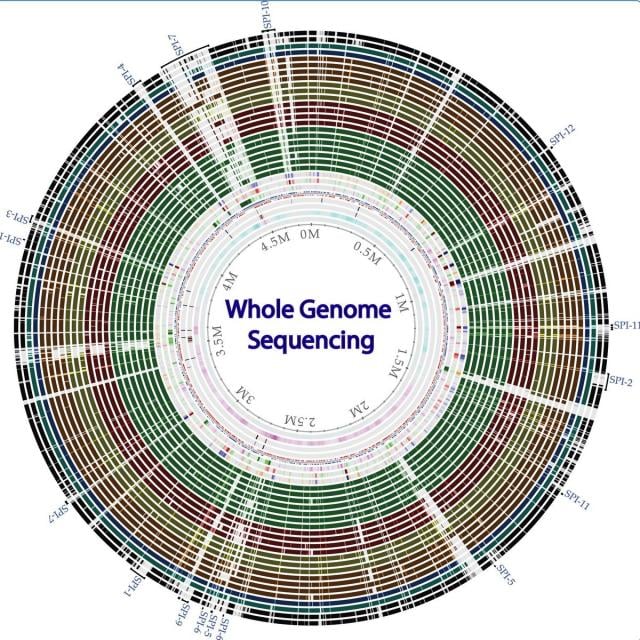
This course will cover the topic of Whole genome sequencing (WGS) of bacterial genomes which is becoming more and more relevant for the medical sector. WGS technology and applications are high on international political agenda, as the classical methods are being replaced by WGS technology and therefore bioinformatic tools are extremely important for allowing the people working in this sector to be able to analyze the data and obtain results that can be interpreted and used for different purposes.

Oct 5th 2026
5-12 Weeks
Essentials of Global Health (Coursera) Coursera
Yale University

Essentials of Global Health (Coursera)

Essentials of Global Health is a comprehensive introduction to global health. It is meant to introduce you to this topic in well-structured, clear and easy to understand ways. Much of the course will focus on five questions: What do people get sick, disabled and die from; Why do they suffer from these conditions? Which people are most affected? Why should we care about such concerns? What can be done to address key health issues, hopefully at least cost, as fast as possible, and in sustainable ways?

Oct 5th 2026
5-12 Weeks
Psychological First Aid (Coursera) Coursera
Johns Hopkins University

Psychological First Aid (Coursera)

Learn to provide psychological first aid to people in an emergency by employing the RAPID model: Reflective listening, Assessment of needs, Prioritization, Intervention, and Disposition. Utilizing the RAPID model (Reflective listening, Assessment of needs, Prioritization, Intervention, and Disposition), this specialized course provides perspectives on injuries and trauma that are beyond those physical in nature. The RAPID model is readily applicable to public health settings, the workplace, the military, faith-based organizations, mass disaster venues, and even the demands of more commonplace critical events, e.g., dealing with the psychological aftermath of accidents, robberies, suicide, homicide, or community violence.

Oct 5th 2026
5-12 Weeks
Leadership Through Social Influence (Coursera) Coursera
Northwestern University

Leadership Through Social Influence (Coursera)

This course will provide learners with a systematic general framework for analyzing persuasive influence situations. Learners will be able to identify different challenges faced by persuaders and to fashion appropriate strategies for addressing those challenges. The broad goal is to provide learners with not only an extensive persuasion tool kit, but also with an understanding of how different tools are useful in different situations.

Oct 5th 2026
4 Weeks
Autism Spectrum Disorder (Coursera) Coursera
University of California, Davis

Autism Spectrum Disorder (Coursera)

Understanding the characteristics of autism spectrum disorder (ASD) and their implications for behavior, learning and the ability to process information is critical for anyone working or interacting with those on the spectrum -- educators, clinicians, counselors, therapists, medical staff, family and employers. This course will give you a fundamental understanding of what ASD is, how it is diagnosed, the primary areas of impairment, and why prevalence is increasing.

Oct 5th 2026
5-12 Weeks
Mind Control: Managing Your Mental Health During COVID-19 (Coursera) Coursera
University of Toronto

Mind Control: Managing Your Mental Health During COVID-19 (Coursera)

Never in the history of humanity have so many people been feeling intense anxiety related to COVID-19 and the world it will leave in its wake. The intent of this course is to give you a deeper understanding of the anxiety reaction as it relates to various aspects of our current life, ranging from our consumption of news to the way we talk to our children about this. I will also give you clear strategies for managing and, in fact, turning off the anxiety response at least for short periods.

Oct 5th 2026
4 Weeks
Global Health Policy (Coursera) Coursera
The University of Tokyo

Global Health Policy (Coursera)

In this course, learners will become familiar with principles and theories of global health problems, and major challenges and controversies in improving global population health as well as practical applications of quantitative methods to analyze and interpret issues and challenges for policy. Topics will include health and foreign policy, health governance, acute disease surveillance, non-communicable diseases, burden of disease, universal health coverage, health systems strengthening, health financing, and human resources for health and ageing.

Oct 5th 2026
4 Weeks