EdX

Introduction à l'immunologie: aspects fondamentaux (edX)

Introduction à l'immunologie: aspects fondamentaux (edX)

Ce cours décrit les mécanismes fondamentaux du système immunitaire pour mieux comprendre les bases immunologiques dela vaccination, de la transplantation, de l’immunothérapie, de l'allergie et des maladies auto-immunes.

Class Deals by MOOC List - Click here and see EdX's Active Discounts, Deals, and Promo Codes.

Le but de cet enseignement est de faire comprendre comment fonctionne notre système immunitaire et son rôle dans la lutte contre les agents infectieux.
Les étudiants serontinitiés aux composants cellulaires et moléculaires des réponses immunitaires innée et adaptative (cellules NK, neutrophiles, cellules B et T, peptides antimicrobiens, complément, anticorps, cytokines…).
Ils connaîtront dans les grandes lignes l'organisation des tissus lymphoïdes primaires (moelle osseuse, thymus) et secondaires (rate, nœuds lymphatiques) et seront capables d'expliquer comment ces structures permettent la générationd’un répertoire diversifié de cellules B et T.
Les étudiants seront en mesure de comprendre comment les composants du système immunitaire sont capables de reconnaître et de cibler les agents infectieux sans s’attaquer au soi. Ils apprendront les séquences d’événements menant à une réponse immunitaire de type T ou B.

What you'll learn
Bonjour et bienvenus à tous pour ce MOOC « Introduction à l’immunologie: aspects fondamentaux ». Il s’agit d’un cours d’un niveau licence ou Master 1. Il vous permettra d’acquérir le vocabulaire et les concepts clés de l’immunologie, en nous focalisant sur le système immunitaire des mammifères et de l’homme. Les objectifs du cours seront de :
Comprendre la structure et la fonction du système immunitaire en nous intéressant aux molécules et aux tissus impliqués dans la réponse immunitaire et à leur intégration dans organisme
Donner un aperçu sur les mécanismes de défenses innées et adaptatives

Le cours est subdivisé en 8 semaines contenant environ une à deux heures d’exposés:

  1. Présentation générale du système immunitaire
  2. Immunité Innée
  3. Génération des répertoires des cellules B et T
  4. La présentation des antigènes
  5. Réponses médiées par les cellules T
  6. Réponses effectrices des cellules T
  7. La réponse des cellules B
  8. Conclusion : Une vision intégrée du système immunitaire. Examen final

Go to Class
MOOC List is learner-supported. When you buy through links on our site, we may earn an affiliate commission.

Related Courses

Lessons from Ebola: Preventing the Next Pandemic (edX) EdX
HarvardX,Harvard University

Lessons from Ebola: Preventing the Next Pandemic (edX)

Understanding the context for the Ebola outbreak: What went right, what went wrong, and how we can all do better. Like no other event in recent history, the 2014 Ebola outbreak has made clear the fragility of existing health systems. While responding to the current epidemic is critical, we also have an opportunity to learn lessons to prevent the next global health catastrophe, forge partnerships across borders and disciplines, and demonstrate our commitment to value all human lives.

Self Paced
Self-Paced
Biospecimen Research Methods (edX) EdX
The University of British Columbia,UBCx

Biospecimen Research Methods (edX)

Improve the quality of your research by learning and applying best practices to collect, store and use biospecimens in your laboratory. The success of your research depends on the quality of the biospecimens you use. Get ahead of the competition, increase your chances of being published in high impact journals, and open doors to opportunities for working in leading biomedical research laboratories or biobanks.

Self Paced
Self-Paced
Music For Wellness (edX) EdX
Berklee College of Music,BerkleeX

Music For Wellness (edX)

Learn how music can help reduce stress and improve your health, and well-being. You love music. You listen to music all the time. Maybe you sing, play an instrument, or compose music. You don’t need to have musical talent to use music to enhance your well being, and even your health.

Self Paced
Self-Paced
Essential Human Biology: Cells and Tissues (edX) EdX
University of Adelaide,AdelaideX

Essential Human Biology: Cells and Tissues (edX)

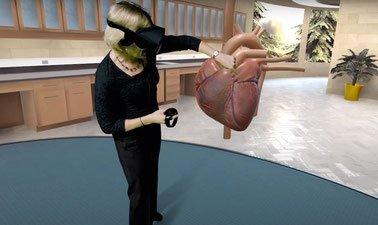
An introduction to the human body's most fundamental building blocks and their behaviours in health and disease. Are you preparing for a health-related career, or planning to study in the health sciences? Perhaps you're just keen to learn more about the wonders of the human body? Our bodies are amazing but complex biological machines. This course will provide you with an outstanding foundation of knowledge in human anatomy and physiology.

Self Paced
Self-Paced
Cell Biology: Mitochondria (edX) EdX
HarvardX,Harvard University

Cell Biology: Mitochondria (edX)

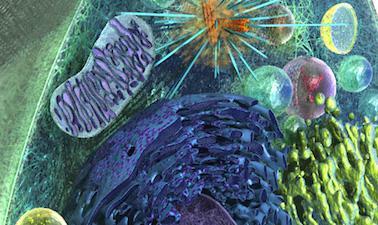
A human-centered approach to the fundamentals of cell biology with a focus on the power plants of the cell - mitochondria. The cell is a powerful case study to help us explore the functional logic of living systems. All organisms, from single-celled algae to complex multicellular organisms like us, are made up of cells. In this course, you will learn the how and why of biology by exploring the function of the molecular components of cells, and how these cellular components are organized in a complex hierarchy.

Self Paced
Self-Paced
Introducción a la Regulación Emocional basada en Mindfulness (edX) EdX
Universidad Autonoma de Madrid

Introducción a la Regulación Emocional basada en Mindfulness (edX)

Entrena la mente para traerla al momento presente, toma conciencia y gestiona un amplio espectro de emociones con amabilidad a través de la práctica de Mindfulness. Este curso en línea es el inicio de un viaje hacia ti mismo, hacia ti misma y hacia la naturaleza tranquila de la mente y la propuesta es hacerlo con el entrenamiento en Mindfulness o Atención Plena.

Self Paced
Self-Paced
Through my Eyes – Intellectual Disability Healthcare around the World (edX) EdX
University of Queensland,UQx

Through my Eyes – Intellectual Disability Healthcare around the World (edX)

Learn, from personal stories, the daily life and challenges faced by those with intellectual disabilities. This health course focuses on the stories of people with intellectual disabilities around the world, as well as their families and supporters. You will learn about the challenges and aid received in healthcare for people with intellectual disabilities, including their experience of specific syndromes and communication difficulties, and how they stay healthy.

Self Paced
Self-Paced
Super-Earths And Life (edX) EdX
HarvardX,Harvard University

Super-Earths And Life (edX)

Learn about the Earth, life, and how we can search for life elsewhere in the universe. Are we alone in this universe? What new information and observations on exoplanets have we discovered? In the past decade, astronomers have made incredible advances in the discovery of planets outside our solar system. Thirty years ago, we knew only of the planets in our own solar system. Now we know of thousands circling nearby stars.

Self Paced
Self-Paced
Well and Able - Improving the Physical Health of People with Intellectual Disability (edX) EdX
University of Queensland,UQx

Well and Able - Improving the Physical Health of People with Intellectual Disability (edX)

Learn how to help those with intellectual disability achieve better health. This health course will examine the specific physical health issues that affect people with an intellectual disability including, oral health, syndrome specific health issues, health communication, especially for non-verbal patients, sexual health, and interactions between tertiary and primary healthcare systems. There is a special section on complex care including issues associated with aging and spasticity, and the health impacts of epilepsy.

Self Paced
Self-Paced
Tropical Coastal Ecosystems (edX) EdX
University of Queensland,UQx

Tropical Coastal Ecosystems (edX)

Take the challenge and understand problems and solutions to managing tropical coastal ecosystems. Do you want to develop the skills and knowledge needed to help preserve tropical coastal ecosystems? These habitats provide goods and services for hundreds of millions of people but human activities have led to their global decline.

Self Paced
Self-Paced