RF and millimeter-Wave Circuit Design (Coursera)

RF and millimeter-Wave Circuit Design (Coursera)

This unique Master-level course offered by the Center for Wireless Technology Eindhoven (CWT/e) of the Eindhoven University of Technology, The Netherlands, provides students with in-depth knowledge and hands-on experience on RF and mmWave circuit design. The course covers the topics on how to derive the RF wireless systems specifications, and how to design the main building blocks of a transceiver, i.e., low noise amplifier, power amplifier, RF mixers, oscillators, and PLL frequency synthesizers. It is divided into two parts: (1) theoretical lectures will cover the basis of RF and mmWave Circuit Design; and (2) design labs will include simulation and implementation of these circuits.

Class Deals by MOOC List - Click here and see Coursera's Active Discounts, Deals, and Promo Codes.

The design labs are completely optional for obtaining the certificate, but they are recommended because they allow students to put into practice all the acquired theoretical knowledge, and of course, implementing the circuits is where all the fun is! The students will be able to do 70% of the design labs using simulation tools, which already offers a great learning experience. The other 30% will require students to either get access to an electronics lab or to purchase a few off-the-shelf components. But ultimately, this would allow students to design and build their own transceiver at home!
The course contains theoretical video classes with examples, quizzes, and an entire set of simulation files, step-by-step procedures, recorded data of real-life circuits, and solution videos so that students can learn from and build even better circuits.

Syllabus

WEEK 1
Introduction to RF & mm-Wave Circuit Design Course
This module will introduce the student to the RF and mm-Wave Circuit Design course and to the topic of wireless systems. It will present the learning objectives, grading system, supporting material, introductory class, and design labs. Besides, it will show the student how to use the simulation tools and the equipment used in the design labs.

WEEK 2
Wireless Systems
The module on Wireless Systems will introduce the student to the history of wireless technologies, wireless system design, and RF system specifications. Concepts about transceivers will be detailed, such as path loss, interference signals, receiver sensitivity, and transmitter output power. It also includes the first design lab, the system design of a Wireless Tin Can Telephone.

WEEK 3
Amplifiers
The Amplifiers module will introduce the student to the basic concepts of amplifiers, types of power gain, and the most used amplifier topologies. The student will also learn about low noise amplifier matching and power amplifiers classes. The second design lab will focus on designing LNAs and PAs.

WEEK 4
Mixers
The Mixers module will introduce the student to the working principle of RF mixers and their basic concepts. The difference between active and passive mixers will be explained, the advantages and drawbacks of balanced and unbalanced mixers will be detailed, and the mixer's noise performance highlighted. The third design lab will cover the design of up and down-conversion mixers.

WEEK 5
Oscillators
The Oscillators module will introduce the student to the working principles of frequency oscillators and their basic concepts, like condition to sustain an oscillation. The student will learn about different topologies of oscillators, why and how to tune oscillators, and the impact of noise in the oscillator's signal. At last, the influence of output buffering and breakdown voltage on oscillators will also be explained. The fourth design lab will focus on designing a Voltage Controlled Oscillator (VCO).

WEEK 6
Synthesizers
The Synthesizers module will introduce the student to the working principles of frequency synthesizers and their basic concepts. The student will learn about the importance of using synthesizers in modern wireless communications, the Phase-Locked Loop types I and II, the advantages and drawbacks of using All-Digital PLL, and the impact of the PLL frequency synthesizer on the signal's noise performance. At last, the architecture and usage of fractional-N PLL frequency synthesizers will be detailed. The fifth and last design lab will contain the design of a frequency divider and a phase detector.
Go to Class
MOOC List is learner-supported. When you buy through links on our site, we may earn an affiliate commission.

Related Courses

Electrónica Digital Bit a Bit: Aprendiendo fundamentos (Coursera) Coursera
Pontificia Universidad Católica de Chile

Electrónica Digital Bit a Bit: Aprendiendo fundamentos (Coursera)

Es desafiante y hasta atemorizante entender un circuito digital cuando observamos la cantidad de transistores que puede contener, y aún más difícil diseñarlo eficientemente para su implementación en un circuito integrado o una FPGA. Sin embargo, saber diseñar circuitos digitales simples nos abre las puertas para diseñar sistemas digitales más complejos a partir de estos.

Jun 22nd 2026
5-12 Weeks
IoT Communications (Coursera) Coursera
University of Illinois at Urbana-Champaign

IoT Communications (Coursera)

This course builds on the previous course: IoT Devices. After we have built and programmed a small self-driving vehicle, now it's time get into more advanced territory and enhance the device's connectivity further. To do so you will study radio frequency (RF) communication, the MAC layer, Mesh Networking as well as distributed algorithms for use with geographic locations. These techniques will be applied to your device in the lab, which is composed of four steps, one in each week of the course.

Jun 15th 2026
4 Weeks
Sensors and Sensor Circuit Design (Coursera) Coursera
University of Colorado Boulder

Sensors and Sensor Circuit Design (Coursera)

After taking this course, you will be able to: understand how to specify the proper thermal, flow, or rotary sensor for taking real-time process data; implement thermal sensors into an embedded system in both hardware and software; add the sensor and sensor interface into a microprocessor based development kit; create hardware and firmware to process sensor signals and feed data to a microprocessor for further evaluation; study sensor signal noise and apply proper hardware techniques to reduce it to acceptable levels.

Jun 15th 2026
5-12 Weeks
Fundamentals of particle accelerator technology (NPAP MOOC) (Coursera) Coursera
Lund University

Fundamentals of particle accelerator technology (NPAP MOOC) (Coursera)

Did you know that particle accelerators play an important role in many functions of todays society and that there are over 30 000 accelerators in operation worldwide? A few examples are accelerators for radiotherapy which are the largest application of accelerators, altogether with more than 11000 accelerators worldwide. These accelerators range from very compact electron linear accelerators with a length of only about 1 m to large carbon ion synchrotrons with a circumference of more than 50 m and a huge rotating carbon ion gantry with a weight of 600 tons!

Jun 15th 2026
5-12 Weeks
Linux System Programming and Introduction to Buildroot (Coursera) Coursera
University of Colorado Boulder

Linux System Programming and Introduction to Buildroot (Coursera)

This course provides an overview of System Programming for the Linux operating system, or software which is interfacing directly with the Linux Kernel and C library. The basic components of a Linux Embedded System, including kernel and root filesystem details are discussed. The Buildroot build system is introduced, which students use to build their own custom Embedded Linux system through programming assignments.

Jun 15th 2026
4 Weeks
Physics 102 - Magnetic Fields and Faraday's Law (Coursera) Coursera
Rice University

Physics 102 - Magnetic Fields and Faraday's Law (Coursera)

This course serves as an introduction to the physics of electricity and magnetism. Upon completion, learners will have an understanding of how the forces between electric charges are described by fields, and how these fields are related to electrical circuits. They will gain experience in solving physics problems with tools such as graphical analysis, algebra, vector analysis, and calculus. The course follows the typical progression of topics of a first-semester university physics course: charges, electric forces, electric fields potential, magnetic fields, currents, magnetic moments, electromagnetic induction, and circuits.

Jun 22nd 2026
4 Weeks
Rapid Prototyping of Embedded Interface Designs (Coursera) Coursera
University of Colorado Boulder

Rapid Prototyping of Embedded Interface Designs (Coursera)

Rapid Prototyping is the second of three classes in the Embedded Interface Design (EID) specialization, an online version of the on-campus EID class taught in graduate embedded systems design. This course is focused on rapid prototyping of devices and systems and the related methods, practices, and principles that will help ensure your embedded interface designs are what your users both need and want.

Jun 15th 2026
4 Weeks
Silicon Thin Film Solar Cells (Coursera) Coursera
École Polytechnique

Silicon Thin Film Solar Cells (Coursera)

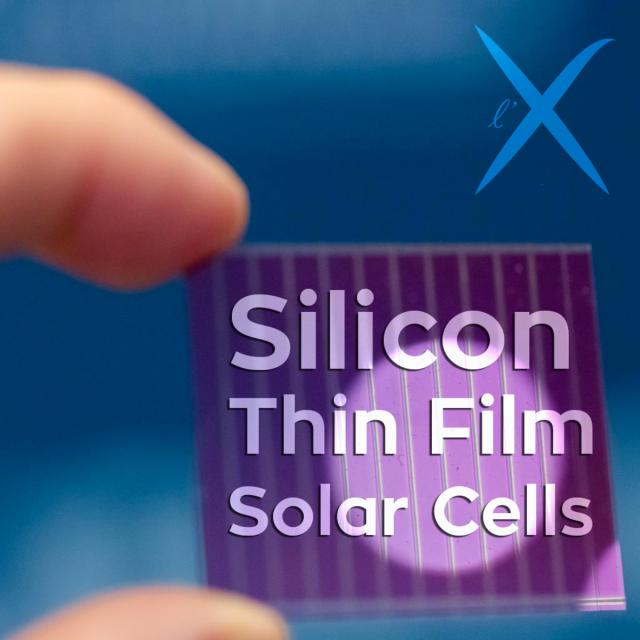
This course consists of a general presentation of solar cells based on silicon thin films. It is the third MOOC of the photovoltaic series of Ecole polytechnique on Coursera. The general aspects of the photovoltaic field are treated in "Photovoltaic Solar Energy". And the detailed description of the crystalline silicon solar cells can be found in "Physics of Silicon Solar Cells".

Jun 15th 2026
3 Weeks
Physics 102 - AC Circuits and Maxwell's Equations (Coursera) Coursera
Rice University

Physics 102 - AC Circuits and Maxwell's Equations (Coursera)

This course serves as an introduction to the physics of electricity and magnetism. Upon completion, learners will have an understanding of how the forces between electric charges are described by fields, and how these fields are related to electrical circuits. They will gain experience in solving physics problems with tools such as graphical analysis, algebra, vector analysis, and calculus. The course follows the typical progression of topics of a first-semester university physics course: charges, electric forces, electric fields potential, magnetic fields, currents, magnetic moments, electromagnetic induction, and circuits.

Jun 22nd 2026
3 Weeks
Industrial Applications of AI (Coursera) Coursera
L&T EduTech

Industrial Applications of AI (Coursera)

The course Embarks on a transformative learning journey exploring the power of Artificial Intelligence across diverse fields such as electrical, mechanical, civil, and general applications. This course elevates the learner’s insight on AI towards the real-world practices by bridging the gap between theory and practical applications. It also provides hands-on experience of applying AI algorithms into potential applications.

Jun 15th 2026
5-12 Weeks
Equivalent Circuit Cell Model Simulation (Coursera) Coursera
University of Colorado Boulder,University of Colorado System

Equivalent Circuit Cell Model Simulation (Coursera)

In this course, you will learn the purpose of each component in an equivalent-circuit model of a lithium-ion battery cell, how to determine their parameter values from lab-test data, and how to use them to simulate cell behaviors under different load profiles.

Jun 15th 2026
5-12 Weeks