Fundamentals of particle accelerator technology (NPAP MOOC) (Coursera)

Offered by Lund University,
Fundamentals of particle accelerator technology (NPAP MOOC) (Coursera)

Did you know that particle accelerators play an important role in many functions of todays society and that there are over 30 000 accelerators in operation worldwide? A few examples are accelerators for radiotherapy which are the largest application of accelerators, altogether with more than 11000 accelerators worldwide. These accelerators range from very compact electron linear accelerators with a length of only about 1 m to large carbon ion synchrotrons with a circumference of more than 50 m and a huge rotating carbon ion gantry with a weight of 600 tons!

Class Deals by MOOC List - Click here and see Coursera's Active Discounts, Deals, and Promo Codes.

There are also a growing number of synchrotron light sources in the world. The light in these sources are created by electrons that are accelerated to almost the speed of light. This light can reveal the molecular structures of materials and also take x-ray pictures of the inner structure of objects. Synchrotron light sources are very important in life sciences, material sciences and chemistry. Another type of accelerators are used in spallation sources, like the European Spallation Source in Lund, Sweden. Here protons are accelerated to very large energies. They produce neutrons when they are smashed into a disc of tungsten. These neutrons are used for finding the inner structure of objects and atomic structures of materials. Finally there are many accelerators for basic physics, like the large hadron collider in Cern.
This course takes you on a journey through the technologies used in particle accelerators: The microwave system which produce the electromagnetic waves that accelerate particles; The magnet technology for the magnets that guide and focus the beam of particles; The monitoring systems that determine the quality of the beam of particles; Finally the vacuum systems that create ultra high vacuum so that the accelerated particles do not collide with molecules and atoms. Exciting right!
The course is graded through quizzes, one for each of the four modules. Throughout the course there are also a number of training quizzes to offer you support. The four modules in the course are: RF-systems, Magnet technology, Beam diagnostics, and Vacuum techniques. In total there are 48 lectures, where each lecture is a 2-4 minutes long video presentation. Some of the lectures are followed by short texts with complementary information and all will hopefully be an exciting collection for you to engage with.
Have fun!

What You Will Learn

  • You will learn the basic technology of particle accelerators.
  • You will understand the basic principles for how particles are accelerated, and how they can be guided.
  • You will learn about different ways to monitor the beam.
  • You will learn about vacuum: Why we need vacuum in accelerators; Where particles that give rise to pressure comes from; How one create vacuum

Syllabus

WEEK 1
RF-systems
This module is an introduction to the RF systems of particle accelerators. RF stand for radio frequency and indicates that the systems deal with electromagnetic waves with frequencies that are common for radio systems. The RF system generates electromagnetic waves and guides them down to cavities. The cavities are located along the beam pipe such that the particles pass through the cavities when they travel along the accelerator. When the waves enter the cavity they create as standing wave inside the cavity. it is the electric field of this standing wave that accelerates the particles. In the module we describe the amplifier, which generates and amplifies the electromagnetic waves. We describe different types of waveguides which transport the waves from the amplifier to the cavity. We also describe the most common types of cavities. Most of the system is described without equations but in the texts following the lectures you will find some of the theory for the RF-system.

WEEK 2
Magnet technology for accelerators
This module is about the types of magnets that are used in particle accelerators. It introduces dipole magnets, quadrupole magnets, sextupole magnets and octupole magnets, and describe where these are needed and how they are designed. In the most common types of magnets, the magnetic field are produced by currents running in normal conducting wires. When large magnetic fields are required one use superconducting magnets and the module describe how these are designed. There are also cases when quite weakl magnetic fields are required and then one can use permanent magnets. This a green alternative since they have zero power consumption. The permanent magnets are also covered in this module.

WEEK 3
Beam Diagnostics
In this module we describe how we can measure and monitor various beam parameters in a particle accelerator. We introduce a few examples of common instruments for each specific parameter, starting with beam intensity and beam position, followed by transverse distribution and beam emittance. We also present ways to monitor the longitudinal and the energy distribution. The last section describe how we can determine the amount of particles that the beam loose as it travels through the accelerator.

WEEK 4
Basics of Vacuum techniques
This module gives an introduction to basic concepts of vacuum physics and techniques in accelerators. Vacuum regions and the behavior of residual gas in these regions are described. Important phenomena, such as velocity distribution, average collision distance and molecular formation are explained by Maxwell-Boltzmann theory. These phenomena are used to determine vacuum criteria for accelerator systems. Basic concepts of vacuum pumps will be described, and different types of vacuum equipment will be presented.
The objective is that the students would understand the behavior of residual gas in Vacuum systems. They should be able to determine Vacuum criteria for a given system. They should also be able to choose proper equipment for Vacuum generation and measurement.

WEEK 5
You have now successfully finalized the course!
Go to Class
MOOC List is learner-supported. When you buy through links on our site, we may earn an affiliate commission.

Related Courses

Introduction to Semiconductor Devices 1 (Coursera) Coursera
Korea Advanced Institute of Science and Technology - KAIST

Introduction to Semiconductor Devices 1 (Coursera)

This course aims to provide a general understanding of semiconductor devices. This course explores the principles and the operation mechanism of semiconductor, such as charge transfer, p-n junction, junction capacitors, and Metal-Oxide-Semiconductor Field Effect Transistors(MOSFETs).

Jun 1st 2026
5-12 Weeks
Physics 102 - Electric Charges and Fields (Coursera) Coursera
Rice University

Physics 102 - Electric Charges and Fields (Coursera)

This course serves as an introduction to the physics of electricity and magnetism. Upon completion, learners will have an understanding of how the forces between electric charges are described by fields, and how these fields are related to electrical circuits. They will gain experience in solving physics problems with tools such as graphical analysis, algebra, vector analysis, and calculus. The course follows the typical progression of topics of a first-semester university physics course: charges, electric forces, electric fields potential, magnetic fields, currents, magnetic moments, electromagnetic induction, and circuits.

Jun 22nd 2026
4 Weeks
Particle Physics: an Introduction (Coursera) Coursera
University of Geneva

Particle Physics: an Introduction (Coursera)

This course introduces you to subatomic physics, i.e. the physics of nuclei and particles. More specifically, the following questions are addressed: What are the concepts of particle physics and how are they implemented?; What are the properties of atomic nuclei and how can one use them?; How does one accelerate and detect particles and measure their properties?; What does one learn from particle reactions at high energies and particle decays?; How do electromagnetic interactions work and how can one use them?; How do strong interactions work and why are they difficult to understand?; How do weak interactions work and why are they so special?; What is the mass of objects at the subatomic level and how does the Higgs boson intervene?; How does one search for new phenomena beyond the known ones?; What can one learn from particle physics concerning astrophysics and the Universe as a whole?

Jun 15th 2026
5-12 Weeks
Digital Signal Processing 1: Basic Concepts and Algorithms (Coursera) Coursera
École Polytechnique Fédérale de Lausanne

Digital Signal Processing 1: Basic Concepts and Algorithms (Coursera)

Digital Signal Processing is the branch of engineering that, in the space of just a few decades, has enabled unprecedented levels of interpersonal communication and of on-demand entertainment. By reworking the principles of electronics, telecommunication and computer science into a unifying paradigm, DSP is a the heart of the digital revolution that brought us CDs, DVDs, MP3 players, mobile phones and countless other devices.

Jun 22nd 2026
4 Weeks
Physics 102 - AC Circuits and Maxwell's Equations (Coursera) Coursera
Rice University

Physics 102 - AC Circuits and Maxwell's Equations (Coursera)

This course serves as an introduction to the physics of electricity and magnetism. Upon completion, learners will have an understanding of how the forces between electric charges are described by fields, and how these fields are related to electrical circuits. They will gain experience in solving physics problems with tools such as graphical analysis, algebra, vector analysis, and calculus. The course follows the typical progression of topics of a first-semester university physics course: charges, electric forces, electric fields potential, magnetic fields, currents, magnetic moments, electromagnetic induction, and circuits.

Jun 22nd 2026
3 Weeks
Building Arduino robots and devices (Coursera) Coursera
Moscow Institute of Physics and Technology

Building Arduino robots and devices (Coursera)

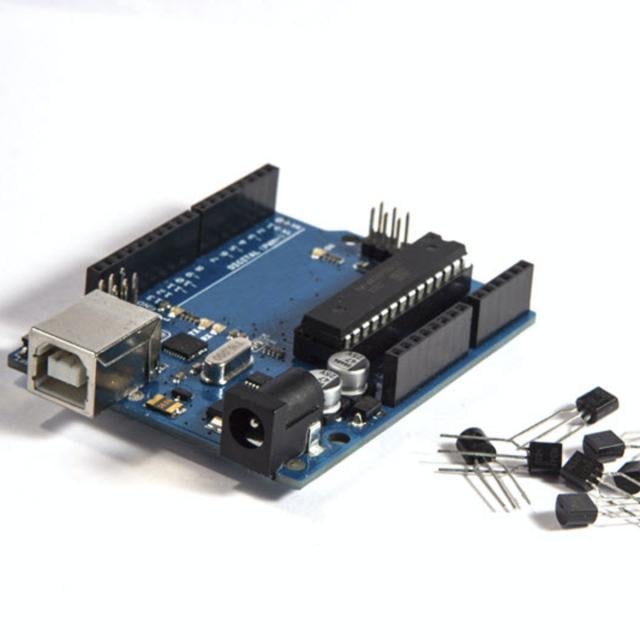
For many years now, people have been improving their tools, studying the forces of nature and bringing them under control, using the energy of the nature to operate their machines. Last century is noted for the creation of machines which can operate other machines. Nowadays the creation of devices that interact with the physical world is available to anyone. Our course consists of a series of practical problems on making things that work independently: they make their own decisions, act, move, communicate with each other and people around, and control other devices. We will demonstrate how to assemble such devices and programme them using the Arduino platform as a basis.

May 9th 2022
5-12 Weeks
Electrónica Digital Bit a Bit: Aprendiendo fundamentos (Coursera) Coursera
Pontificia Universidad Católica de Chile

Electrónica Digital Bit a Bit: Aprendiendo fundamentos (Coursera)

Es desafiante y hasta atemorizante entender un circuito digital cuando observamos la cantidad de transistores que puede contener, y aún más difícil diseñarlo eficientemente para su implementación en un circuito integrado o una FPGA. Sin embargo, saber diseñar circuitos digitales simples nos abre las puertas para diseñar sistemas digitales más complejos a partir de estos.

Jun 22nd 2026
5-12 Weeks
Physics 102 - Electric Potential and DC Circuits (Coursera) Coursera
Rice University

Physics 102 - Electric Potential and DC Circuits (Coursera)

This course serves as an introduction to the physics of electricity and magnetism. Upon completion, learners will have an understanding of how the forces between electric charges are described by fields, and how these fields are related to electrical circuits. They will gain experience in solving physics problems with tools such as graphical analysis, algebra, vector analysis, and calculus.

Jun 22nd 2026
3 Weeks
Outsmarting intermittency (Coursera) Coursera
École Polytechnique

Outsmarting intermittency (Coursera)

Solar and wind offer clean and renewable ways to produce large amounts of electricity. They have boomed over the last few years, evolving from an eco-daydream to a major market and showing unprecedented growth rates. Yet, installing solar panels and wind turbines is by no means the end of the story. The electrical grid, which connects production means to the end-users’ sockets, is not a simple electron pipe. It is the beating heart of our electricity system and ensures its stability. Solar and wind raise specific challenges for the grid, and these challenges will have to be tackled if we want to deploy larger amounts of renewable sources.

Jun 8th 2026
4 Weeks
Engineering of Structures: Shear and Bending (Coursera) Coursera
Dartmouth College

Engineering of Structures: Shear and Bending (Coursera)

This course deals with shear and bending. Shear is a set of parallel, non-collinear forces acting across an element and bending is the curved form taken by a slender element when subjected to loads perpendicular to the element. These forces are easy to understand. You will study how stress and bending force acts for different structures and also, identify what role these forces play in their designs.

Jun 22nd 2026
3 Weeks