Silicon Thin Film Solar Cells (Coursera)

Offered by École Polytechnique,
Silicon Thin Film Solar Cells (Coursera)

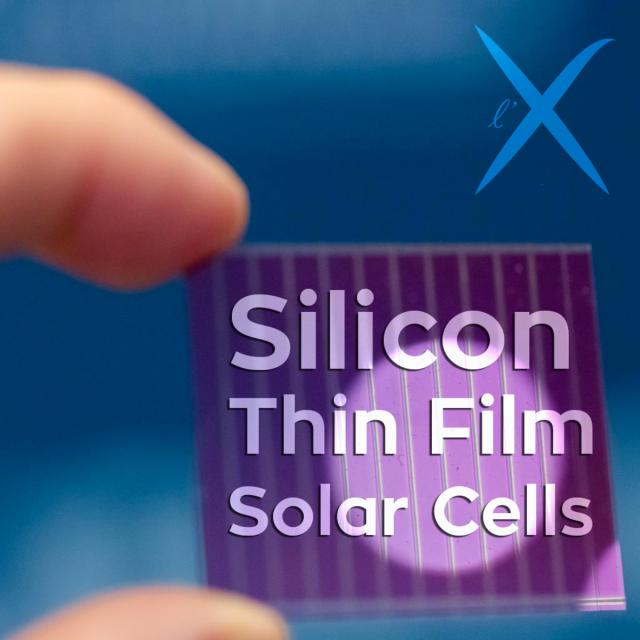
This course consists of a general presentation of solar cells based on silicon thin films. It is the third MOOC of the photovoltaic series of Ecole polytechnique on Coursera. The general aspects of the photovoltaic field are treated in "Photovoltaic Solar Energy". And the detailed description of the crystalline silicon solar cells can be found in "Physics of Silicon Solar Cells".

Class Deals by MOOC List - Click here and see Coursera's Active Discounts, Deals, and Promo Codes.

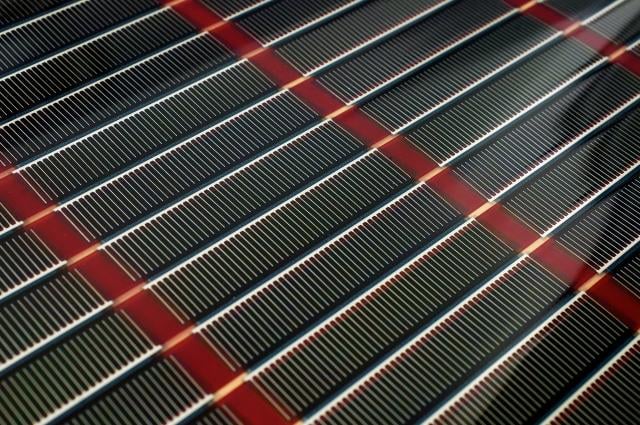
After a brief presentation of solar cells operation, thin film semiconductors are described here. The general properties of disordered and crystalline semiconductors are found very different, in particular in terms of band structure and doping mechanisms. Silicon thin films, generally less than 1 µm thick, are deposited from silane plasma leading to hydrogen incorporation. The growth mechanisms are discussed, in particular the capability to prepare partially crystallized thin films which appear as a mixture of nanocrystallites embedded in an amorphous tissue.
The consequences of the semiconductor properties on solar cells behavior are reviewed. The optical properties of amorphous and nanocrystalline silicon are complementary. Thus the plasma process is particularly well adapted to the preparation of multijunctions, with conversion efficiencies around 13-15 %. Furthermore plasma processes allow to prepare solar cells in large area on glass or flexible substrates.
Finally, it is shown that crystalline and amorphous silicon materials can be combine into heterojunctions solar cells with high efficiency conversion (about 25 %).
What You Will Learn

  • Solar Energy
  • Nanotechnology
  • Semiconductor Materials
  • Thin Films

Syllabus

WEEK 1
Solar Cell Operation
A description of the energetic source, the solar Spectrum, followed by the general principle of operation of solar cells based on semiconductor materials

WEEK 2
Thin Film Semiconductors
A general description of the properties of disordered semiconductors followed by a presentation of the most extensively used materials : hydrogenated amorphous silicon.

WEEK 3
Silicon Thin Film Solar Cells
A general review of silicon thin film solar cells and multijunctions followed by heterojunctions combining crystalline and amorphous silicon
Go to Class
MOOC List is learner-supported. When you buy through links on our site, we may earn an affiliate commission.

Related Courses

Photovoltaic solar energy (Coursera) Coursera
École Polytechnique

Photovoltaic solar energy (Coursera)

The course is an introduction to the photovoltaic (PV) applications in the general mix energetic context dominated by climate warming mitigation. The various uses of solar energy are firstly presented before a short description of the principle of the direct solar photon conversion into electricity (PV). The various PV technologies are reviewed in the current context dominated by crystalline silicon cells. The perspectives of the various technologies are then analysed in terms of R&D investments.

Jun 8th 2026
3 Weeks
Sustainable Development in the 21st Century with Ban Ki-moon (Coursera) Coursera
Yonsei University

Sustainable Development in the 21st Century with Ban Ki-moon (Coursera)

The course is designed for people that want to learn about the latest development agenda the international community agreed to achieve by 2030. Structured around the five pillars of Agenda 2030 – people, prosperity, planet, peace and justice, and partnership, students will learn that these pillars are interconnected and need to be integrated in practical policy-making and operational activities for development, in both developed and developing country settings.

Jun 8th 2026
5-12 Weeks
Design of High-Performance Optical Systems (Coursera) Coursera
University of Colorado Boulder

Design of High-Performance Optical Systems (Coursera)

This course can also be taken for academic credit as ECEA 5602, part of CU Boulder’s Master of Science in Electrical Engineering degree.Optical instruments are how we see the world, from corrective eyewear to medical endoscopes to cell phone cameras to orbiting telescopes. This course extends what you have learned about first-order, paraxial system design and optical resolution and efficiency with the introduction to real lenses and their imperfections.

Jun 8th 2026
5-12 Weeks
Climate Change, Sustainability, and Global Public Health (Coursera) Coursera
University of Michigan

Climate Change, Sustainability, and Global Public Health (Coursera)

The third course of the Impacts of the Environment on Global Public Health specialization will introduce you to two major environmental health challenges facing the world today. The first is climate change –the preeminent threat to public health today, and a threat that will impact every human and ecosystem on the planet.

Jun 8th 2026
4 Weeks
Solar Energy and Electrical System Design (Coursera) Coursera
University at Buffalo

Solar Energy and Electrical System Design (Coursera)

This course supplies learners with the insights necessary for properly planning, and therefore successfully installing, a photovoltaic (PV) system per design specifications. It directs learners through the important steps of initial site inspection and evaluating appropriate locations for PV systems, and features unique elements of residential, small, industrial and utility-scale solar applications.

Jun 8th 2026
5-12 Weeks
Digital Systems: From Logic Gates to Processors (Coursera) Coursera
Universitat Autònoma de Barcelona

Digital Systems: From Logic Gates to Processors (Coursera)

This course gives you a complete insight into the modern design of digital systems fundamentals from an eminently practical point of view. Unlike other more "classic" digital circuits courses, our interest focuses more on the system than on the electronics that support it. This approach will allow us to lay the foundation for the design of complex digital systems.

Jun 8th 2026
5-12 Weeks
Beyond the Sustainable Development Goals (SDGs): Addressing Sustainability and Development (Coursera) Coursera
University of Michigan

Beyond the Sustainable Development Goals (SDGs): Addressing Sustainability and Development (Coursera)

We’re excited you’re here! This course, “Beyond the Sustainable Development Goals (SDGs): Addressing Sustainability and Development,” is the first course in the upcoming Sustainability and Development MasterTrack Certificate program (Fall 2020), but you can also take this course as a stand-alone learning opportunity.

Jun 10th 2026
5-12 Weeks
Fundamentals of Audio and Music Engineering: Part 1 Musical Sound & Electronics (Coursera) Coursera
University of Rochester

Fundamentals of Audio and Music Engineering: Part 1 Musical Sound & Electronics (Coursera)

In this course students learn the basic concepts of acoustics and electronics and how they can applied to understand musical sound and make music with electronic instruments. Topics include: sound waves, musical sound, basic electronics, and applications of these basic principles in amplifiers and speaker design.

Jun 8th 2026
5-12 Weeks
The Economics of Agro-Food Value Chains (Coursera) Coursera
Technische Universität München - TUM

The Economics of Agro-Food Value Chains (Coursera)

In this course, you learn how the agro-food value chain approaches the challenge of constantly improving its competitiveness by producing high quality food and products and also aiming to attain greater sustainability. Some of the topics of this course are: the notion of quality for food and agricultural products and consumer value; how to conduct market research in this field; labelling, branding and pricing strategies, as-well as innovation in the agro-food sector; how sustainability can be used as a competitive advantage through corporate social responsibility: the role and different types of industrial standards; the different forms of coordination in the chain, in particular with regard to the retailing and distribution sector.

Jun 10th 2026
5-12 Weeks
Interfacing with the Arduino (Coursera) Coursera
University of California, Irvine

Interfacing with the Arduino (Coursera)

Arduino senses the environment by receiving inputs from add-on devices such as sensors, and can control the world around it by adjusting lights, motors, and other actuators. In this class you will learn how and when to use the different types of sensors and how to connect them to the Arduino. Since the external world uses continuous or analog signals and the hardware is digital you will learn how these signals are converted back-and-forth and how this must be considered as you program your device. You'll also learn about the use of Arduino-specific shields and the shields software libraries to interface with the real world.

Jun 8th 2026
4 Weeks