Fundamentals of waves and vibrations (Coursera)

Offered by École Polytechnique,
Fundamentals of waves and vibrations (Coursera)

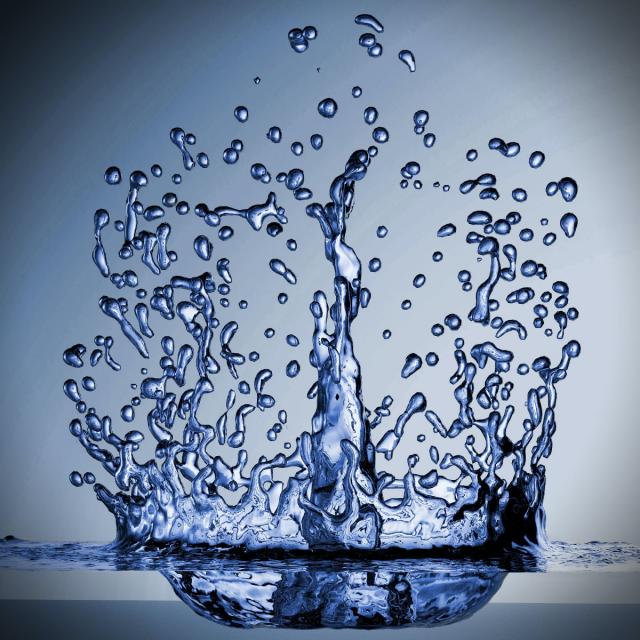
Waves are everywhere. On water of course, but also in the air as you hear a plane, and under your feet during an earthquake certainly. Vibrations, too, are everywhere In your bike as you go over a bump, in you guitar as you play, and of course in your smartphone. You can guess that there is something in common behind all this. This is exactly the purpose of this course !

Class Deals by MOOC List - Click here and see Coursera's Active Discounts, Deals, and Promo Codes.

So if you want to understand better waves and vibrations, and the relation between them and to use that knowledge in your field, this MOOC is for you. We are going to consider any possible domains of applications such as civil engineering, aerospace engineering, plant biomechanics, and many others! This is why we called the course “fundamentals of waves and vibrations”. There are so many phenomena and so many models that we need to work with you on the basic mechanisms. We look forward to see you in the course, and work together !

Syllabus

WEEK 1
Simple waves
Presentation of the models of continuous systems and application for non-dispersive waves.

WEEK 2
Complex waves
Introduction to non-dispersive waves and their properties.

WEEK 3
Modes
How combining waves with boundary conditions leads to the existence of particular solutions, modes.

WEEK 4
More modes
The concept of modes is now applied to a large variety of systems, both fluids and solids.

WEEK 5
Oscillators
The response of the oscillator to any type of forcing is explored, as a generic model of modal response.

WEEK 6
Dynamics using modes
Using the knowledge on the oscillator dynamics from the previous week, the response of general systems is built by modal recomposition.
Go to Class
MOOC List is learner-supported. When you buy through links on our site, we may earn an affiliate commission.

Related Courses

Material Behavior (Coursera) Coursera
Georgia Institute of Technology

Material Behavior (Coursera)

Have you ever wondered why ceramics are hard and brittle while metals tend to be ductile? Why some materials conduct heat or electricity while others are insulators? Why adding just a small amount of carbon to iron results in an alloy that is so much stronger than the base metal? In this course, you will learn how a material’s properties are determined by the microstructure of the material, which is in turn determined by composition and the processing that the material has undergone.

Jun 15th 2026
5-12 Weeks
Engineering Systems in Motion: Dynamics of Particles and Bodies in 2D Motion (Coursera) Coursera
Georgia Institute of Technology

Engineering Systems in Motion: Dynamics of Particles and Bodies in 2D Motion (Coursera)

This course is an introduction to the study of bodies in motion as applied to engineering systems and structures. We will study the dynamics of particle motion and bodies in rigid planar (2D) motion. This will consist of both the kinematics and kinetics of motion. Kinematics deals with the geometrical aspects of motion describing position, velocity, and acceleration, all as a function of time. Kinetics is the study of forces acting on these bodies and how it affects their motion.

Jun 15th 2026
5-12 Weeks
Cyber Security in Manufacturing (Coursera) Coursera
University at Buffalo,The State University of New York

Cyber Security in Manufacturing (Coursera)

The nature of digital manufacturing and design (DM&D), and its heavy reliance on creating a digital thread of product and process data and information, makes it a prime target for hackers and counterfeiters. This course will introduce students to why creating a strong and secure infrastructure should be of paramount concern for anyone operating in the DM&D domain, and measures that can be employed to protect operational technologies, systems and resources.

Jun 15th 2026
4 Weeks
Introduction to Basic Vibrations (Coursera) Coursera
Korea Advanced Institute of Science and Technology - KAIST

Introduction to Basic Vibrations (Coursera)

Introduction to Basic Vibrations starts with the fundamental principle of vibrations with a single and double degree of freedom systems. These fundamental vibration systems provide a solid platform not only to understand general vibrations but also to apply or use them into simple mechanical problems.

Jun 15th 2026
5-12 Weeks
Rigid Body Dynamics (Coursera) Coursera
Korea Advanced Institute of Science and Technology - KAIST

Rigid Body Dynamics (Coursera)

This course teaches dynamics, one of the basic mechanics subjects of Mechanical Engineering. Students would be able to organize their knowledge about force and motion, work-energy, impulse-momentum in view of Newton's 2nd law and its integration over time and displacement. The Engineering Dynamics consists of two parts: particle dynamics and rigid body dynamics. This is the second part of the dynamics: rigid body dynamics.

Jun 22nd 2026
13-24 Weeks
Applications in Engineering Mechanics (Coursera) Coursera
Georgia Institute of Technology

Applications in Engineering Mechanics (Coursera)

This course applies principles learned in my course “Introduction to Engineering Mechanics” to analyze real world engineering structures. You will need to have mastered the engineering fundamentals from that class in order to be successful in this course offering. This course addresses the modeling and analysis of static equilibrium problems with an emphasis on real world engineering systems and problem solving.

Jun 15th 2026
5-12 Weeks
Autonomous Aerospace Systems (Coursera) Coursera
University of Naples Federico II

Autonomous Aerospace Systems (Coursera)

The course aims to provide the knowledge needed to design and develop efficient driving and navigation solutions for autonomous vehicles. Driving can be strategic or tactical while navigation is the function that provides information about the position, speed and orientation of the vehicle. It is made by integrating measurement from different sources, such as sensors and receivers.

Jun 22nd 2026
5-12 Weeks
Mechanics: Motion, Forces, Energy and Gravity, from Particles to Planets (Coursera) Coursera
UNSW Sydney - University of New South Wales

Mechanics: Motion, Forces, Energy and Gravity, from Particles to Planets (Coursera)

Most of the phenomena in the world around you are, at the fundamental level, based on physics, and much of physics is based on mechanics. Mechanics begins by quantifying motion, and then explaining it in terms of forces, energy and momentum. This allows us to analyse the operation of many familiar phenomena around us, but also the mechanics of planets, stars and galaxies.

Jun 22nd 2026
5-12 Weeks
Modern Robotics, Course 1: Foundations of Robot Motion (Coursera) Coursera
Northwestern University

Modern Robotics, Course 1: Foundations of Robot Motion (Coursera)

Do you want to know how robots work? Are you interested in robotics as a career? Are you willing to invest the effort to learn fundamental mathematical modeling techniques that are used in all subfields of robotics? If so, then the "Modern Robotics: Mechanics, Planning, and Control" specialization may be for you. This specialization, consisting of six short courses, is serious preparation for serious students who hope to work in the field of robotics or to undertake advanced study. It is not a sampler.

Jun 15th 2026
4 Weeks
Oscillators and Waves (Coursera) Coursera
Rice University

Oscillators and Waves (Coursera)

This first course serves as an introduction to the physics of waves and light. Upon completion, learners will understand how mathematical laws and conservation principles describe wave propagation and light in the context of both geometrical and physical optics. Learners will gain experience in solving physics problems with tools such as graphical analysis, algebra, vector analysis, and calculus.

Jun 22nd 2026
4 Weeks