Question Reality: Matter (Coursera)

Offered by Dartmouth College,
Question Reality: Matter (Coursera)

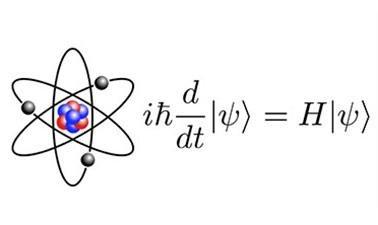
In this course, you will walk through a timeline of “the atom” from the Greeks through discoveries in the 1900s and learn how our understanding of matter and the atom affected our views on reality.

Class Deals by MOOC List - Click here and see Coursera's Active Discounts, Deals, and Promo Codes.

You will be introduced to some of the current understandings of matter and subatomic particles and also take a trip to the Large Hadron Collider at CERN! Finally, you will explore quantum mechanics' interpretation of reality and compare quantum versus classical boundaries.
This course also addresses questions such as: Where do you draw the line between the quantum and the classical worlds? What do we mean by “knowable” and “unknowable”?
Course 2 of 3 in the Question Reality! Science, philosophy, a search for meaning Specialization.

Syllabus

WEEK 1
Module 1: Matter Part I
This module explores how our understanding of matter and the atom affected our views on Reality.

WEEK 2
Module 2: Matter Part II
This module will introduce you to some of the current understandings of matter and sub-atomic particles. You will also take a trip to the Large Hadron Collider at CERN!

WEEK 3
Module 3: Matter Part II
This module explores quantum mechanics' interpretation of reality and compares quantum versus classical boundaries.
Go to Class
MOOC List is learner-supported. When you buy through links on our site, we may earn an affiliate commission.

Related Courses

Formulación y nomenclatura de compuestos químicos (edX) EdX
Universitat Politècnica de València,UPValenciaX

Formulación y nomenclatura de compuestos químicos (edX)

Aprenderemos cómo establecer las fórmulas de los compuestos químicos inorgánicos y orgánicos más usuales y las reglas para nombrarlos. Toda la materia está formada por elementos o compuestos químicos que son resultado de la combinación de átomos. Cada compuesto presenta una determinada composición que se corresponde con una fórmula y se identifica con un nombre.

Self Paced
Self-Paced
De l'atome à l'humain : à la racine des mots scientifiques (FUN) FUN
Université de Lorraine

De l'atome à l'humain : à la racine des mots scientifiques (FUN)

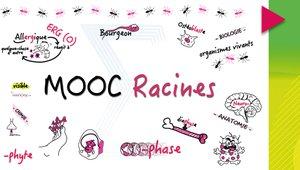
Ce cours en ligne gratuit porte donc sur l’étymologie du vocabulaire scientifique et médical. Il s’adresse aux lycéens se préparant à la PACES, aux formations paramédicales, aux études scientifiques, aux STAPS... Il s’adresse également aux étudiants de ces différentes filières, ainsi qu’à toute personne intéressée par l’étymologie.

Sep 27th 2021
4 Weeks
Discovering Nuclear Science: energy and beyond (POK) Polimi OPEN KNOWLEDGE
Politecnico di Milano

Discovering Nuclear Science: energy and beyond (POK)

Where do natural radioactivity come from? What is a radioactive atom? Which are the phases of nuclear fission? How is radioactive pollution monitored? Are nuclear waste managed managed? Talking about “nuclear issues”, many questions arise: this MOOC aims at providing scientific answers. Enroll in the course and unlock the potential of Nuclear Science to shape our future for the better. Let's get started!

Available
3 Weeks
General Chemistry I (saylor.org) Saylor Academy
Saylor.org

General Chemistry I (saylor.org)

This chemistry survey is designed to introduce students to the world of chemistry. The principles of chemistry were first identified, studied, and applied by ancient Egyptians in order to extract metal from ores, make alcoholic beverages, glaze pottery, turn fat into soap, and much more.

Self Paced
Self-Paced
Conceptos y Herramientas para la Física Universitaria (Coursera) Coursera
Tecnológico de Monterrey

Conceptos y Herramientas para la Física Universitaria (Coursera)

Este curso provee al estudiante con conceptos y herramientas matemáticas para modelar problemas en física, que al aplicar podrá enfrentar con éxito los cursos de física universitarios. Así pues, la filosofía de este curso consiste en cubrir temas conceptuales relativos a la Física y desarrollar tu capacidad de aprender y aplicarlos en tu vida profesional.

Jun 22nd 2026
5-12 Weeks
Quantitative Methods (Coursera) Coursera
University of Amsterdam

Quantitative Methods (Coursera)

Discover the principles of solid scientific methods in the behavioral and social sciences. Join us and learn to separate sloppy science from solid research! This course will cover the fundamental principles of science, some history and philosophy of science, research designs, measurement, sampling and ethics. The course is comparable to a university level introductory course on quantitative research methods in the social sciences, but has a strong focus on research integrity. We will use examples from sociology, political sciences, educational sciences, communication sciences and psychology.

Jun 22nd 2026
5-12 Weeks
Geodesign: Change Your World (Coursera) Coursera
Pennsylvania State University

Geodesign: Change Your World (Coursera)

What happens when creativity and science come together? The power to design our world is unleashed, providing tools to inform choices about how we live! Geodesign is the glue—it’s a process that deploys creativity to connect information to people, using collaboration to better inform how we design our world.

Jun 22nd 2026
5-12 Weeks
From Atoms to Stars: How Physics Explains Our World (edX) EdX
National Research Nuclear University MEPhI,MEPhIx

From Atoms to Stars: How Physics Explains Our World (edX)

Explore the universe through physics from the smallest micro particle to the vastness of galaxies. In this physics course, you will learn about the structure and function of our universe, from the micro-world of quantum fields and atoms up to the mega-world of stars and galaxies. You will learn about the objective laws governing the physical world and about methods, provided mainly by physics, which allow us to obtain such knowledge.

Self Paced
Self-Paced
DNA and Atoms: The Secret of Life (edX) EdX
Seoul National University,SNUx

DNA and Atoms: The Secret of Life (edX)

Learn about DNA structure, how atoms are bonded to make DNA molecules and the periodic table, through Nobel lectures and key scientific papers. In this chemistry course, you will learn about “Life in the Universe." We will explore DNA as genetic material and atoms as the building blocks of life. We will discuss the discovery and key features of the double helical structure of DNA and the chemical principles behind the sugar-phosphate backbone and hydrogen bonding in the base pairs will be emphasized.

This course is archived
4 Weeks