Structure of matter: atoms, molecules, nanomaterials. Part 2 (Coursera)

Structure of matter: atoms, molecules, nanomaterials. Part 2 (Coursera)

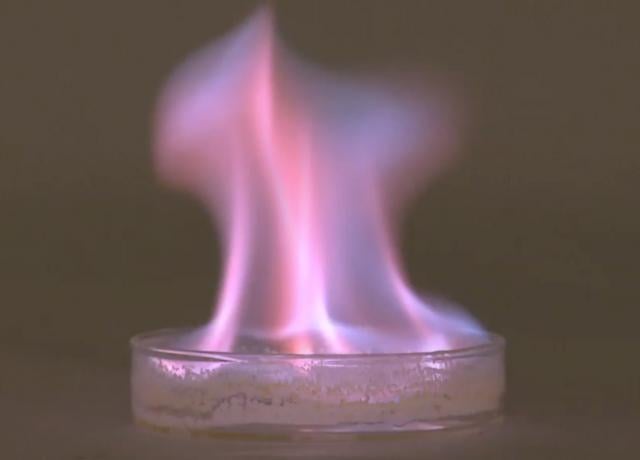
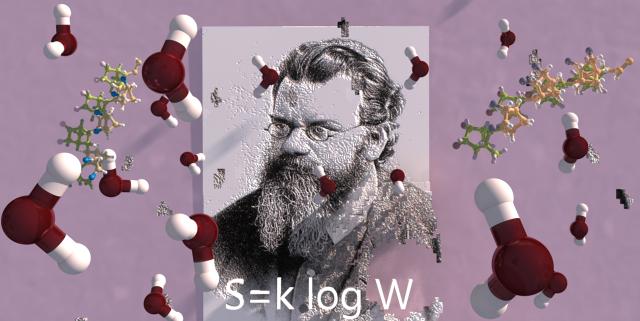
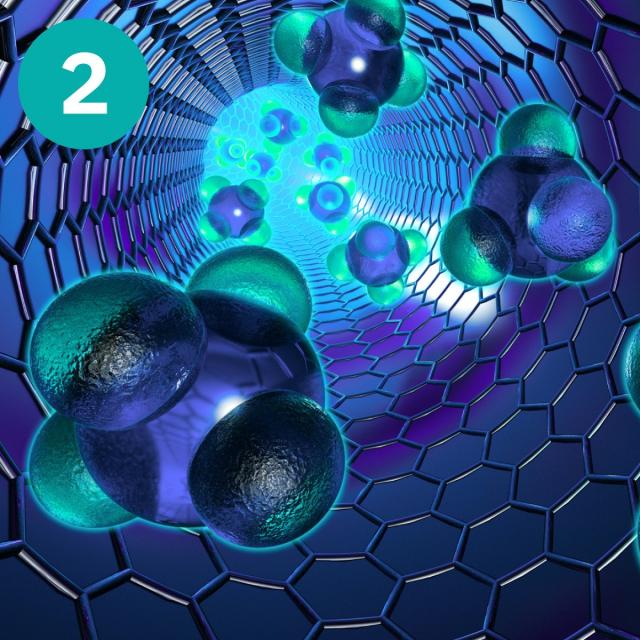
A two-part course lays down an understanding of the fundamental foundations of the structure of atoms and molecules, chemical bonds, intermolecular interactions. The course systematically reveals the relationship between the electronic structure of atoms and molecules, the periodic law of D.I. Mendeleev and the properties of substances and materials in various states of aggregation, modern achievements in the creation of various functional materials with desired properties, the foundations of the digital economy in the field of chemical sciences are considered.

Class Deals by MOOC List - Click here and see Coursera's Active Discounts, Deals, and Promo Codes.

.

Go to Class
MOOC List is learner-supported. When you buy through links on our site, we may earn an affiliate commission.


Related Courses

Quantum Optics 1 : Single Photons (Coursera) Coursera
École Polytechnique

Quantum Optics 1 : Single Photons (Coursera)

This course gives you access to basic tools and concepts to understand research articles and books on modern quantum optics. You will learn about quantization of light, formalism to describe quantum states of light without any classical analogue, and observables allowing one to demonstrate typical quantum properties of these states. These tools will be applied to the emblematic case of a one-photon wave packet, which behaves both as a particle and a wave.

Sep 21st 2026
5-12 Weeks
Ferrous Technology II (Coursera) Coursera
Pohang University of Science and Technology - POSTECH

Ferrous Technology II (Coursera)

Steel, ever-evolving material, has been the most preeminent of all materials since it can provide wide range of properties that can meet ever-changing requirements. In this course, we explore both fundamental and technical issues related to steels, including iron and steelmaking, microstructure and phase transformation, and their properties and applications.

Sep 28th 2026
5-12 Weeks
Understanding Modern Physics II: Quantum Mechanics and Atoms (Coursera) Coursera
The Hong Kong University of Science and Technology - HKUST

Understanding Modern Physics II: Quantum Mechanics and Atoms (Coursera)

The 20th century was known as the century of physics. In the past 120 years, concepts such as space, time, energy, entropy and particles were understood to much deeper levels. New paradigms of thinking such as relativity and quantum mechanics emerged. This course is the second course in the Understanding Modern Physics series, which covers an introduction to quantum mechanics, atomic physics and quantum information.

Sep 28th 2026
4 Weeks
Materials Science: 10 Things Every Engineer Should Know (Coursera) Coursera
University of California, Davis

Materials Science: 10 Things Every Engineer Should Know (Coursera)

We explore “10 things” that range from the menu of materials available to engineers in their profession to the many mechanical and electrical properties of materials important to their use in various engineering fields. We also discuss the principles behind the manufacturing of those materials. By the end of the course, you will be able to: recognize the important aspects of the materials used in modern engineering applications; explain the underlying principle of materials science: “structure leads to properties,”; identify the role of thermally activated processes in many of these important “things” – as illustrated by the Arrhenius relationship; relate each of these topics to issues that have arisen (or potentially could arise) in your life and work.

Sep 28th 2026
5-12 Weeks
Understanding Research Methods (Coursera) Coursera
University of London,SOAS University of London

Understanding Research Methods (Coursera)

This MOOC is about demystifying research and research methods. It will outline the fundamentals of doing research, aimed primarily, but not exclusively, at the postgraduate level. It places the student experience at the centre of our endeavours by engaging learners in a range of robust and challenging discussions and exercises befitting SOAS, University of London's status as a research-intensive university and its rich research heritage.

Sep 21st 2026
4 Weeks
Sistemas Digitales: De las puertas lógicas al procesador (Coursera) Coursera
Universitat Autònoma de Barcelona

Sistemas Digitales: De las puertas lógicas al procesador (Coursera)

En este curso aprenderemos los fundamentos del diseño de los circuitos digitales actuales, siguiendo una orientación eminentemente práctica. A diferencia de otros cursos más "clásicos" de Circuitos Digitales, nuestro interés se centrará más en el Sistema que en la Electrónica que lo sustenta. Este enfoque nos permitirá sentar las bases del diseño de Sistemas Digitales complejos.

Sep 28th 2026
5-12 Weeks
Introduction to High-Throughput Materials Development (Coursera) Coursera
Georgia Institute of Technology

Introduction to High-Throughput Materials Development (Coursera)

This course is an introduction to high-throughput experimental methods that accelerate the discovery and development of new materials. This course is an introduction to high-throughput experimental methods that accelerate the discovery and development of new materials. It is well recognized that the discovery of new materials is the key to solving many technological problems faced by industry and society. These problems include energy production and utilization, carbon capture, tissue engineering, and sustainable materials production, among many others. This course will introduce the learner to a remarkable new approach to materials discovery and characterization: high-throughput materials development (HTMD).

Sep 28th 2026
5-12 Weeks
Chemical Biology (Coursera) Coursera
University of Geneva

Chemical Biology (Coursera)

Chemical biology is a burgeoning field that has rapidly risen to prominence. This surge of interest has been fuelled by chemical biology’s applicability to understanding critical processes in live cells or model organisms in real time. This success has arisen because chemical biology straddles a nexus between chemistry, biology, and physics. Thus, chemical biology can harness rapid chemistry to observe or perturb biological processes, that are in turn reported using physical assays, all in an otherwise unperturbed living entity. Although its boundaries are endless, the multidisciplinary nature of chemical biology can make the field seem daunting; we beg to differ! Here, we deconstruct chemical biology into its core components, and repackage the material.

Sep 28th 2026
5-12 Weeks