Quantum Mechanics for Scientists and Engineers 2 (Stanford Online)

Offered by Stanford University,
Quantum Mechanics for Scientists and Engineers 2 (Stanford Online)

This course covers key topics in the use of quantum mechanics in many modern applications in science and technology, introduces core advanced concepts such as spin, identical particles, the quantum mechanics of light, the basics of quantum information, and the interpretation of quantum mechanics, and covers the major ways in which quantum mechanics is written and used in modern practice. It follows on directly from the QMSE-01 "Quantum Mechanics for Scientists and Engineers" course and is also accessible to others who have studied some quantum mechanics at the equivalent of a first junior or senior college-level physics quantum mechanics course.

All of the material for the QMSE-01 course is also provided as a resource. The course should prepare participants well to understand quantum mechanics as it is used in a wide range of current applications and areas and provide a solid grounding for deeper studies of specific more advanced areas.

Course syllabus

Quantum mechanics in crystals
Crystal structures, the Bloch theorem that simplifies quantum mechanics in crystals, and other useful concepts for understanding semiconductor devices, such as density of states, effective mass, quantum confinement in nanostructures, and important example problems like optical absorption in semiconductors, a key process behind all optoelectronics.

Methods for one-dimensional problems
How to understand and calculate tunneling current. The transfer matrix technique, a very simple and effective technique for calculating quantum mechanical waves and states.

Spin and identical particles
The purely quantum mechanical idea of spin, and how to represent and visualize it. The general ideas of identical particles in quantum mechanics, including fermions and bosons, their properties and the states of multiple identical particles.

Quantum mechanics of light
Representing light quantum mechanically, including the concept of photons, and introducing the ideas of annihilation and creation operators.

Interaction of different kinds of particles
Describing interactions and processes using annihilation and creation operators for fermions and bosons, including the important examples of stimulated and spontaneous emission that correctly explain all light emitters, from lasers to light bulbs.

Mixed states and the density matrix
Introducing the idea of mixed states to describe how quantum mechanical systems interact with the rest of the complex world around us, and the notation and use of the density matrix to describe and manipulate these.

Quantum measurement and quantum information
Introducing the no-cloning theorem, quantum cryptography, quantum entanglement and the basic ideas of quantum computing and teleportation, and returning to the idea of measurement in quantum mechanics, including the surprising results of Bell's inequalities.

Interpretation of quantum mechanics
A brief introduction to some of the different approaches to the difficult problem of understanding what quantum mechanics really means!

Prerequisites
The course is designed to build on a first course on quantum mechanics at the junior or senior college level, so students should have at least that background. The material here is specifically matched to follow on from the Stanford Online QMSE-01 "Quantum Mechanics for Scientists and Engineers" class, and all the material from that class is provided as background in the online course materials here. No additional background beyond that class is presumed here.
Go to Class
MOOC List is learner-supported. When you buy through links on our site, we may earn an affiliate commission.

Related Courses

SciWrite: Writing in the Sciences (Stanford Online) Lagunita Stanford Online
Stanford University

SciWrite: Writing in the Sciences (Stanford Online)

This course teaches scientists to become more effective writers, using practical examples and exercises. Topics include: principles of good writing, tricks for writing faster and with less anxiety, the format of a scientific manuscript, and issues in publication and peer review. Students from non-science disciplines can benefit from the training provided in the first four weeks (on general principles of effective writing).

Self Paced
Self-Paced
Teaching Science at University (Coursera) Coursera
University of Zurich

Teaching Science at University (Coursera)

This course will prepare you for teaching science in higher education. In this MOOC you will learn to make your knowledge as an excellent researcher accessible to your students. We will show you how to communicate science to novices as well as advanced students in science.

Aug 31st 2026
5-12 Weeks
BIM Application for Engineers (Coursera) Coursera
National Taiwan University

BIM Application for Engineers (Coursera)

In order to effectively reach the goal of learning, students will get familiar with the model-building process. The second module of the course will be on how to use Autodesk Revit to build BIM models. We will use an example case and guide students to build a 6-story BIM model from the CAD drawings step by step.

Aug 24th 2026
5-12 Weeks
Global Warming I: The Science and Modeling of Climate Change (Coursera) Coursera
University of Chicago

Global Warming I: The Science and Modeling of Climate Change (Coursera)

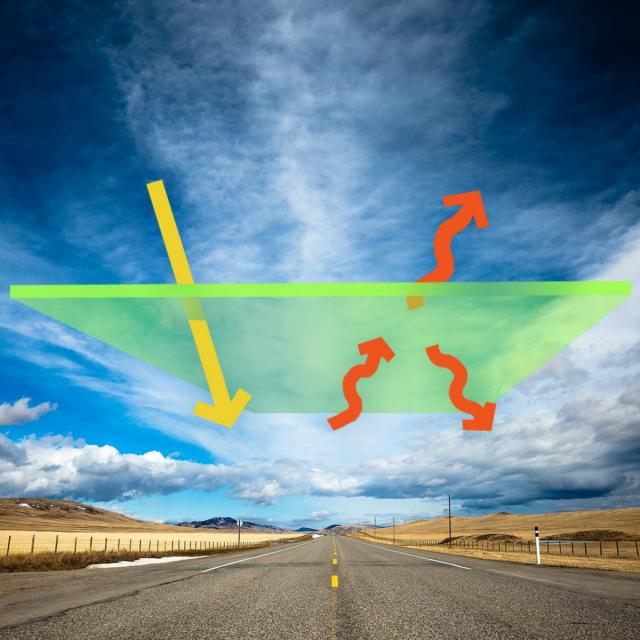
This class describes the science of global warming and the forecast for humans’ impact on Earth’s climate. Intended for an audience without much scientific background but a healthy sense of curiosity, the class brings together insights and perspectives from physics, chemistry, biology, earth and atmospheric sciences, and even some economics—all based on a foundation of simple mathematics (algebra).

Aug 24th 2026
5-12 Weeks
Introduction to Engineering Mechanics (Coursera) Coursera
Georgia Institute of Technology

Introduction to Engineering Mechanics (Coursera)

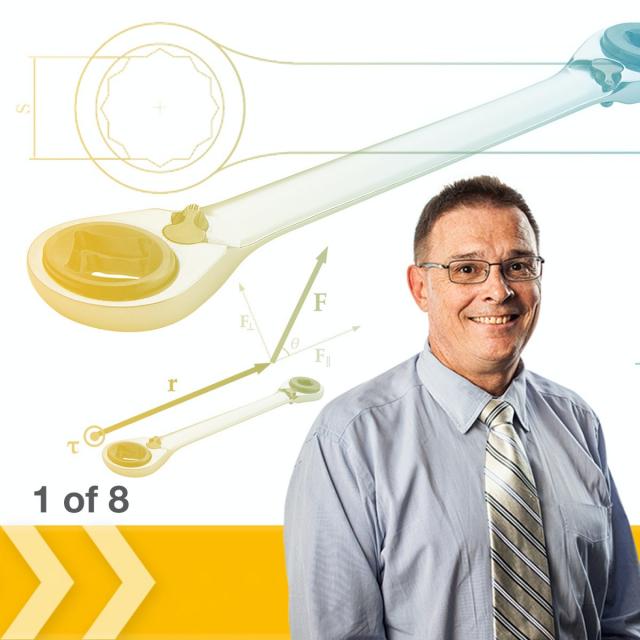
This course is an introduction to learning and applying the principles required to solve engineering mechanics problems. Concepts will be applied in this course from previous courses you have taken in basic math and physics. The course addresses the modeling and analysis of static equilibrium problems with an emphasis on real world engineering applications and problem solving.

Aug 24th 2026
5-12 Weeks
Flight mechanics - The basis (Coursera) Coursera
ISAE-SUPAERO

Flight mechanics - The basis (Coursera)

More than one century after the Wright brothers' first flight, the flight still defy our intuition. You will learn here how to name the different parts of the airplane and how to describe and quantify its geometry. For that, we need now to share a precise vocabulary to describe the airplane's movement and attitude in space, and a refresher on basic general mechanic principles. You will remind how Newton's 2nd law allows you to determine what force must be applied on an apple - or on an airplane, to modify the magnitude and direction of its speed.

Aug 24th 2026
3 Weeks
Quantitative Formal Modeling and Worst-Case Performance Analysis (Coursera) Coursera
EIT Digital

Quantitative Formal Modeling and Worst-Case Performance Analysis (Coursera)

Welcome to Quantitative Formal Modeling and Worst-Case Performance Analysis. In this course, you will learn about modeling and solving performance problems in a fashion popular in theoretical computer science, and generally train your abstract thinking skills. After finishing this course, you have learned to think about the behavior of systems in terms of token production and consumption, and you are able to formalize this thinking mathematically in terms of prefix orders and counting functions. You have learned about Petri-nets, about timing, and about scheduling of token consumption/production systems, and for the special class of Petri-nets known as single-rate dataflow graphs, you will know how to perform a worst-case analysis of basic performance metrics, like throughput, latency and buffering.

Aug 24th 2026
4 Weeks
The Brain and Space (Coursera) Coursera
Duke University

The Brain and Space (Coursera)

This course is about how the brain creates our sense of spatial location from a variety of sensory and motor sources, and how this spatial sense in turn shapes our cognitive abilities. Knowing where things are is effortless. But “under the hood,” your brain must figure out even the simplest of details about the world around you and your position in it.

Aug 17th 2026
5-12 Weeks