SciWrite: Writing in the Sciences (Stanford Online)

Offered by Stanford University,
SciWrite: Writing in the Sciences (Stanford Online)

This course teaches scientists to become more effective writers, using practical examples and exercises. Topics include: principles of good writing, tricks for writing faster and with less anxiety, the format of a scientific manuscript, and issues in publication and peer review. Students from non-science disciplines can benefit from the training provided in the first four weeks (on general principles of effective writing).

In the first four weeks, we will review principles of effective writing, examples of good and bad writing, and tips for making the writing process easier. In the second four weeks, we will examine issues specific to scientific writing, including: authorship, peer review, the format of an original manuscript, and communicating science for lay audiences. Students will watch video lectures, complete quizzes and editing exercises, write two short papers, and edit each others’ work.
Welcome to the self-paced version of Writing in the Sciences! The course is organized into 8 learning units. We anticipate that each unit will take about 2 to 6 hours to complete. After completing all 8 units, you will take a multiple-choice final exam. For those trying to earn a Statement of Accomplishment, your final grade will be based on: quizzes (20%); Unit 1-3 homework assignments (40%); and a multiple-choice final exam (40%). You will have two attempts on quiz questions, but just one attempt on homework and exam questions. To earn a Statement of Accomplishment, you must score at least 60% in the course. To earn a Statement with distinction, you must score 90% or better. You can monitor your cumulative grade in the course by clicking on the Progress menu.

Suggested Readings:
On Writing Well: The Classic Guide to Writing Nonfiction
The Elements of Style, Fourth Edition
Sin and Syntax: How to Craft Wicked Good Prose
Essentials of Writing Biomedical Research Papers. Second Edition

Go to Class
MOOC List is learner-supported. When you buy through links on our site, we may earn an affiliate commission.

Related Courses

Philosophy, Science and Religion: Religion and Science (Coursera) Coursera
University of Edinburgh

Philosophy, Science and Religion: Religion and Science (Coursera)

Philosophy, Science and Religion mark three of the most fundamental modes of thinking about the world and our place in it. Are these modes incompatible? Put another way: is the intellectually responsible thing to do to ‘pick sides’ and identify with one of these approaches at the exclusion of others? Or, are they complementary or mutually supportive? As is typical of questions of such magnitude, the devil is in the details. For example, it is important to work out what is really distinctive about each of these ways of inquiring about the world. In order to gain some clarity here, we’ll be investigating what some of the current leading thinkers in philosophy, science and religion are actually doing.

Nov 3rd 2026
5-12 Weeks
Introduction to Systems Biology (Coursera) Coursera
Icahn School of Medicine at Mount Sinai

Introduction to Systems Biology (Coursera)

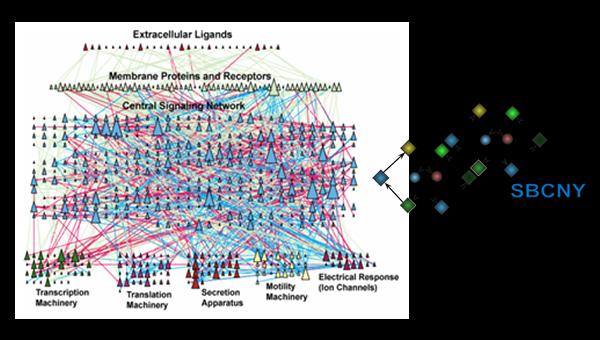
This course will introduce the student to contemporary Systems Biology focused on mammalian cells, their constituents and their functions. Biology is moving from molecular to modular. As our knowledge of our genome and gene expression deepens and we develop lists of molecules (proteins, lipids, ions) involved in cellular processes, we need to understand how these molecules interact with each other to form modules that act as discrete functional systems.

Nov 2nd 2026
5-12 Weeks
Quantum Mechanics for Scientists and Engineers 2 (Stanford Online) Lagunita Stanford Online
Stanford University

Quantum Mechanics for Scientists and Engineers 2 (Stanford Online)

This course covers key topics in the use of quantum mechanics in many modern applications in science and technology, introduces core advanced concepts such as spin, identical particles, the quantum mechanics of light, the basics of quantum information, and the interpretation of quantum mechanics, and covers the major ways in which quantum mechanics is written and used in modern practice. It follows on directly from the QMSE-01 "Quantum Mechanics for Scientists and Engineers" course and is also accessible to others who have studied some quantum mechanics at the equivalent of a first junior or senior college-level physics quantum mechanics course.

No sessions available
5-12 Weeks
Adventures in Writing (Stanford Online) Lagunita Stanford Online
Stanford University

Adventures in Writing (Stanford Online)

Welcome to Adventures in Writing, a series of graphic-novel style learning modules designed to help you learn more about and practice a range of effective written communication skills. You’ll immerse yourself in the adventures of Maya and Chris, using each module’s interactive exercises to apply what you’ve learned.

Self Paced
Self-Paced
The Brain and Space (Coursera) Coursera
Duke University

The Brain and Space (Coursera)

This course is about how the brain creates our sense of spatial location from a variety of sensory and motor sources, and how this spatial sense in turn shapes our cognitive abilities. Knowing where things are is effortless. But “under the hood,” your brain must figure out even the simplest of details about the world around you and your position in it.

Nov 9th 2026
5-12 Weeks
The Strategy of Content Marketing (Coursera) Coursera
University of California, Davis

The Strategy of Content Marketing (Coursera)

This course is a partnership between the leading content marketing authority, Copyblogger, and UC Davis Extension. In this course, you will learn the core strategies content marketers use to acquire and retain customers profitably. Specifically, you will learn how to develop, organize and implement a content marketing strategy, analyze and measure the effectiveness of content marketing, write compelling copy, use a strategic framework when writing, and build your professional brand and authority through content marketing. You will also learn how to put the ideas presented to you into action and build your own personal brand through content marketing.

Nov 9th 2026
5-12 Weeks
Writing Skills for Engineering Leaders (Coursera) Coursera
Rice University

Writing Skills for Engineering Leaders (Coursera)

Engineering leaders must write extensively for their jobs, and their writing needs to be professional, reader-focused, and error-free. What leaders write in particular can affect productivity and the bottom line, so the written communication that leaders create must be clear and concise. In this course, you’ll learn essential writing skills that you can apply in your daily activities on the job as an engineering leader.

Nov 9th 2026
4 Weeks
Philosophy, Science and Religion: Philosophy and Religion (Coursera) Coursera
University of Edinburgh

Philosophy, Science and Religion: Philosophy and Religion (Coursera)

Philosophy, Science and Religion mark three of the most fundamental modes of thinking about the world and our place in it. Are these modes incompatible? Put another way: is the intellectually responsible thing to do to ‘pick sides’ and identify with one of these approaches at the exclusion of others? Or, are they complementary or mutually supportive? As is typical of questions of such magnitude, the devil is in the details. For example, it is important to work out what is really distinctive about each of these ways of inquiring about the world. In order to gain some clarity here, we’ll be investigating what some of the current leading thinkers in philosophy, science and religion are actually doing.

Nov 9th 2026
5-12 Weeks
Biosphere 2 Science for the Future of Our Planet (Coursera) Coursera
University of Arizona

Biosphere 2 Science for the Future of Our Planet (Coursera)

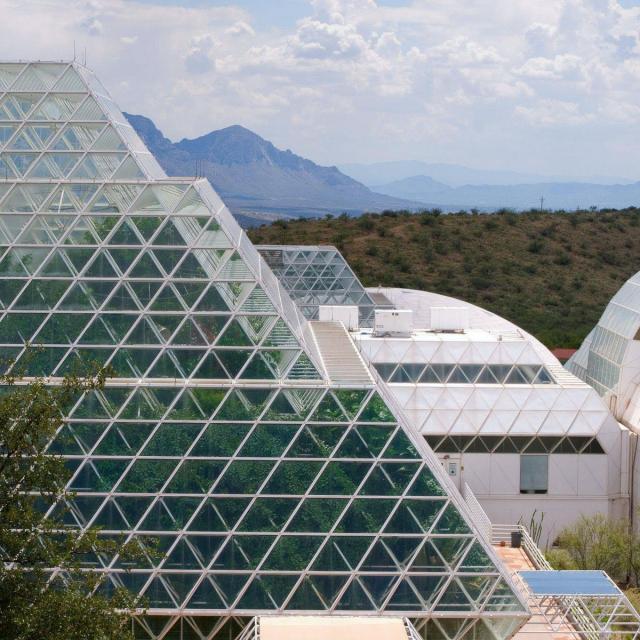
Are you ready to take an incredible journey around Planet Earth and beyond? In this course, you will delve into a world of innovative science and learn from a team of Biosphere 2 and University of Arizona researchers. From plants and soils, to oceans and rainforests, the Moon, Mars, and more, this course is an exciting opportunity for anyone interested in science and Earth stewardship.

Nov 9th 2026
5-12 Weeks
Bugs 101: Insect-Human Interactions (Coursera) Coursera
University of Alberta

Bugs 101: Insect-Human Interactions (Coursera)

Of all the animals on earth, which are the strongest for their size? What about the fastest? Who were the first animals to evolve flight? Insects take all of these titles and more! As the most abundant animals on the planet, insects and other arthropods affect our lives in so many ways. From beneficial interactions like pollination and biological pest control, to the transmission of life threatening diseases; this course will teach you about the big ways that these little arthropods impact our lives.

Nov 9th 2026
13-24 Weeks